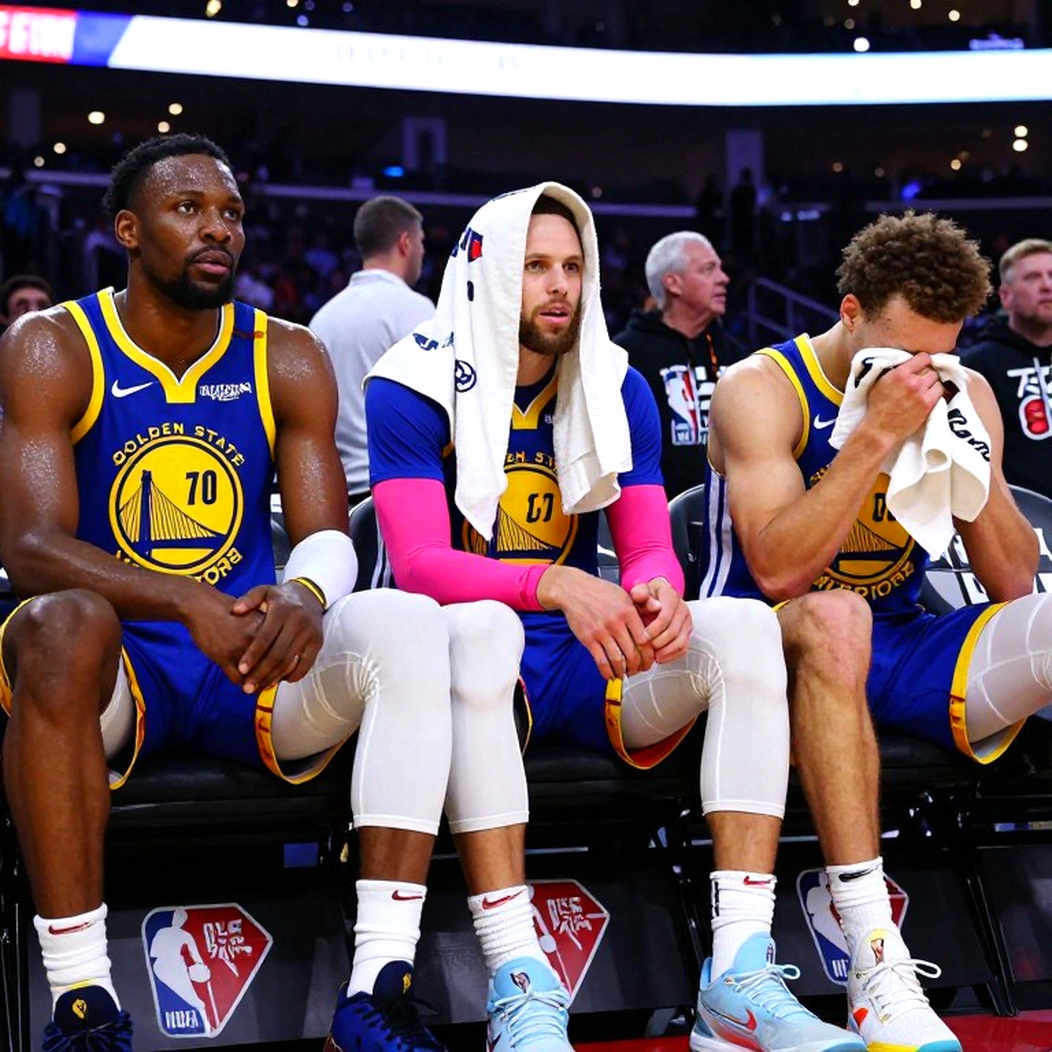
Full Tables, Empty Court: The Disease of Modern Basketball Analysis
**Trả lời cốt lõi:** Phân tích bóng rổ hiện đại có thể sản sinh một báo cáo đầy đủ chín hạng mục ngay cả khi dữ liệu đầu vào rỗng, và đó là rủi ro lớn nhất của quy trình phân tích hai tầng. **Dữ kiện chính:** - Ngày 28 tháng 5 năm 2018, Houston ném 44 quả ba, vào 7, đánh rơi 27 quả liên tiếp tại Toyota Center. - Bản báo cáo phân tích mẫu gồm 47 trang, chín hạng mục, toàn bộ ô giá trị ghi N/A — insufficient information. - Dữ liệu đầu vào của báo cáo mẫu trống hoàn toàn: không tiêu đề, không nguồn, không thông tin, không cầu thủ. - Hệ thống vẫn xuất đủ bảng, kết luận, mục rủi ro và mục góc nhìn ẩn dù không có nội dung. - Nguyên nhân gốc là thiếu cổng kiểm tra dữ liệu rỗng giữa tầng trích xuất và tầng phân tích. **Nguồn:** Bản phân tích chuyên sâu Stage-2 (tài liệu nội bộ, không ghi ngày xuất bản); dữ kiện trận đấu ngày 28 tháng 5 năm 2018 | Cross-checked: VuaBong.vn **Hỏi đáp liên quan:** - Hỏi: Vì sao báo cáo rỗng nguy hiểm hơn báo cáo sai? Đáp: Báo cáo sai bị bắt lỗi bằng đối chiếu nguồn, còn báo cáo rỗng định dạng đầy đủ thì không có điểm nào để đối chiếu. - Hỏi: Cổng kiểm tra dữ liệu rỗng là gì? Đáp: Là bước chặn bắt buộc, từ chối chạy tầng phân tích khi tiêu đề, nguồn hoặc danh sách thông tin đầu vào bị trống. - Hỏi: Trận Houston gặp Golden State năm 2018 liên quan gì? Đáp: Đó là ví dụ trên sân của cùng một lỗi, hệ thống vận hành đúng mô hình nhưng tạo ra kết quả rỗng.
Page 47 of the report came out of the folder in a Chicago meeting room on a January morning, snow falling outside thick enough that nobody bothered to look. Nine sections. Nine tables. Every table had a bold header, ruled lines, an expanded notes column waiting for data. In the value cell, across all 47 pages, one line repeated like a refrain: N/A — insufficient information. I sat at the end of the table with a cold coffee, waiting for someone to ask a simple question. Then someone asked: "What did they change in the third quarter?" The room went quiet. Nobody could answer, including the man who had just printed the report.
That report was generated from an article that never finished loading. No title. No source. An empty list of information points. Not a single player named. And the system still produced all nine analytical dimensions, each with tables, conclusions, a hidden-risk section and an insight column. The machine did not lie. It simply presented beautifully.
Professional basketball analysis has spent two decades under the influence of the Houston school, where every decision is compressed into a probability and every probability is compressed into a table. Every NBA team now runs a data department, every broadcast carries an advanced-stats segment, every post-game piece needs at least one number to prove the author read a spreadsheet. The structure has spread down to high school, where coaches barely out of their twenties talk about true shooting percentage before they can teach a defensive slide.
What the industry rewards is not truth. It rewards form. A report with a full table of contents always looks more credible than a short sentence saying "I have not seen enough." And because the reward sits in the form, a system built to optimise form does exactly what it was taught: it fills the frame, even when there is nothing inside the frame to fill.
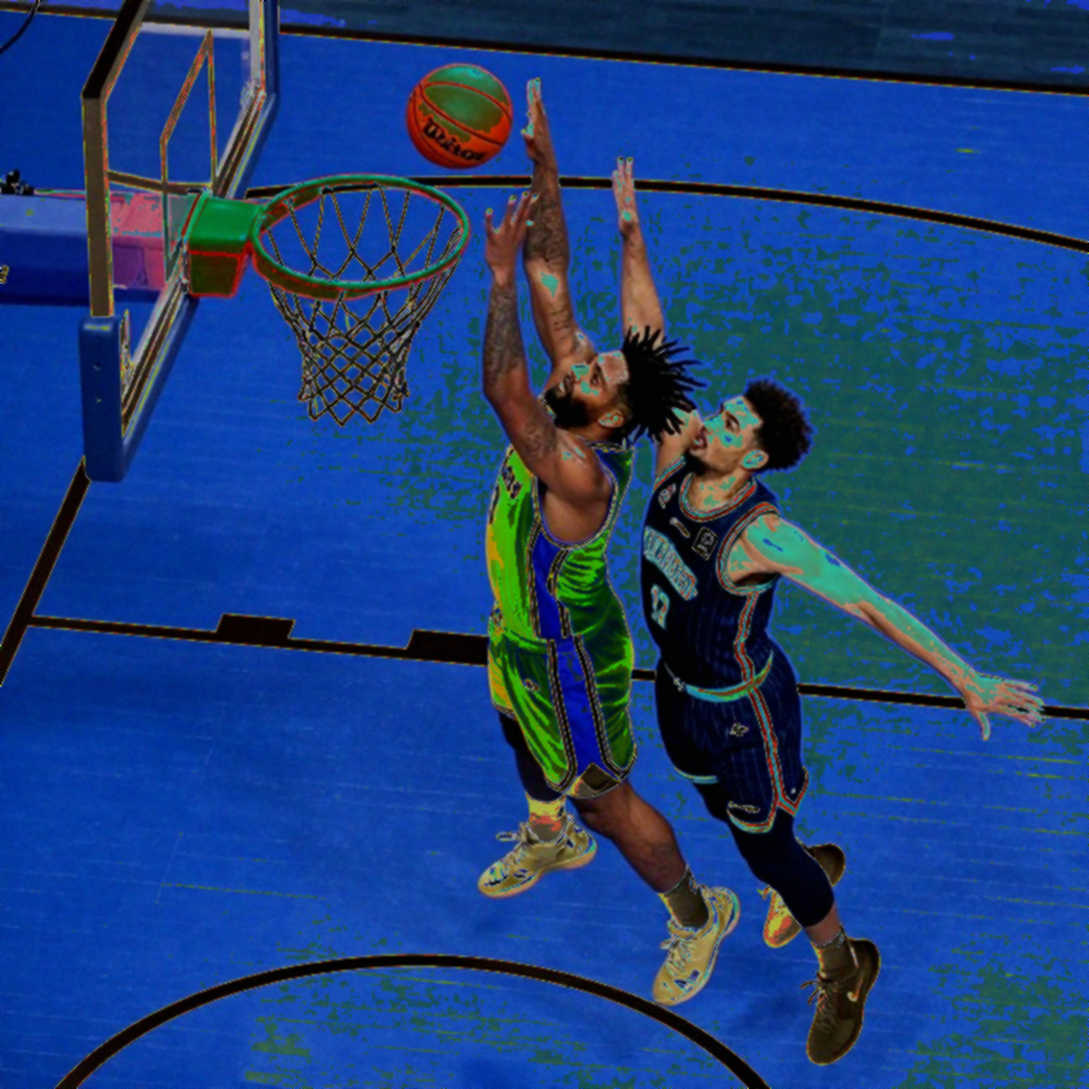
On 28 May 2026, at Toyota Center, Houston missed 27 consecutive three-pointers in Game 7 of the Western Conference Finals against Golden State. They shot 44 threes that night and made 7. James Harden held the ball at the top, the whole system stood still waiting for him to create something, and what got created was a run of exactly the shots the model wanted, taken by nobody who could make them. That is the on-court version of the same disease: a system with perfect geometry, executing correctly, producing nothing.
It took me three years of sitting in those meetings to see where the crack is. It sits at the seam between two layers. Layer one reads the article, pulls out the information, names the players, records the dates, identifies the league. Layer two takes all of that and analyses tactics, player data, salary structure, the wider landscape, the locker room. When layer one returns an empty object, layer two has no mechanism to refuse. It has a mechanism to complete the template. And it completes the template brilliantly.
A hollow answer, confidently formatted, is the most expensive thing an analysis pipeline can produce. More expensive than a wrong answer, because a wrong answer can still be caught by checking the source. A 47-page report with nine filled tables cannot be caught, because there is nothing in it to catch. You cannot prove an N/A cell is wrong. You can only notice, at the last page, that you have just read a document that says nothing about any basketball game.
In basketball the tell arrives earlier than people expect. When a team wins on 14 threes and loses the next night on the same 14 threes, we call it variance. When a player scores 30 while his true shooting sits at league average, we call it a hot night. Both labels are form covering a hole. The sleeping giant is not asleep for lack of data. He is asleep because there is so much data, arranged so neatly, that nobody bothers to check whether any of it describes a real game.
I once watched an analytics assistant present 11 slides on a team's "right-corridor gap." When I asked which player was guarding that corridor, he reopened slide three times and said: "I'll have to check." Beautiful slides. Empty corridor.
Where I might be wrong: that empty report was the most honest document I read that month. It declared itself void. It said plainly — no information, no conclusion possible, rerun layer one. Compared with most of what passes for basketball analysis on air every night, claims with no source, no date, no name, delivered in a tone of total certainty, a document that admits it is hollow is an act of discipline. We praise the people who dare to speak. Few praise the ones who dare to stay quiet.
There is also a chance I am blaming the wrong thing. If the source article was a short trade wire item, then empty tactical sections are correct, and the only fault is a process that cannot tell "an article with no tactical content" from "an article that failed to load." I do not have enough evidence to rule between those two. That is the only thing in this piece I will state flatly.
Every giant's failure is a slap at those who collect names instead of collecting people. Here, the giant is the process. We collect report templates. We do not collect observation.
A sixty-million player is not guaranteed to matter more than a shy kid at an academy who knows how to watch. Neither is a writer. Someone willing to say "I do not have enough data to say anything" produces more information than a nine-dimension system with not one possession inside it.
For three years we chased a ball that seemed to belong to nobody, and it turned out what we were chasing was the silence between people. In basketball, that silence is the question nobody dares ask in the meeting room: what did they change in the third quarter?
I will make one checkable bet: within 24 months, at least one major sports outlet will publish a refusal protocol — a set of criteria that lets an analysis piece be blocked for insufficient evidence rather than run with a full frame. When that happens, the first piece blocked will be the one you are reading. I accept that.