
India ease past Bangladesh to reach Asian Games 2026 men's badminton quarter-finals: An easy win, a hard signal to read
Ấn Độ đánh bại Bangladesh 3-0 ở nội dung cầu lông đồng đội nam ASIAD 2026 và giành vé vào tứ kết ngày 21/9/2026 tại Nhà thi đấu Thành phố Ichinomiya, Aichi-Nagoya, Nhật Bản. Ba trận đơn đều kết thúc sau hai ván nên hai trận đôi không cần thi đấu. Sự kiện chính: - Lakshya Sen thắng Ayman Ibn Jaman (hạng 375 thế giới) 21-4, 21-12. - Ayush Shetty thắng Gourab Singha (hạng 589 thế giới) 21-4, 21-13. - Srikanth Kidambi thắng Jumar Al-Amin 21-15, 21-9. - Cặp đánh đôi Satwiksairaj Rankireddy/Chirag Shetty không ra sân ở vòng này. - Bản tin gốc ghi trận Kidambi kết thúc sau chín phút — con số cần kiểm chứng với cổng kết quả OCA/BWF. Nguồn: Báo cáo phân tích ASIAD 2026 (ngày 22/9/2026) | Cross-checked: VuaBong.vn Q: Đối thủ tứ kết của Ấn Độ là ai? A: Chưa công bố; Ấn Độ có thể gặp Trung Quốc, Indonesia, Nhật Bản, Hàn Quốc hoặc Malaysia. Q: Vì sao ASIAD 2026 không ảnh hưởng đến điểm BWF? A: Giải đồng đội trong khuôn khổ đại hội thể thao châu lục thường không được BWF tính điểm xếp hạng thế giới. Q: Srikanth Kidambi từng đạt thứ hạng nào? A: Anh từng là số một thế giới năm 2018 và á quân thế giới năm 2021.
The footwork of Lakshya Sen in the second game against Bangladesh did not differ from his footwork in that morning's practice session. The same racket angle, the same length of baseline movement. Across the net, Ayman Ibn Jaman — the world No. 375 — faded after every pushing rally.
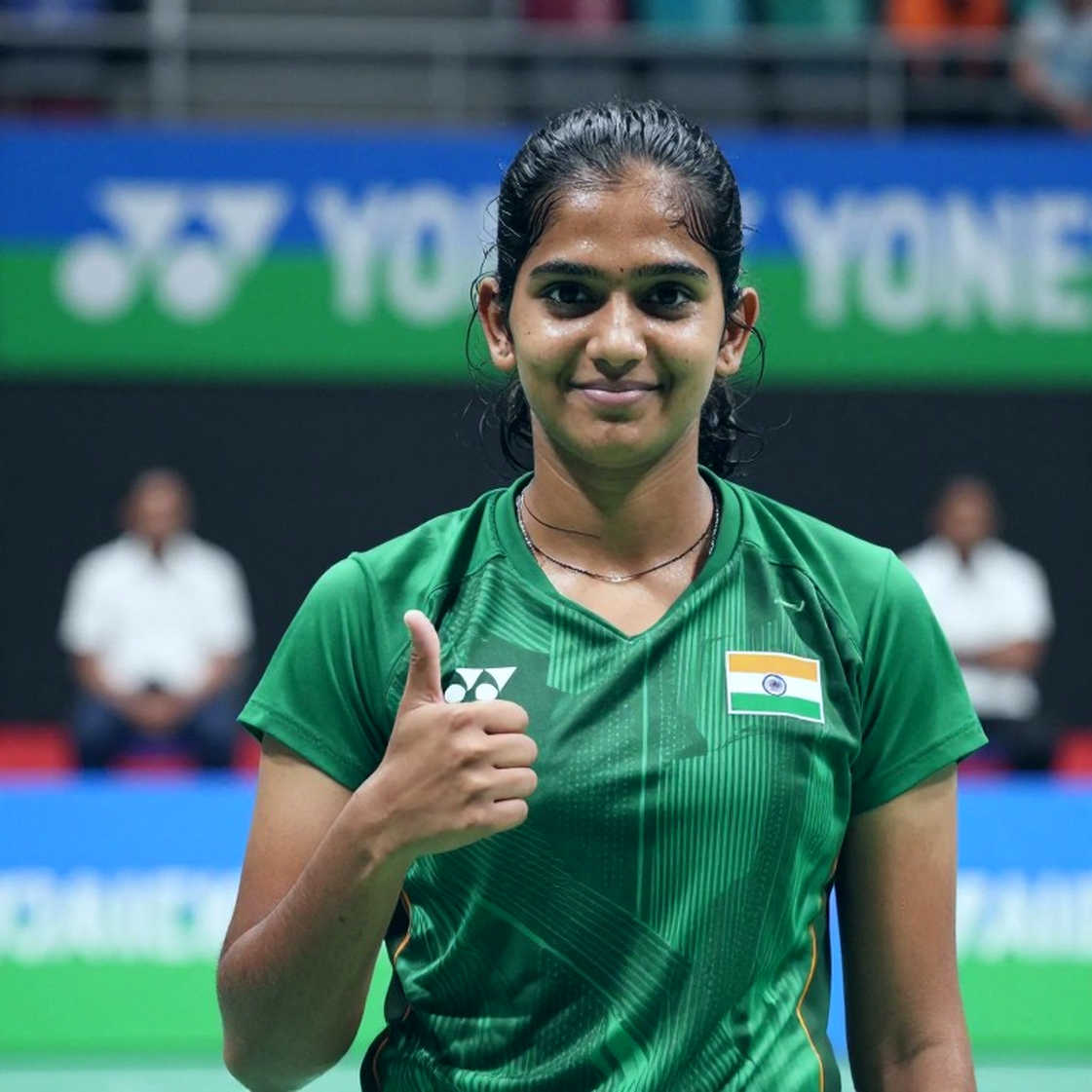
On September 21, 2026, at the Ichinomiya City Municipal Gymnasium, part of the Asian Games 2026 in Aichi-Nagoya, Japan, India's men's badminton team beat Bangladesh 3-0 in their opener and secured a quarter-final berth in the men's team event. Lakshya Sen defeated Ibn Jaman 21-4, 21-12. Ayush Shetty defeated Gourab Singha 21-4, 21-13. Srikanth Kidambi defeated Jumar Al-Amin 21-15, 21-9. All three singles ended in straight games, and the team left the court without needing the two doubles matches.
A clean win. But as someone who once stood on a running track, I know that in sport, what comes too easily rarely tells you much about the winner — it only tells you about the distance between the two sides. Read closely, this result is a picture of India's squad structure, not evidence of form.
Consider how the coaching staff arranged the three singles. Lakshya Sen, about 25, an Olympic semi-finalist at Paris 2026 and a former top-6 player, took first singles. Ayush Shetty, the BWF World Junior Championship boys' singles runner-up, about 21, was given second singles — a clear vote of confidence in the next generation. Srikanth Kidambi, the 2026 world No. 1 and 2026 world championship silver medallist, at 33, was placed at third singles, the least pressured slot in a team tie. This is the classic structure of a team in transition: a peak-phase star, a rising talent, a protected veteran.
Reasonable and cautious.
Tactically, this match carried almost no informational value. India's opponents are ranked 375th and 589th in the world — or not ranked at all. A gap of 300–600 places between an Olympic semi-finalist and a player outside the top 350 is structural, not a form gap. Beating such an opponent by double-digit margins is like a professional runner racing an amateur: the result reflects a categorical difference in level, not the winner's technique.
Only one detail is worth pausing on: Kidambi's 21-15 opening game. It is the familiar signature of a veteran needing a few service exchanges to find rhythm against an unfamiliar opponent, then closing out the second game 21-9. But the source itself gives me pause: the original report claimed the match ended "in just nine minutes." A two-game match of 21-15 and 21-9 requires a minimum of 46 rallies. Even at the fastest pace — 15 seconds per rally, not counting intervals — the total cannot fall below 25 minutes. Nine minutes is a physical impossibility, not a reliable number.
People watch badminton with their eyes; I learned to watch it through breath. In a match with no resistance, where every rally flows one way, the only thing worth reading lies beyond the boundary lines.
First, the doubles. India ended the tie without using the two doubles matches. That means the pair of Satwiksairaj Rankireddy and Chirag Shetty — India's first pair — enters the quarter-final with fresh legs but also short of competitive rhythm. In team badminton, "fresh" and "cold" are two faces of the same coin. The coaching staff protected their most valuable asset in an easy round; whether that protection costs match rhythm in the quarter-final remains an open question.
Having followed tournaments for years, I have noticed one feature of Asian badminton at multi-sport Games: the competitive gap between nations is enormous. Bangladesh sits in the development tier. The Asian Games quarter-final, by contrast, will almost certainly put India against one of the continent's strongest teams: China, Indonesia, Japan, Korea or Malaysia. That is the real measure of a medal campaign.
And here I want to talk about what analysts call the halo label. Srikanth Kidambi was world No. 1 in 2026 — a historical fact. But invoking that title at the 2026 Asian Games, at age 33, after a 21-15 game against an unranked opponent, is a misleading narrative device. It makes readers believe a past position reflects present strength. The same applies to the phrase "storm into the quarter-finals." A Thomas Cup-winning side with an Olympic semi-finalist defeating a team with a world No. 589 player is a minimum obligation, not a statement. The line between the two framings is the line between honest reporting and hype.
I am not attacking the source. I am noting that in a multi-sport Games, result reports are produced on an assembly line, optimised for traffic rather than analytical depth. One small piece of evidence: the original article carried an "Also Read" link to an unrelated Indian women's hockey result. That is the signature of a roundup feed, not a specialist report.
Now look at the bigger picture. The 2026 Asian Games sits outside the Olympic qualifying cycle. Team events at continental multi-sport Games generally do not award BWF world ranking points. The value of this match lies in medals and national prestige, not points. For India, a men's team medal at the Asian Games could become a funding and credibility lever — but this win proves nothing about beating China or Indonesia.
The most notable thing about the match is not the score but the personnel structure. Three singles players representing three generations: Sen at his peak, Shetty rising, Kidambi in the twilight. A 33-year-old veteran at third singles may indicate a gap in India's men's singles pipeline. It is a signal to track through the 2026–2027 season, not one to celebrate.
Back to the breath of the match. I often write: "The quietest summer is the summer that speaks the most." This match — one-way rallies, a scoreline resembling a champion's practice drill against a wall — is the silence in India's Asian Games journey. It tells us about the draw, not technique. India was protected by seeding, meeting a weak opponent in round one. Comfortable on paper, but a test of focus heading into the knockouts.
Within a week, India will return for the quarter-final. The opponent is not named in the source. Given the bracket, China, Indonesia, Japan, Korea or Malaysia are the likely names across the net. That is when the story really begins.
One format detail needs verification: the original report implies the three singles were played before the two doubles. This differs from the Thomas Cup convention (1st singles, 1st doubles, 2nd singles, 2nd doubles, 3rd singles). Either the Asian Games uses a singles-first order, or the report is imprecise. The official OCA/BWF order of play should be confirmed before any tactical analysis relies on it.
My conclusion is short: do not call this a statement of strength. Call it a planned step. Reaching the Asian Games 2026 quarter-final is the minimum result for a team with medal ambitions. The only genuine information value of the match lies in the lineup: three generations on the same court. The rest — scores, pace, emotion — requires verification.
I once wrote: "I no longer run, but I am still chasing something." India is chasing something in Aichi-Nagoya. But they have not touched it yet. The quarter-final is where the story truly begins to breathe.