
Trang chủBadmintonIndonesia Reaches 2026 Asian Games Men's Team Final: Doubles Carry the Weight, First Singles Exposes the Risk
Indonesia Reaches 2026 Asian Games Men's Team Final: Doubles Carry the Weight, First Singles Exposes the Risk
Câu trả lời cốt lõi: Đội tuyển cầu lông nam Indonesia vào chung kết đồng đội nam Asian Games 2026 sau khi thắng Thái Lan 3-1 ở bán kết, nhờ cả hai cặp đôi thắng thẳng, bất chấp Jonatan Christie thua trận đơn đầu tiên 17-21, 14-21. Dữ kiện chính: - Indonesia thắng Thái Lan 3-1 ở bán kết đồng đội nam Asian Games 2026 tại Aichi-Nagoya. - Hai cặp đôi Indonesia đều thắng thẳng: 21-13/21-19 và 21-15/21-13. - Jonatan Christie thua trận đơn đầu 17-21, 14-21; Alwi Farhan thắng 21-15, 21-13. - Indonesia thắng Malaysia 3-2 ở tứ kết trước khi vào bán kết. - Trận bán kết còn lại giữa Trung Quốc và Ấn Độ chưa ngã ngũ khi bài gốc đăng, Trung Quốc dẫn 2-1. Nguồn: Bola.net, ngày 27 tháng 9 năm 2026 | Cross-checked: VuaBong.vn Hỏi đáp liên quan: Q: Indonesia gặp ai ở chung kết đồng đội nam Asian Games 2026? A: Chưa xác định, phụ thuộc kết quả bán kết giữa Trung Quốc và Ấn Độ. Q: Vì sao Indonesia thắng dù thua trận đơn đầu tiên? A: Vì cả hai cặp đôi đều thắng thẳng, tạo lợi thế hai điểm quyết định. Q: Phong độ của Jonatan Christie có đáng lo không? A: Ván hai thua 14-21 cho thấy anh không kiểm soát được thế trận sau khi bị dẫn.
Jonatan Christie left the court with a faint nod. The scoreboard read 17-21, 14-21. Indonesia's captain had just lost the opening singles match of the 2026 Asian Games men's team semifinal, and in Aichi-Nagoya, a moment like that usually triggers panic. But on the coaching bench, nobody stood up. They knew what was waiting behind: two doubles pairs.
When the stands fall silent, I hear the shuttle tell its story clearly. Here, that story lives in every point played by the doubles players — the ones who decide the tie yet whose names few remember after the final applause.
Indonesia reached the final by beating Thailand 3-1, following a 3-2 quarterfinal win over Malaysia. Looking at the scoreboard, everything seems tidy. But behind those numbers lies a team structure worth dissecting.
The Asian Games men's team event is played over five rubbers, best of three wins, with three singles and two doubles in the order singles, doubles, singles, doubles. This format reduces the volatility of any single match, but it places the entire weight on coordination and squad depth. A team can lose its strongest singles and still win, as long as both doubles pairs are steady enough. Indonesia did exactly that.
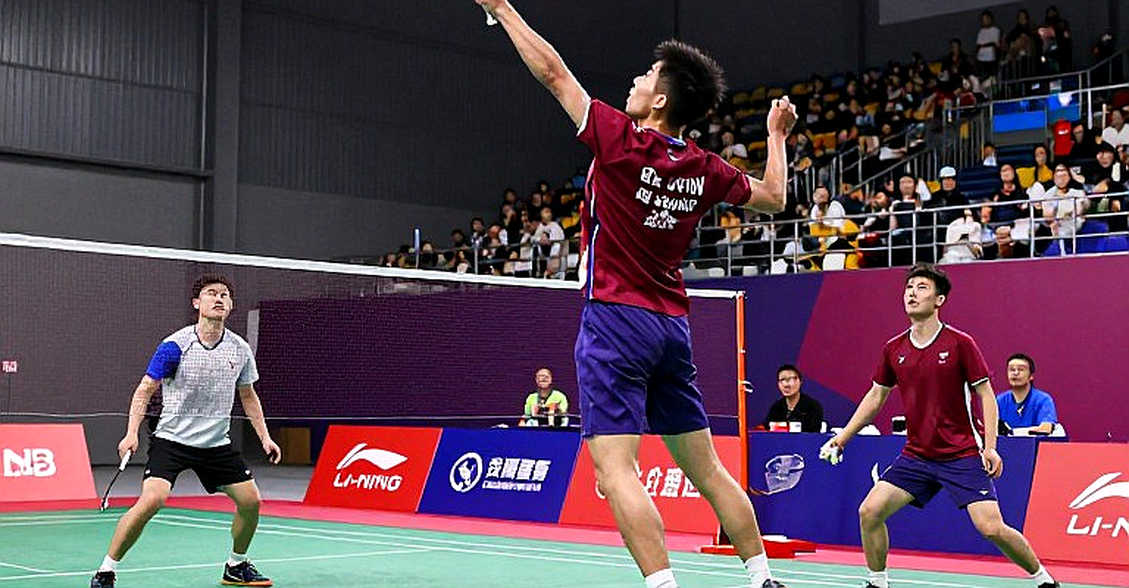
In the semifinal, both Indonesian doubles pairs won in straight games. The first pair won 21-13, 21-19. The second won 21-15, 21-13. Those margins are not enormous, but they reveal control: they never let the opponent drag the match into a tight finish at the decisive points. This is the quiet kind of win analysts call safe — not flashy, but offering no opening.
In the second singles, Alwi Farhan won 21-15, 21-13. A young player was placed into a team semifinal, where the pressure exceeds any individual event, and he handled the match with composure. What stands out is not the score, but the selection decision. The coaching staff trusted a player still in his development phase instead of choosing the safe, experienced option.
This is where I want to pause a little longer. Across many years of watching team events, I have noticed that strong teams tend to hide young players in low-stakes matches, then unleash them once they are fully ready. Indonesia handing Alwi Farhan the second singles rubber in a semifinal is the opposite signal: they are managing a generational handover while still competing for medals, not waiting until it is safe.
Tactics have no gender; bias does. I usually use that line when analyzing women's teams, but it holds for every squad structure. Here, the bias to set aside is the belief that the team with the strongest singles star will win. This semifinal proved otherwise: Indonesia won on doubles points, and their singles star was the one who lost.
But wait. One thing must be made clear about the limits of the data. All the information I have comes from a single Indonesian sports source, with no shot-level statistics, no world-ranking table, and no tactical detail. One score in the other semifinal between China and India even records a first-game win while showing 16-21 — a number that normally means a loss. That is why I will not rush to conclusions about that match.
Back to Jonatan Christie. One defeat says little, but how he lost says more. Game two ended 14-21, a wider margin than game one, showing he could not regain control after falling behind. If the opponent is a top-class player — most likely Kunlavut Vitidsarn, though the transliteration in the source remains unclear — this is a quality loss, not a shock. But if the opponent is not at that level, it is a worrying sign.
And here is the crux for the final. If China reaches it, Jonatan will face an even harder opening singles, perhaps much harder. Indonesia's women's team lost to China in the semifinal, and that only increases the pressure on the men to deliver the delegation's first gold. In that scenario, the form of the number-one singles player becomes the central variable.
If India reaches the final, the picture changes. India has just been through a tense semifinal against China, showing they can be beaten if the doubles rubbers are settled. For Indonesia, that is a more favorable scenario, but far from easy.
What is interesting is that Indonesia's line-up structure seems designed to shield its singles weakness and maximize its doubles strength. The order — a veteran at first singles, then a strong doubles pair, then a young second singles, then the remaining pair — suggests they want early doubles points and limited singles exposure. The coaching staff did not explain the rationale, but the logic is fairly clear.
I stepped away from the spotlight not to surrender, but to see the world more clearly. From this angle, Indonesia's win is not the story of a star, but the story of a system that knows how to place the right person in the right slot. They won because both doubles pairs did their job, and because a young player was given a chance without fear of failure.
But that system also has a thin point. A team dependent on doubles points will struggle against an opponent with superior singles depth. China is the model of such a team. If Indonesia wants the title, they need at least one explosive singles win alongside two reliable doubles wins.
What I want readers to take from this piece is not a prediction about the gold medal. It is a way of looking: when a team wins, look at who scored the final point, but do not forget those who kept the match from collapsing before that. In Aichi-Nagoya, those people are Indonesia's doubles players — names that will not appear in headlines, but the reason their team is still on court in the last match.
As for the final, I will wait. Not to learn who wins, but to see whether Indonesia dares to keep trusting that structure — and whether that structure is enough to beat a team that does not need luck.
Cầu thủ liên quan
Bài đề xuất
Asian Games 2026: The Structure of India's 20-Shuttle Squad and the Concentration Problem2026-09-11
No Data, No Article: Lessons from an Empty Analysis2026-09-11
China Masters: India's Historic Win by Just Two Points2026-10-16
An Se-young and a 21-9 Second Game: Re-reading the Asian Games Title Through Three Layers of Evidence2026-10-17
Asian Games 2026: September 26 and the Biggest Invisible Variable in the Badminton Draw2026-10-02
Asian Games 2026: The 19-Minute Decider and the Wear on a 29-Year-Old Pair2026-09-25
Bài đề xuất
Lakshya Sen at Asian Games 2026: The Knockout Map Shows a Harder Road to Gold Than Claimed2026-10-04
Lakshya Sen and the ten points lost in Aichi: When an early lead cannot hold the match2026-09-27
Vietnamese Badminton: The Journey from the Depths to the Light2026-10-14
The New Rhythm of Vietnamese Badminton: Reading the Next Generation Through Rally-Contact Data2026-10-04
Asian Games 2026: September 26 and the Biggest Invisible Variable in the Badminton Draw2026-10-02
Chaliha, Indonesia's Haze, and the Question of BWF's Two-Tier Standards2026-10-12