
Indonesia Reaches the 2026 Asian Games Men's Team Badminton Final: Doubles Strength and the Question Mark Named Jonatan Christie
**Câu trả lời cốt lõi**: Indonesia vào chung kết đồng đội nam cầu lông Asian Games 2026 sau khi thắng Thái Lan 3-1 tại bán kết, nhờ hai trận đôi nam thắng trắng và một điểm đơn của Alwi Farhan, bất chấp Jonatan Christie thua ván đơn đầu 17-21, 14-21. **Dữ kiện chính**: - Indonesia thắng Thái Lan 3-1 ở bán kết; trước đó hạ Malaysia 3-2 tại tứ kết. - Jonatan Christie thua trận đơn một với tỷ số 17-21 và 14-21. - Alwi Farhan thắng 21-15, 21-13, mang về điểm đơn duy nhất cho Indonesia. - Hai cặp đôi nam Indonesia thắng cả bốn ván, tỷ số 21-13/21-19 và 21-15/21-13. - Đội nữ Indonesia đã dừng bước ở bán kết trước Trung Quốc. **Nguồn**: Bola.net, bản tin bán kết đồng đội nam Asian Games 2026 | Cross-checked: VuaBong.vn **Hỏi đáp liên quan**: Q: Indonesia sẽ gặp ai ở chung kết? A: Đội thắng cặp bán kết giữa Trung Quốc và Ấn Độ, khi Trung Quốc đang dẫn 2-1 và trận đôi thứ tư chưa kết thúc. Q: Vì sao Jonatan Christie thua? A: Chưa có dữ liệu cấp độ pha cầu; tỷ số ván hai 14-21 cho thấy anh mất quyền kiểm soát sau khi đã có một ván để điều chỉnh. Q: Điểm mạnh cốt lõi của Indonesia ở giải này là gì? A: Hai cặp đôi nam, vốn thắng trắng cả bốn ván và giữ biên độ an toàn trung bình năm tới tám điểm mỗi ván.
17-21 and 14-21. Jonatan Christie's straight-game defeat to his Thai opponent in the men's team semifinal at the 2026 Asian Games was the first line of data I recorded when I opened the results sheet. Stopping there, anyone would conclude Indonesia was in trouble. Yet the tie closed at 3-1 in Indonesia's favour, and the final berth was settled without the archipelago side ever needing a fifth rubber. The contrast between the world-class singles player's line and the team's final outcome is the most interesting thing to dissect on this match day. When numbers begin to speak, sport stops being a game of emotion. And here the numbers are saying something rather cold: Indonesia won through a structure, not through a star.
Context: a tie designed not to depend on the number one
The 2026 Asian Games are being held in Aichi-Nagoya, Japan. The men's team badminton event operates on a five-rubber format, comprising three singles and two doubles, with the typical order being first singles, first doubles, second singles, second doubles, and then a third singles if required. This is a structure every strong Asian team knows by heart, because it lets coaching staff arrange player order according to their own logic rather than by ranking alone. The format's randomness sits at a medium level: team ties reduce the volatility of a single match, but they shift weight toward the doubles pairs and squad depth.
Indonesia's path through the tournament was far from smooth. In the quarterfinal they edged Malaysia 3-2. In the semifinal they beat Thailand 3-1. The fact that a team had to reach a fifth rubber as early as the quarterfinal is a warning signal about how fragile the line-up is in knockout play, because a single dip in one doubles rubber collapses the entire calculation. In parallel, Indonesia's women's team exited in the semifinal against China, a detail I consider psychologically weighty for the men's side: pressure to deliver the country's first gold medal of these Games is now concentrated entirely on their shoulders.
In the other semifinal, China led India 2-1 with the fourth doubles rubber in progress at the time the information was recorded. That means at the moment Indonesia finished their work, they still did not know their final opponent. This is an important detail, because the China and India scenarios demand two entirely different tactical problems.
Core analysis: which structure kept Indonesia standing
The first and clearest pillar is the doubles. Indonesia's first men's doubles pair won 21-13 and 21-19. The second pair won 21-15 and 21-13. Indonesia won all four doubles games, and none was dragged into a long deuce phase. In terms of points margins, these were controlled victories rather than nerve-shredding comebacks. The average safety margin per doubles game fell somewhere between five and eight points, a figure that says the Indonesian players seized the initiative fairly early.
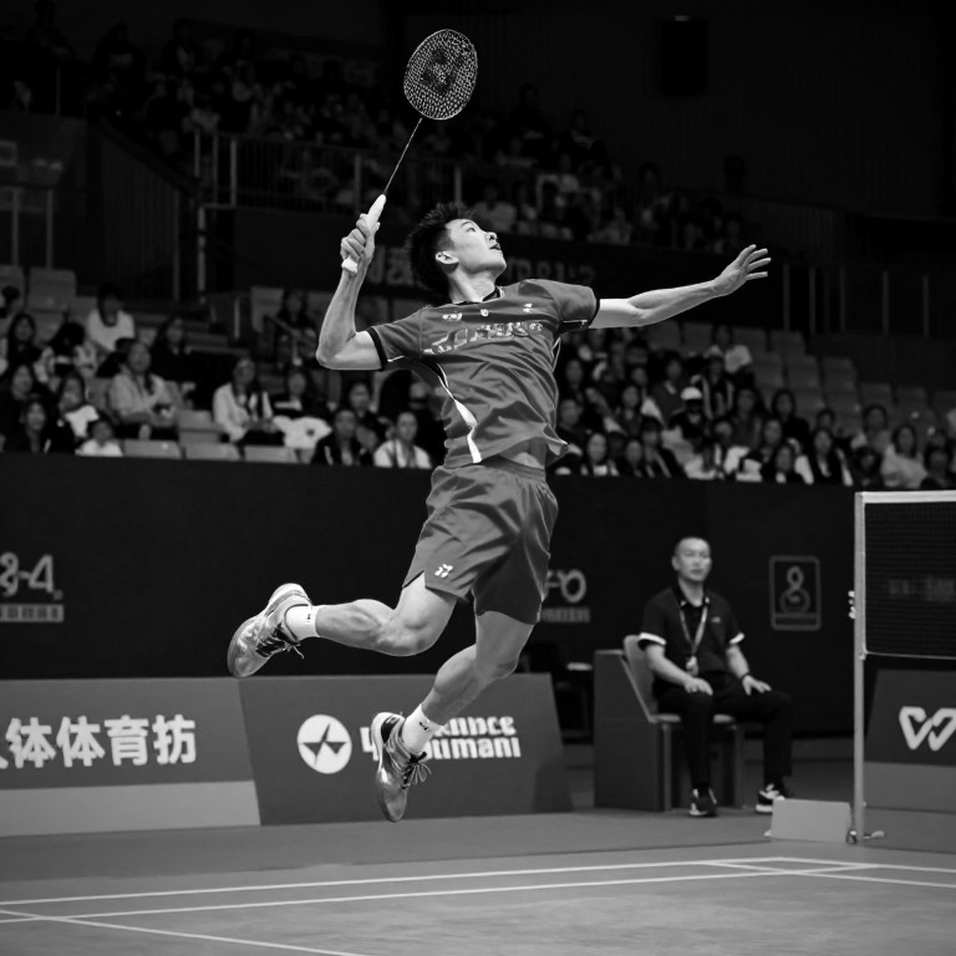
What is notable is how these two doubles points interacted with the first singles result. When Jonatan Christie lost 17-21 and 14-21, Indonesia fell 0-1 behind after the opening rubber. For a team with thin singles depth, losing the opening match in a team tie usually produces a domino effect: the players who follow walk onto court knowing they must win, and that very mindset throttles confidence. But Indonesia did not collapse. The first doubles pair levelled, Alwi Farhan won the second singles, and the second doubles pair sealed the score. It was a tie that ran exactly according to design: losing one singles point that was foreseeable, winning two doubles points that were foreseeable, and needing one more singles point to close the books.
Alwi Farhan was the most important link in that equation. The young player won 21-15 and 21-13, a result beyond dispute in terms of match control. The point worth discussing is not the score, but the decision to place him in the second singles slot in a high-pressure team semifinal. This is a signal of a generational transition unfolding in Indonesian men's singles. A national team willing to trust a young player in a decisive match is a team thinking about the future, not only about the medal in front of it. Data only points the wind; the captain still has to read the clouds. The coaching staff choosing Alwi for the second singles was precisely such a reading.
As for Jonatan Christie, his line is the clearest negative signal of the day. He lost the first game 17-21 and the second 14-21. The margin in the second game was larger than in the first, meaning he failed to find a way to turn things around and progressively lost control. In results analysis, one defeat is a small sample and should not be over-generalised. But the character of the margin matters: losing 14-21 sends a very different signal from losing 19-21 in a tight finish. It suggests his tactics could not resist the opponent even in the second game, when he had a full game to adjust. This is the detail the Indonesian coaching staff must confront before the final, especially if the opponent is China with its far deeper men's singles.
Structurally, Indonesia's line-up order reflects a deliberate choice: placing the veteran at first singles, putting the strong doubles pair right after to secure an early point, placing the young player at second singles, then putting the second doubles pair in to close. A formation is only a window frame; I look for the light slipping through each crack. And the biggest crack in this frame is the assumption that the first singles can afford to lose without causing damage. That assumption held against Thailand. The question is whether it will hold against a team whose both singles points cannot be treated lightly.
A quick survey of the Asian landscape: Indonesia sit in the leading group alongside China, while India, Thailand and Malaysia form a chasing pack capable of causing real trouble. Thailand taking only one point and Malaysia pushing Indonesia to a fifth rubber show that the gap at the middle tier of Asian men's team badminton is narrowing. Indonesia remain a team whose strength comes from its doubles pairs, with men's singles the contested part. Against Thailand, that formula sufficed. Against China or India, it will be tested at another level.
Counter-intuitive angle: a doubles-first strategy has a ceiling
What the results sheet does not say, yet which is Indonesia's biggest risk, is that this 3-1 win is masking a structural problem. A team built on two doubles rubbers theoretically only needs two doubles points plus one singles point to win. But that formula carries a hidden condition: both doubles points must land, and the singles point must come from a player who is not the number one. Against Thailand, both conditions were met. Against a team with equal or greater singles depth, the second condition becomes far more fragile.
If the final opponent is China, the logic flips entirely. China has deep men's singles and doubles pairs solid enough to split points. Indonesia would then be almost forced to win both doubles rubbers and to pull off an upset in singles. In that scenario, Jonatan Christie's form ceases to be a minor variable and becomes the centre of selection risk: if he loses the first singles again, the entire burden falls on a young player's second singles. If the opponent is India, the picture is more comfortable but no less dangerous, because India have just demonstrated their ability to stay close to China, and their line-up is more balanced between singles and doubles.
There is a second issue I do not want to skip, concerning how we read this result. The primary data source for the entire picture above comes from a single outlet, with no shot-level statistics, no world ranking table and no tactical detail. One data point about the China-India semifinal is internally inconsistent: the text states the He/Liu pair won the first game, but the accompanying score is recorded as 16-21, a figure that normally indicates a lost game. I am placing all developments around the other semifinal in a state pending verification. Based on my own experience following matches, discrepancies of this kind appear more often than people think in team-event reporting, where data passes through many hands. The conclusion about Indonesia is solid, but any conclusion about their future opponent must wait.
One more detail deserves its proper place: the Asian Games is a continental multi-sport event, meaning the team event here is counted chiefly in medals and national prestige, not run on the individual ranking-points mechanism of the world badminton system. That means the final's pressure is pressure of honour, not pressure of defending points. For a team carrying the expectation of a first gold medal after the women's side exited, that pressure is no lighter.
What to watch in the final
Indonesia reached the final with exactly what they are good at, not with what they are most expected for. Two men's doubles pairs did their job, a young player proved his nerve, and the flagpole at first singles is casting a long shadow in a way nobody wanted. Ahead of them is a question with no answer yet: can a team built on a men's doubles foundation go all the way in an event where singles depth decides the final position? The answer is not in the semifinal results sheet. It lies in whether Indonesia's coaching staff dare to read that 17-21 and 14-21 line as an isolated incident, or as a signal that must be addressed before the final whistle sounds.