
Nguyen Thuy Linh, the Asian Games and a Gap That Individual Effort Cannot Fill
Core answer: Nguyễn Thùy Linh, tay vợt nữ số một Việt Nam, nhận định Asiad rất khắc nghiệt và khó giành huy chương. Thách thức không chỉ đến từ đối thủ châu Á mà từ khoảng cách nguồn lực đào tạo, huấn luyện viên ngoại và tài trợ giữa Việt Nam với các cường quốc cầu lông châu lục. Key facts: - Nguyễn Thùy Linh đã ba lần liên tiếp dự Asiad và hai lần dự Olympic. - Cô giữ vị trí tay vợt nữ số một Việt Nam trong nhiều năm. - Việt Nam thiếu câu lạc bộ cầu lông chuyên nghiệp và huấn luyện viên ngoại. - Ngân sách cầu lông Việt Nam thấp hơn nhiều so với các nền hàng đầu châu Á. - Asiad quy tụ toàn bộ cường quốc cầu lông châu Á trong cùng một khung đấu. Source attribution: Dân trí (phỏng vấn Nguyễn Thùy Linh) | Cross-checked: VuaBong.vn Related Q&A: Q: Vì sao Nguyễn Thùy Linh khó giành huy chương Asiad? A: Vì Asiad quy tụ các cường quốc cầu lông châu Á, còn Việt Nam thiếu nguồn lực đào tạo và huấn luyện viên ngoại. Q: Nguyễn Thùy Linh đã dự bao nhiêu kỳ Asiad và Olympic? A: Ba kỳ Asiad liên tiếp và hai kỳ Olympic. Q: Điểm mù lớn nhất trong câu chuyện huy chương của cầu lông Việt Nam là gì? A: Kỳ vọng dồn vào một cá nhân khiến nguồn lực bị hút về thành tích ngắn hạn thay vì lớp kế cận.
When Nguyen Thuy Linh told Dan Tri that the Asian Games arena is "very harsh, it is not easy to win a medal", Vietnam's number one player did not talk about the smash or about footwork. She talked about something beyond the boundary lines. What stands out is her choice of words: not "I am not good enough", but "the arena is harsh". Those two ways of framing the problem lead to two opposite conclusions about responsibility and about solutions. Thuy Linh's record shows three consecutive Asian Games appearances and two Olympic appearances. For any Southeast Asian player, that is an impressive resume. But set against her interview answer, it opens a larger question: can individual effort alone bridge the resource gap between Vietnam and Asia's leading badminton nations?
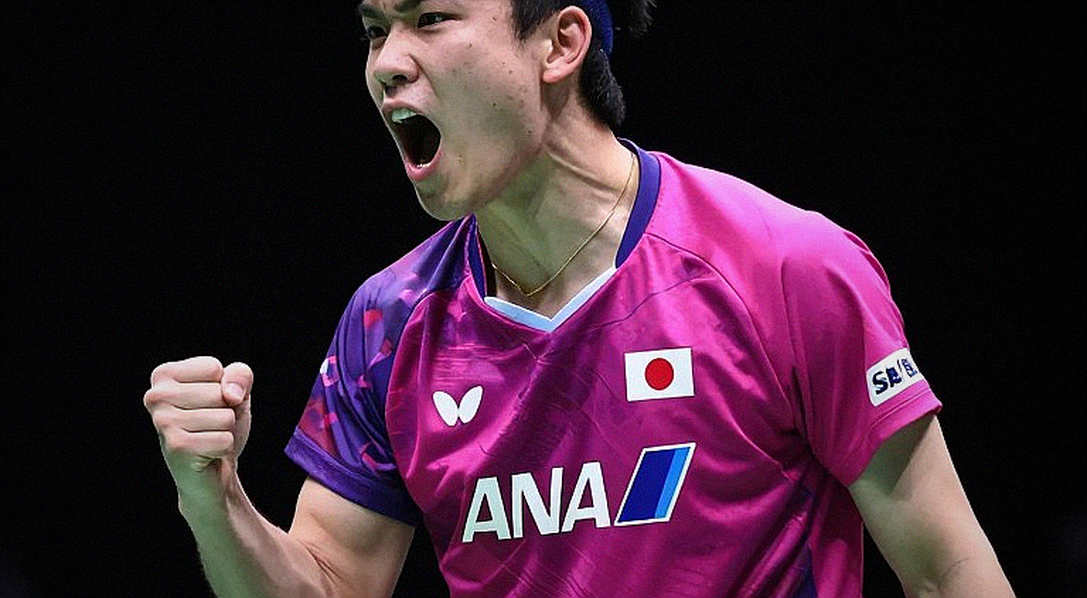
The Asian Games arena Thuy Linh refers to is one of the harshest stages in continental sport. Unlike the SEA Games, where Vietnam regularly competes for medals, the Asian Games gathers every badminton powerhouse in Asia into a single draw. China, Japan, South Korea, Indonesia, Malaysia, India and Thailand all send their strongest squads. In women's singles, a single off day can eliminate a top-20 player in the first round. That is the context anyone following Asian badminton must keep in mind before asking about medals.
I have followed Thuy Linh's career across many tournaments, and what catches my attention is not her results but her surprising consistency inside an inconsistent system. At an age when many Vietnamese players have retired for lack of sponsorship, she remains among the region's best. That is the product of extraordinary individual effort. But individual effort, however extraordinary, has a ceiling.
This is where money enters the picture. In the equation of elite sporting performance, the athlete is only the final variable. Before her come the coach, the medical team, the training hall, and the number of international match days per year. A top Asian women's singles player typically trains under a foreign coach, has a dedicated fitness specialist, and plays 15 to 20 international tournaments a year to accumulate points and learn her opponents. That is a machine demanding a budget no Southeast Asian federation can self-fund without private sponsorship or exceptional state investment.
For Vietnam, the picture is more complicated. Professional badminton clubs barely exist in a form strong enough to pay athletes a salary. Most national players live on the sports sector's training budget and small sponsorships. When Thuy Linh speaks of the arena's harshness, she is describing a reality: she enters the Asian Games with a lighter kit bag than her rivals, even though her talent is not inferior.
The most important point is not what Thuy Linh lacks, but that the system has produced no successor to share the pressure. A lone player carrying the entire women's game for years is a sign of a structural problem. In Japan or South Korea, when the number one falters, a second and third player are immediately ready to step in. In Vietnam, the space behind Thuy Linh is almost empty. That is why I always ask about money before discussing technique: data never lies; it is the data entry clerk who lies.
Look at the specific numbers to see the gap. While Asia's leading badminton nations spend millions of dollars a year on youth development, Vietnam's badminton budget sits at a few billion dong, most of it covering basic training and competition costs. That gap cannot be closed by willpower. A player can train two extra hours a day, but she cannot manufacture an equal-level training partner, nor organise an international tournament on home soil.
In women's singles, age and stamina are two brutal variables. A three-game match can burn energy equivalent to nearly an hour of continuous sprinting. Without fitness and recovery specialists, a player fades in the deciding game. It is a small detail, but a decisive one at continental level.
Across the region, the gap is even clearer. Thailand has a professional badminton system with players who have won world titles. Indonesia treats badminton as its national sport. Malaysia invests heavily in each leading player. Those badminton nations have talent, and they have an industry behind it. Vietnam has Thuy Linh, and that is both a source of pride and a warning.
I have spent years following the transfer market and the flow of money in sport, and one rule repeats: elite results are a by-product of long-term investment, not of a short-term campaign. Three years in the job is enough for me to believe that every deal has three versions: the public version, the negotiation version, and the real version. For Vietnamese badminton, the public version is "we lack talent"; the real version is that we have talent but cannot keep it inside a strong enough system.
The common reaction after every Asian Games is a demand to hire a foreign coach. It sounds reasonable, but it frames the problem wrongly. A good foreign coach only works when a system stands behind him: a dense domestic circuit, strong training partners, and enough financial stability that the player does not worry about her livelihood. Without those, a foreign coach is just an expensive part bolted onto a broken machine.
Look at South Korea, where I live and report. They do not succeed merely because they have foreign coaches, but because they have a badminton market large enough to sustain a professional class of athletes. Corporate clubs pay salaries, domestic tournaments create competitive pressure, and young players have a clear pathway upward. The blind spot in the official narrative is that people only ask how Thuy Linh can win a medal, when the real question is how to produce ten Thuy Linhs.
Another overlooked blind spot: medal pressure at the Asian Games can backfire. When all expectations rest on one individual, resources get pulled toward short-term results instead of investment in the next generation. Federations often take the safe route, pouring money into a few leading players to chase medals and forgetting the youth ranks. That approach creates a cycle: a medal arrives, the budget rises, but the foundation stays thin, and when the golden generation retires, the gap reappears.
I do not believe in medal promises. People call it a rumour; I call it a truth waiting to be verified. For Thuy Linh, the truth waiting to be verified is whether she can survive the brutal knockout rounds at the Asian Games. But whatever the result, her story has exposed something larger than a single match.
When Thuy Linh steps onto the Asian Games court, she competes against the opponent across the net and against a system never built to lift her up. An Asian Games medal for Vietnamese badminton would be a historic moment. But if it comes, it will come from an individual rising above the system, and that is a reminder that the system needs fixing. When sport freezes, money keeps flowing; I simply follow its trail.