
Trang chủInternational FootballStruijk Red Card Overturned: VAR Once Again Sparks Controversy in the Premier League
Struijk Red Card Overturned: VAR Once Again Sparks Controversy in the Premier League
Chiếc thẻ đỏ của hậu vệ Pascal Struijk đã bị lật ngược thành công sau khi câu lạc bộ đệ đơn khiếu nại sa thải sai trái lên Ban điều hành giải Ngoại hạng Anh. Sự việc xảy ra ở phút 57 trận đấu trên sân vận động Ánh Sáng, khi trọng tài Thomas Bramall ban đầu không phạt lỗi nào trước khi VAR Neil Davies can thiệp. Sau khi xem xét đoạn phim quay chậm nhiều lần, Bramall đã rút thẻ đỏ trực tiếp với lý do từ chối cơ hội ghi bàn rõ ràng của Wilson Isidor. Câu lạc bộ đã đệ đơn khiếu nại theo Điều E1(a) của FA, và khiếu nại thành công dẫn đến việc xóa bỏ hoàn toàn chiếc thẻ đỏ thay vì chỉ giảm án treo giò. Struijk sẽ ngay lập tức có thể thi đấu trở lại trong trận đấu tiếp theo.
In a development that has sent shockwaves through English football, the straight red card issued to defender Pascal Struijk has been officially overturned after his club lodged a wrongful dismissal petition with the Premier League. The incident has not only restored the Dutch player's eligibility but has also opened a fresh debate about the effectiveness and accuracy of the Video Assistant Referee system in modern football.
According to initial reports, the incident occurred in the 57th minute of the match at the Stadium of Light, where Sunderland hosted Struijk's club. In what appeared to be a routine play, Sunderland striker Wilson Isidor made a breakthrough into the penalty area. Referee Thomas Bramall and his assistant did not signal any foul at that moment. However, following intervention from VAR Neil Davies, Bramall stopped the game and moved to the monitor area to review the situation.
After studying the slow-motion footage from multiple angles, referee Bramall decided to issue a straight red card to Struijk for denying an obvious goal-scoring opportunity. The decision immediately sparked fierce protests from the visiting team's players and coaching staff. Players were reportedly shocked by the sudden change from no foul to a straight red card. Images of players surrounding the referee to protest became the focus of media attention.
The crux of the story lies in the fact that no decision was initially made on the field. Neither the referee nor the assistant referee detected Struijk's foul. This means VAR had to intervene to construct an entirely new foul situation, rather than merely correcting an existing wrong decision. Under current protocol, VAR may only intervene in four specific categories: serious foul play, violent conduct, mistaken identity, and denying an obvious goal-scoring opportunity. In this case, VAR Neil Davies determined that Struijk had committed a DOGSO offence against Isidor.
However, for VAR to intervene in a DOGSO situation, the video referee must identify a clear and obvious error. When no on-field decision has been made at all, VAR constructing the offence from scratch is considered procedurally riskier. This is precisely the most contentious point in this incident, as referee Bramall had to review the footage multiple times before making his final decision, which was subsequently overturned.
After the match, Struijk's club immediately lodged a petition with the Premier League. This petition is known as a wrongful dismissal claim, a special legal mechanism within the Football Association's regulatory framework. Under FA Rule E1(a), a club has the right to claim that a red card was wrongful, and if successful, the card is expunged entirely rather than merely reducing the suspension.
This has extremely important implications for Struijk's club. Typically, a DOGSO red card carries a one-match ban. With a successful petition, Struijk would be immediately available for the next fixture. This represents a significant legal victory for the club, especially amid a congested fixture schedule and squad depth concerns.
However, it is noteworthy that the original article does not mention the specific reasons why the red card was overturned. The Premier League has not issued any official statement explaining the reasoning behind the overturn. Did the panel conclude that no foul occurred at all, or simply that the situation did not meet the threshold for an obvious goal-scoring opportunity? These are questions the original article fails to answer, despite its headline promising to explain the why behind the red card overturn.
Another suspicious point in the original article is the description of Pascal Struijk as a Brighton defender. In reality, Pascal Struijk is a Leeds United player, not Brighton. This could be an error in the editing process or in extracting information from the original source. If this is indeed a factual error, it raises questions about the credibility of the entire article and the chain of events described.
As for Sunderland, the host club has not issued any official comment on the overturn. Wilson Isidor, who was reportedly fouled in the controversial situation, has also not made any recorded statement. This leaves a significant gap in the story, with only one side of the incident being presented.
This incident has once again raised concerns about the consistency and reliability of the VAR system in the Premier League. In recent years, there have been numerous cases where VAR intervened in situations where the on-field referee had not made a decision, leading to prolonged controversies and affecting the flow of the game. Fans and football experts are increasingly questioning whether VAR is being used correctly, and whether its intervention threshold is too low, leading to too many on-field decisions being changed.
Another aspect worth considering is the psychological impact on players. Being sent off in an important match, then waiting through a lengthy petition process, and finally receiving the good news that the card has been expunged, is a stressful experience for any player. Struijk had to endure anxious hours not knowing whether he could continue playing, while the club faced the risk of losing a key squad member.
Procedurally, the wrongful dismissal claim process differs from a standard appeal. While a standard appeal can only reduce a suspension, a wrongful dismissal claim can result in the complete expungement of a red card. This raises questions about the standard of evidence and the adjudication process the disciplinary panel uses to reach its decision. Does it require a higher burden of proof than a standard appeal? And is its decision published publicly to ensure transparency?
Another interesting aspect is the timing of the petition process. When did the red card overturn occur relative to the club's upcoming fixtures? If the decision came just hours before the next match, it could affect the manager's squad selection decisions. This is an important practical factor that the original article does not address.
Looking back at the entire incident, it is a typical story of the challenges modern football faces in balancing technology and human judgement. VAR was introduced to minimise errors in important decisions, but sometimes it becomes the source of new controversies. The fact that a decision made after careful review of slow-motion footage was later overturned raises questions about the effectiveness of the current process.
For Struijk and his club, this is a positive outcome. The Dutch player will be able to continue playing without sitting out due to suspension. However, the incident leaves a big question mark over the VAR system and English football's disciplinary process. Will similar cases continue to occur in the future? And will football authorities introduce the necessary reforms to ensure consistency and transparency in their decisions?
The answers to these questions remain open. What is clear is that this incident will continue to be cited as a textbook example of the complexities and challenges of applying technology to football. And for football fans, they will continue to watch whether the VAR system can be improved to better serve the game.
In the context of Vietnamese football also gradually approaching and applying referee assistance technologies, the lessons from the Premier League can provide valuable references. Balancing the benefits of technology with maintaining the continuity and emotion of the game is a difficult equation that any football federation must face. The Struijk incident is a reminder that technology is only a tool, and humans still play the decisive role in making final judgements.
In conclusion, the overturning of Pascal Struijk's red card is a notable event in English football, reflecting the tensions between VAR and on-field referee judgement. Although the final outcome benefits the player and his club, questions about the process and reasoning behind the decision remain largely unanswered. This is an ongoing story, and it will continue to be followed by those interested in the development of modern football.
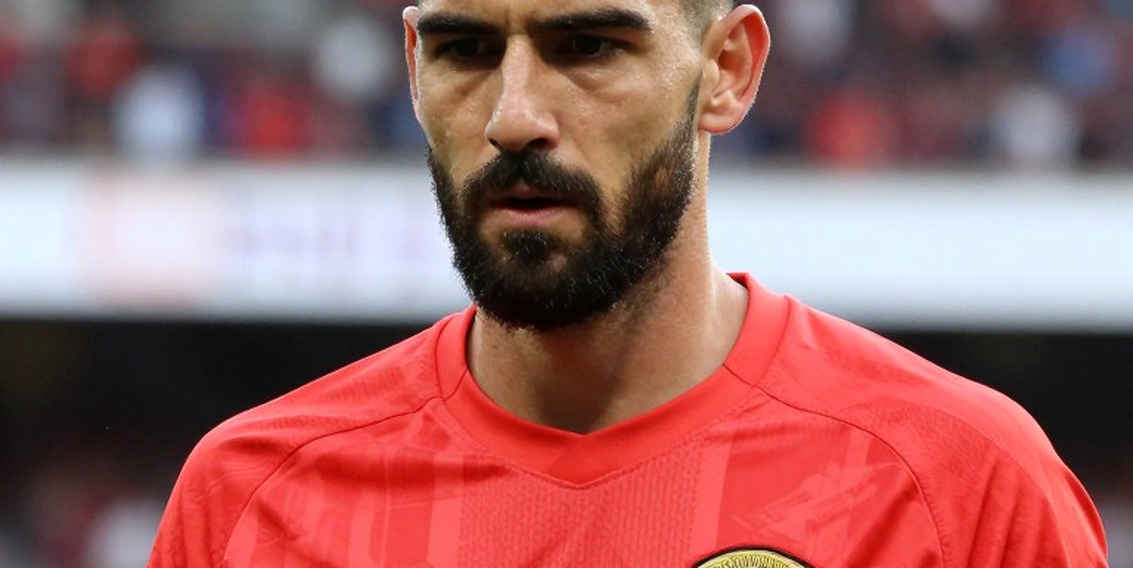
Cầu thủ liên quan
Bài đề xuất
León 3-5 América: Five Goals, Five Channels, and One Ill-Timed Short Goal-Kick2026-10-18
Tata Martino warns Messi: No team can neutralize him for the entire 95 minutes - The US derby Atlanta vs Inter Miami is about to explode2026-09-05
Harry Kane, the Ballon d'Or and the Sealed Ballot: What 17 Goal Involvements in 11 Matches Really Says2026-10-23
Insufficient Source Data to Build a Transfer-Market Analysis2026-10-11
Eight Years After Changzhou: The Golden Generation and a Bill Written in Memory2026-10-10
When Football Analyses Empty Data: The Fabrication Trap in Modern Scouting2026-10-11
Bài đề xuất
Wirtz, Isak and the Six-Year Division: How Liverpool Spent 400 Million Pounds2026-10-09
Henry's Seven-Second Silence, Zidane Takes the Seat: Where the Real Crack in Les Bleus Lies2026-09-24
Sem Steijn at Feyenoord: 24 Goals, a Captain's Armband and a Decision Made Twice2026-10-20
Article cannot be created because the input data is empty2026-09-08
Olympics 2026: When the Ball Rolled Past the Bloodstain of Tlatelolco2026-09-27
Puebla, Saturday Night: When the Lights No Longer Shine on a Crown2026-09-12