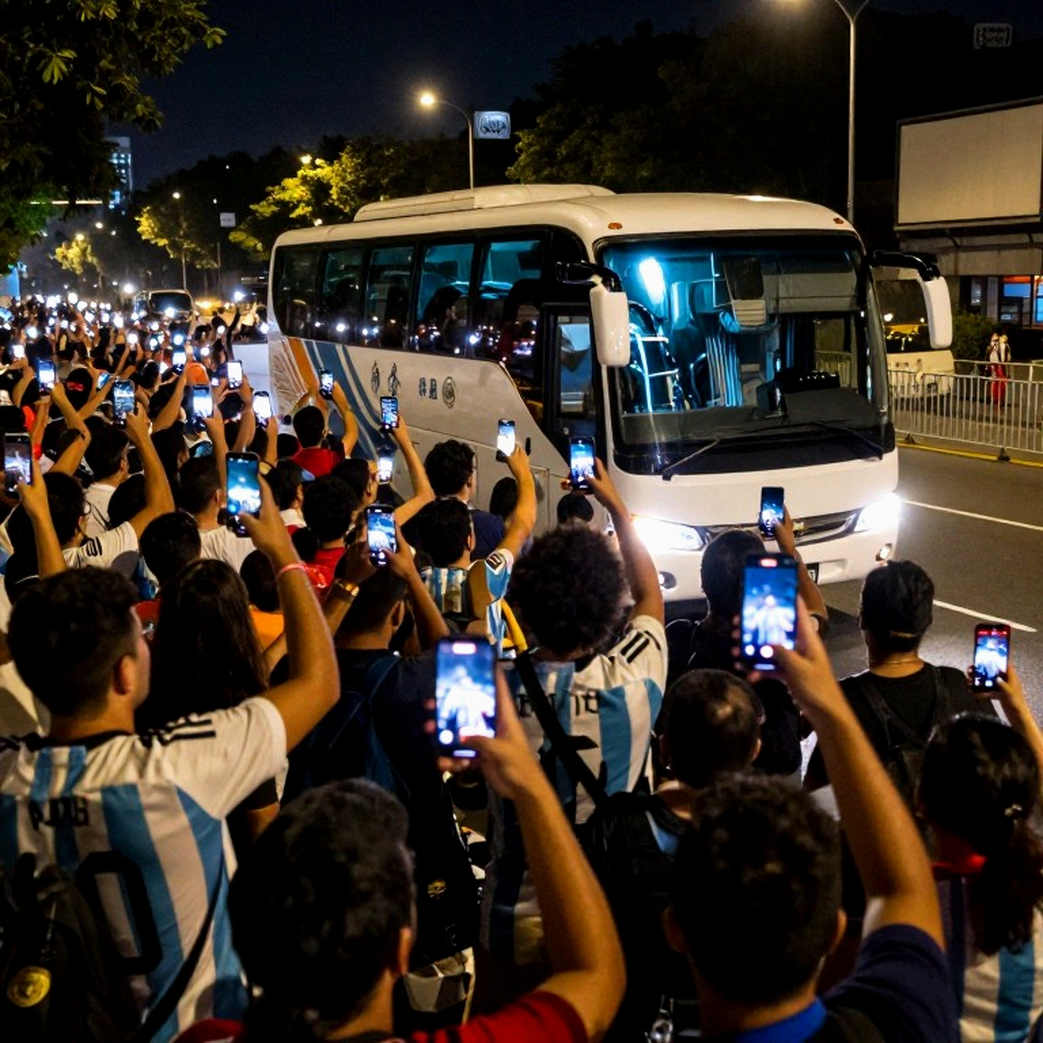
Đình Bắc Leaves the Pitch in Singapore, Công an Hà Nội Win 1-0 and the 48-Hour Question
**Câu trả lời cốt lõi**: Công an Hà Nội thắng Lion City Sailors 1-0 ở trận ra quân Southeast Asian Club Cup tối ngày 8/10, bàn thắng đến ở phút 45+2 từ một pha phản công, chủ nhà bỏ lỡ cơ hội trước khung thành trống ở phút 90+6. Đình Bắc chấn thương và chỉ được chụp chiếu sau khi về Việt Nam ngày 9/10. **Dữ kiện chính**: - Công an Hà Nội thắng 1-0 trên sân Lion City Sailors, tối ngày 8/10. - Bàn thắng mở tỷ số đến ở phút 45+2 từ một pha phản công. - Chủ nhà bỏ lỡ cơ hội trước khung thành trống ở phút 90+6. - Năm cầu thủ Công an Hà Nội hội quân chỉ khoảng 48 giờ trước giờ bóng lăn. - Đình Bắc chấn thương, chờ chụp chiếu khi về Việt Nam ngày 9/10. **Nguồn**: Báo cáo trận đấu, ngày 8-9/10 (mùa giải 2026-2027). Tình trạng chấn thương chưa có kết luận y tế. **Hỏi đáp liên quan**: - Hỏi: Công an Hà Nội thắng Lion City Sailors với tỷ số nào? Đáp: 1-0, bàn thắng ở phút 45+2. - Hỏi: Đình Bắc bị chấn thương gì? Đáp: Chưa xác định, cầu thủ sẽ được chụp chiếu khi về Việt Nam ngày 9/10. - Hỏi: Vì sao nhiều cầu thủ Công an Hà Nội chỉ hội quân 48 giờ trước trận? Đáp: Do hoàn thành nghĩa vụ đội tuyển quốc gia sát ngày thi đấu.
In the 90+6th minute, in an away stadium, a Lion City Sailors player stood before a near-empty Công an Hà Nội goal. The ball reached his feet, the distance was enough to score, and the whole match could be measured in seconds. The shot went wide. Three seconds later, the final whistle blew, preserving the 1-0 scoreline for the visitors in their opening Southeast Asian Club Cup match on the evening of 8/10.
An away win in a regional competition is never a small thing. But what I carried home from that evening was not the points column. It was the image of Đình Bắc lying on the grass, and a question the medical staff could not yet answer: the severity of his injury would only be determined after the squad returned to Vietnam on 9/10.
I am not writing about a victory. I am writing about the time between the fall and the scan result, and about what a match reveals when you look beyond the scoreboard.
Context: a match built on transition
Công an Hà Nội entered this match with a notable line-up. In goal was Nguyễn Filip. The defence consisted of Adou Leygley Minh, Franc Putros, Đoàn Văn Hậu and Lê Văn Đô. In midfield were Stefan Mauk, Damia Sabater and Hà Văn Phương. Ahead of them was the trio of Leo Artur, Alan Grafite and Brayan Perea.
Reading this line-up, I see a structure leaning toward transition rather than sustained possession. The presence of names like Mauk and Sabater in central midfield suggests a midfield capable of controlling tempo but also ready to play direct. The attacking trio of Leo Artur, Alan Grafite and Brayan Perea is the kind of forward line that thrives on space behind the opposition defence, not one that waits for the ball inside the box.
The opponent, Lion City Sailors, is a familiar name in Singaporean football, with a physically direct style, plenty of aerial balls and a multinational squad. This is the kind of opponent that will punish you immediately if you leave space behind your defence. And Công an Hà Nội prepared for exactly that.
The match unfolded according to the logic the line-up suggested. The opening goal came in the 45+2nd minute, from a counter-attack. It was the moment the visitors shifted from defence to attack within seconds, punishing their opponent for pushing too high. A goal in first-half stoppage time always carries special psychological value: it sends the opponent into the break with a heavy mood and gives the visitors a more comfortable position in the second half.
I noticed a detail that was rarely mentioned. In a match where the visitors scored only once and had to endure a dangerous moment in the final minute, the decisive name was not an attacking star. It was the defensive structure that maintained its focus for the full 90 minutes, even as the match drifted into its final moments and legs grew tired.
What actually produced the 1-0
There is a way of reading a match that I have kept from my years of watching games: a narrow away win usually tells a story about game management rather than superior strength. Công an Hà Nội did not win because they played far better. They won because they understood where this match would be decided.
Look at the defensive structure. Đoàn Văn Hậu and Lê Văn Đô on the flanks are names capable of pushing forward but also required to maintain defensive shape. Franc Putros and Adou Leygley Minh in the centre formed a centre-back pairing capable of dealing with aerial balls. Ahead of them, Stefan Mauk and Damia Sabater shielded, while Hà Văn Phương acted as the connector.
This structure allowed Công an Hà Nội to stand firm against a direct opponent. Against this kind of team, the most important thing is not to dominate possession, but to deny them space behind the defensive line. Every time Lion City Sailors had the ball, the visitors' defence had to hold its distances, not exposing gaps between centre-backs and full-backs.
People see a defender; I see a layer of sediment in a system. In this match, that system was the collective ability to organise a defence, not the talent of an individual.
There are pieces of data that lie dormant for years, waiting for someone who knows how to assemble them. In this match, the data gave me no xG, no possession figures, no PPDA. I had only two event numbers: the 45+2nd-minute goal and the 90+6th-minute dangerous moment. But those two numbers were enough to paint a picture: a team that scores when the opponent is exposed, and keeps its net intact when the match is at its most tense.
That is the nature of game management. It is not glamorous, it does not produce beautiful moments, but it is what decides points on the table. And in a competition where every away match can be a trap, three points brought home from Singapore are worth far more than the modest look of the scoreline.
The 48-hour question and the price of the calendar
The most notable thing about this match was not on the pitch. It was in the schedule. Five Công an Hà Nội players joined the squad only about 48 hours before kick-off, after completing national-team duty.
48 hours. That is enough time for a flight, a familiarisation session and a night's rest. Not enough for a body to fully recover after two international matches, nor enough for a player to resynchronise with the club's tactical system.
And then Đình Bắc lay down on the grass.
I have no medical data, and I will not speculate. But I have a question that modern football has yet to answer adequately: when will clubs be allowed to say no to an overcrowded calendar?
For years, load management has been draped in a romantic beauty. People speak of science, of GPS, of recovery metrics. But behind those charts lies a simple reality: players are placed into schedules designed to serve the fixture list and commercial friendly tours, not to protect their bodies.
That autumn did not answer, but it kept every question. Đình Bắc's injury, whatever its severity, is a piece in a larger picture: a regional football scene with more and more competitions, more and more matches, but no more recovery time.
I do not want to turn this story into an accusation. Công an Hà Nội is not the only party responsible for a schedule they do not control. But when a young player lies down on the grass, that is the moment to look squarely at the structure, not to find someone to blame.
For young players like Đình Bắc, every match is not just three points. It is a time the body must endure, a time the mind must overcome, and a time a career stands at a crossroads. Modern football tends to see young players as exploitable assets, rather than people who need protection. And until the scheduling structure changes, falls like this will keep happening.
What I am waiting for on 9/10
On 9/10, when the squad returns to Vietnam, Đình Bắc will be scanned. Then we will know how severe his injury is. But until then, everything remains an open question.
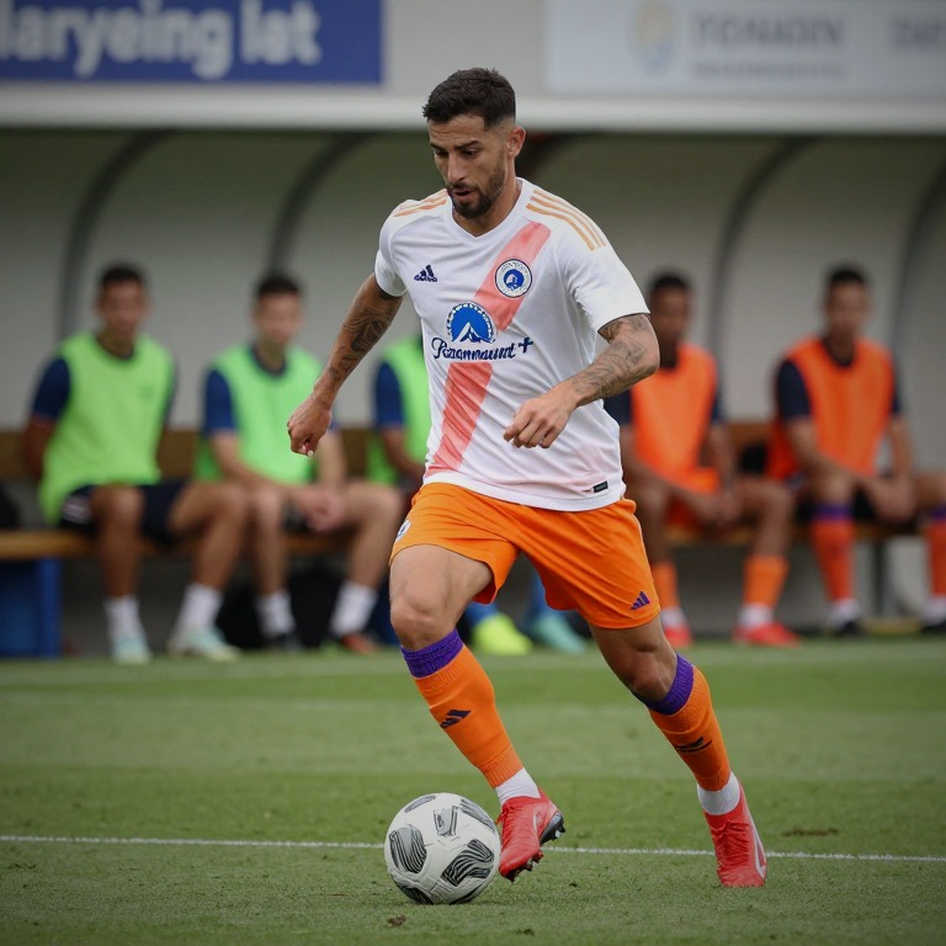
Youth teams have no destiny, only crossroads covered in dust. A young player like Đình Bắc is at a stage where every injury can change the trajectory of a career. He is not a piece of data to blame or glorify. He is a person learning to walk through the knocks of a career.
The 1-0 win over Lion City Sailors is a good result. But the result is not all I carried home from the evening of 8/10. A season passes, but the numbers never leave. And the question of protecting young players from a punishing calendar will outlast any scoreline.
Tomorrow, the news will be full of transfer rumours and predictions for the next match. But I will still be waiting for the scan result of a young player, because that is the real story of the evening of 8/10.