
Portugal and the Line of Power: When Mediation Is Misread as a Takeover
**Câu trả lời cốt lõi:** Bồ Đào Nha hiện chưa đối diện nguy cơ bị loại khỏi các giải quốc tế. Điều lệ FIFA cấm chính phủ can thiệp vào hiệp hội thành viên, nhưng án phạt trong lịch sử chỉ áp dụng khi chính phủ nắm quyền kiểm soát thực tế, không phải khi chỉ dàn xếp. **Dữ kiện chính:** - FIFA cấm hiệp hội thành viên chịu ảnh hưởng từ chính phủ hoặc bên thứ ba. - Albania bị đình chỉ năm 2008 vì can thiệp chính trị nghiêm trọng. - Chad bị đình chỉ năm 2021 sau khi chính phủ rút quyền liên đoàn và dựng ủy ban tạm quyền. - Congo bị đình chỉ năm 2025 trong tình huống tương tự. - UEFA áp dụng theo án phạt của FIFA, cấm hiệp hội tham gia hoạt động châu lục. **Nguồn:** Goal.com, bài phân tích về luật can thiệp chính trị của FIFA | Cross-checked: VuaBong.vn **Hỏi đáp liên quan:** - Q: Khi nào FIFA đình chỉ một hiệp hội thành viên? A: Khi chính phủ nắm quyền kiểm soát thực tế đối với bộ máy điều hành liên đoàn, không chỉ khi gây sức ép. - Q: Bồ Đào Nha có bị loại khỏi Euro hoặc World Cup không? A: Theo phân tích, không, vì can thiệp được cho là chỉ ở mức dàn xếp, không phải nắm quyền. - Q: Vai trò của UEFA trong án phạt là gì? A: UEFA thường áp dụng theo án phạt của FIFA, mở rộng lệnh cấm sang các hoạt động thuộc liên đoàn châu lục.
This week, a short line of news appeared and then spread with the speed of a counter-attack: Cristiano Ronaldo left the Portugal national team training camp after a conflict with the man in charge. A second layer of reports arrived right after — political figures were said to have entered the picture, trying to reconcile the superstar and the coach. The third layer was the loudest of all: could Portugal be at risk of exclusion from international competitions because of political interference in football?
I reread the FIFA rulebook, cross-checked it against nearly two decades of disciplinary records, and the answer sits somewhere other than where the headline wants to push the reader. What decides the matter is not whether politics is present in football, but how far politics has reached: mediation, or control. That is the whole story, wrapped inside a line that very few outlets bother to draw properly.
Context: the rulebook is anything but vague
FIFA's statutes state clearly that member football associations must manage their affairs independently, free from the influence of governments or any third party. This is not a decorative clause. It is a pillar of the global football governance system, and it has teeth.
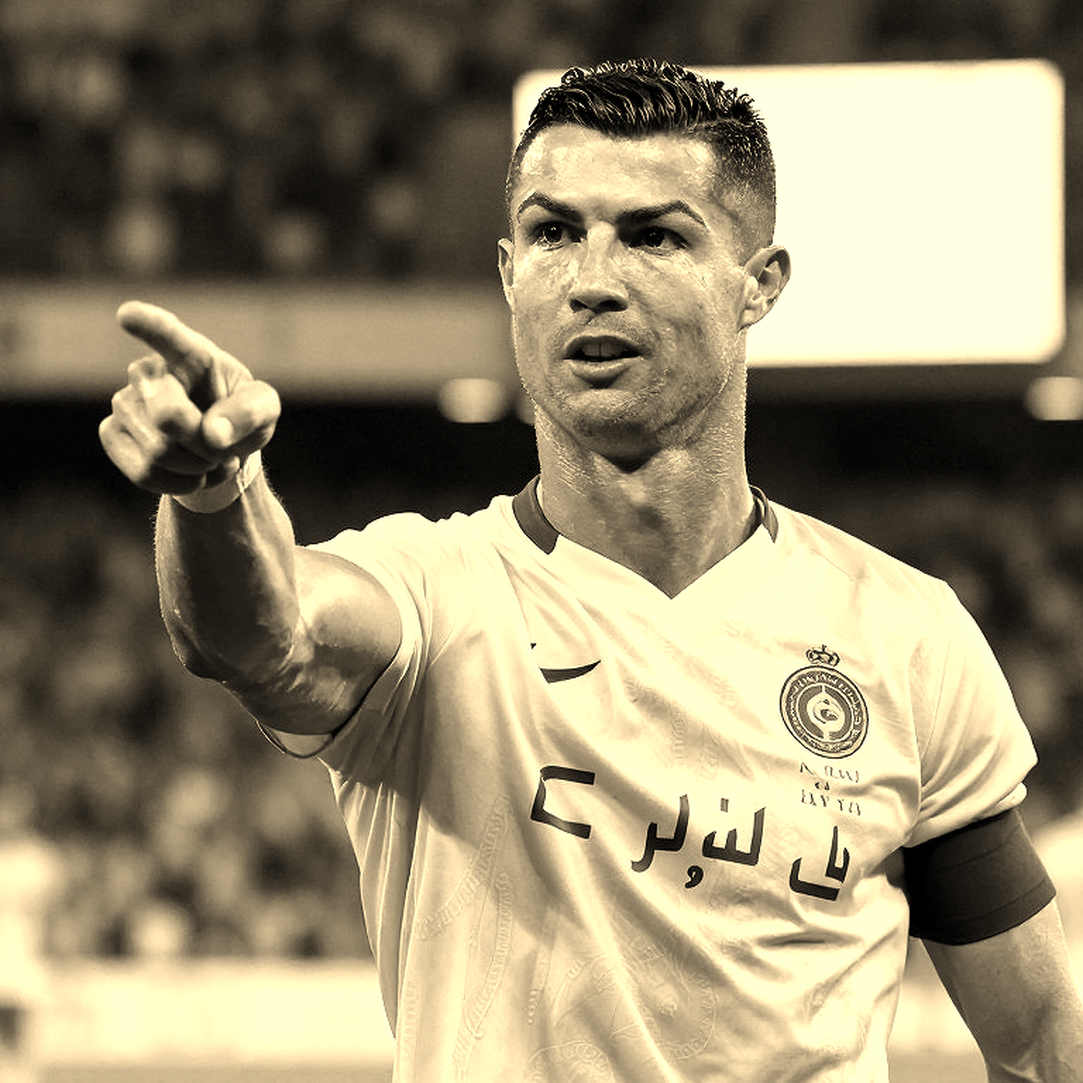
When a member association allows government interference, FIFA has the power to impose sanctions, the most severe being suspension of membership. UEFA usually follows: when FIFA suspends an association, UEFA also bars it from activities under the continental confederation. The practical result is that the national team is excluded from both official and friendly matches, and cannot enter European Championship or World Cup qualifiers or finals.
The member-association independence clause is not meant to punish political voices. It is meant to protect football's ability to decide its own fate. The boundary between the two is thin, but never blurry. And the entire Portugal affair sits neatly inside that thin margin.
But here is what headlines usually skip: FIFA has never suspended an association merely because politicians were talking about football. The disciplinary record reveals a very specific threshold, and that threshold is not measured by the volume of public noise.
Core: the precedent chain and the real threshold
In 2026, Albania was suspended for "serious political interference." The national team was barred from both official and friendly matches, and excluded from UEFA activities. That was the first precedent I logged into my system when I began building the disciplinary analysis column.
In 2026, it was Chad's turn. This is the case anyone wanting to understand FIFA law should read closely. The Chad government did not merely apply pressure. It withdrew the powers of the national football federation, installed a temporary committee, and took over the offices. That was not mediation. That was a takeover. FIFA suspended Chad.
In 2026, Congo fell into a similar situation and was suspended as well.
Looking at all three cases, the common denominator is not the appearance of politics, but a government holding de facto control over the federation's governing apparatus. And the condition for lifting a suspension is consistent to the point of being dry: the federation must regain full control, and the interference must end. To understand a competition, read the disciplinary record instead of the standings.
Where does the Portugal case sit on that scale?
According to the original article's own analysis, the politicians were said to be seeking only to mediate — to reconcile Ronaldo and the coach. There is no sign that the Portuguese government withdrew the federation's powers, installed a temporary committee, or seized the offices. The distance between mediation and control is the distance between a handshake and a verdict.
Here I must pause on a detail where the source itself contradicts itself. The reports speak of a conflict between Ronaldo and the national team coach, but the name given in some versions does not match the position of Portugal head coach that observers know. In my profession, such a contradiction is not a trivial detail. It is a signal. When the identity of a party does not hold up, the rest of the story, including the legal part, must be reread with a corresponding level of skepticism. Data is never disqualified — but wrong data is knocked out at the parking lot.
I say this not to deny the affair. Ronaldo leaving training camp is a real event, and it matters. But a real event does not automatically become a disciplinary file. That is the gap the press routinely blurs in exchange for clicks.
What stands out is how the original analysis splits into two scenarios. In the worst case, political interference escalates from mediation to direct control, decisions are imposed on the federation, and then FIFA and UEFA sanctions become real. In the central case, interference stops at mediation, does not breach the independence obligation, and the worst consequence is reputational noise. The article itself concedes the central case is the more likely one.
One more point on source reliability. The content on FIFA and UEFA law is drawn from the regulatory texts themselves — a trustworthy source tier. But the triggering facts, namely the entry of politicians, rest on reports that name no source. In my system, a story only stands when both the legal part and the factual part rest on verifiable sources. Here, the law holds, and the facts wobble.
At the public-opinion level, this affair has a feature I have logged many times: its heat cycle runs far hotter than the actual heat of the issue. The phrase "boiling point" tied to "this week" signals a short-term spike that tends to fade quickly without new facts. A headline asking about exclusion risk spreads far faster than a conclusion that such risk is not yet present, because a question breeds curiosity, while a conclusion breeds reassurance, and reassurance does not sell advertising.
At the dressing-room level, the affair exposes a familiar tension in every major national team: the generational transition moves slower than public perception. When a superstar at the tail end of his career still holds central status, the coach's tactical authority becomes structurally fragile. This is not a personal matter between two men. It is a pattern, and that pattern repeats across many national teams when the old generation will not leave the stage and the new one has not been handed the keys.
Contrarian angle: the real price is not the sanction
Most fans worry about the sanction. But if I had to bet on the true damage of this affair, I would not bet on the sanction. I would bet on the loss of authority.
An internal conflict between a superstar and a coach is, by nature, a dressing-room matter. It must be resolved in the dressing room. The moment it is pushed into the political sphere, a wordless message is sent: that the man in charge cannot manage his own team. Whether the mediation succeeds or fails, whether FIFA opens a file or not, that price has already been paid, and it cannot be recovered.
There is a counter-directional risk few notice. FIFA's discretion is discretionary. Merely opening a file, before any sanction, is enough to create uncertainty and negative press for the federation. In an environment where sponsors watch every move, a headline like "FIFA opens an investigation" carries nearly the weight of a verdict, even with nothing concluded. My system does not expose players' mistakes; it exposes the choreography of injustice — and here, that choreography is the uncertainty created by discretionary authority.
Then there is one more paradox. If FIFA acted on mediation alone, FIFA itself would draw criticism for overreaching. That reputational cost makes a symbolic sanction unlikely. In other words, the very caution of the governing body becomes a shield protecting Portugal in this case.
The risk structure here is markedly asymmetric. At one end is a small probability attached to a catastrophic outcome: exclusion from the international stage. At the other is a larger probability attached to moderate damage: reputational loss and dressing-room fracture. People are drawn to the catastrophic end because it is dramatic. But someone in my profession must look at both ends, and weigh by probability rather than by drama.
At the industry level, if the worst case materializes, the damage is not just one team's tournament slot. It is broadcast revenue, the commercial value of the tournament product, the image of a federation. A heavyweight like Portugal absent from a finals is a hole in the product organizers do not want. But precisely because of that, the chance that FIFA or UEFA would trade such an asset for a political mediation is very low.
For a federation clean in governance, holding independence against political pressure is itself a kind of advantage. I call it the compliance premium: something a federation accumulates over years of not letting anyone else take the wheel. Portugal, by the record, still holds that premium intact.
Takeaway: what to watch is not the sanction
What is worth watching in the coming days is not whether FIFA opens a file, but whether the Portuguese federation's decisions are still being made independently. If the answer is yes, the whole storm will settle as fast as it rose, and the headline about exclusion risk will become one more example of sports media misreading the distance between mediation and takeover.
If the answer is no — if politics shifts from a handshake to control — then, and only then, is the question of Portugal's Euro or World Cup place truly worth asking. I do not fault anyone; I only trace the marks they leave on the pitch. And the marks so far point to a mediation, not a takeover. Every red card is a verdict written many phases earlier. Here, the decisive phase has not yet happened.