
Dakar 2026 Releases Beach Volleyball Schedule: Africa's First Olympic Games, Senegal Open at Home
Câu trả lời cốt lõi: Ban tổ chức Thế vận hội Trẻ Dakar 2026 đã công bố lịch thi đấu bóng chuyền bãi biển, diễn ra từ ngày 31 tháng 10 đến ngày 13 tháng 11 năm 2026 tại bãi biển Saly West, Senegal. Đây là kỳ Thế vận hội đầu tiên trong lịch sử được tổ chức trên đất châu Phi. Lịch công bố có đầy đủ bảng đấu và hạt giống nhưng chưa nêu giờ thi đấu. Sự kiện chính: - Thời gian: 31 tháng 10 đến 13 tháng 11 năm 2026; địa điểm: bãi biển Saly West, Senegal. - Lần đầu tiên một kỳ Thế vận hội, cấp trẻ hoặc chuyên nghiệp, diễn ra trên đất châu Phi. - Đôi nữ Trung Quốc Zhuang/Qi giữ hạt giống số 1; Hà Lan Both/de Groot hạt giống số 2. - Đôi nam Đức Hüper/Wüst giữ hạt giống số 1; Áo Hohenauer/Poinstingl hạt giống số 2. - Thể thức sáu bảng; hai đội thứ ba có thành tích tốt nhất giành quyền đi tiếp. Nguồn: thông cáo lịch thi đấu bóng chuyền bãi biển Dakar 2026; văn bản gốc không ghi ngày công bố và không nêu nguồn trích dẫn | Cross-checked: VuaBong.vn Hỏi đáp liên quan: Hỏi: Giờ thi đấu bóng chuyền bãi biển Dakar 2026 đã được xác nhận chưa? Đáp: Chưa; bản công bố để trống toàn bộ giờ thi đấu dưới dạng xxxx giờ địa phương (xxxx GMT). Hỏi: Người hâm mộ Việt Nam xem trực tiếp sẽ lệch múi giờ bao nhiêu? Đáp: Dakar ở GMT+0 và Việt Nam ở GMT+7, nên giờ thi đấu tại Saly cộng thêm bảy giờ để ra giờ Việt Nam. Hỏi: Đội chủ nhà Senegal góp mặt ở những nội dung nào trong ngày khai mạc? Đáp: Senegal có đôi nam Seck Ciss/Sidibe và đôi nữ Segnane/Thiam, trong đó đôi nữ gặp Cape Verde tại bảng F.
Six times, in a single release, the same line appears: xxxx local time (xxxx GMT). Six blanks sitting exactly where anyone who follows beach volleyball looks first — the start time. The Dakar 2026 Youth Olympic Games organising committee has published the beach volleyball schedule, running from 31 October to 13 November 2026 at Saly Beach West, Senegal. The men's pairs, the women's pairs, the seeds, the pools, the advancement rules: all present. The only thing missing is the moment the ball is first touched.
A schedule without times is a schedule written for insiders, not for spectators. That detail is as small as a grain of sand, and it says as much as the whole of Saly beach.
Saly West and a landmark buried in the fourth paragraph
Saly is a coastal resort town on the Petite Côte, in the Thiès region, roughly seventy kilometres south of central Dakar. Fine yellow sand, trade winds blowing almost year-round, heavy humidity and hard sun from mid-morning. For beach volleyball, that is close to ideal: enough wind to make the ball's parabola unpredictable, enough soft sand to spare the knees of seventeen-year-olds landing from blocks.
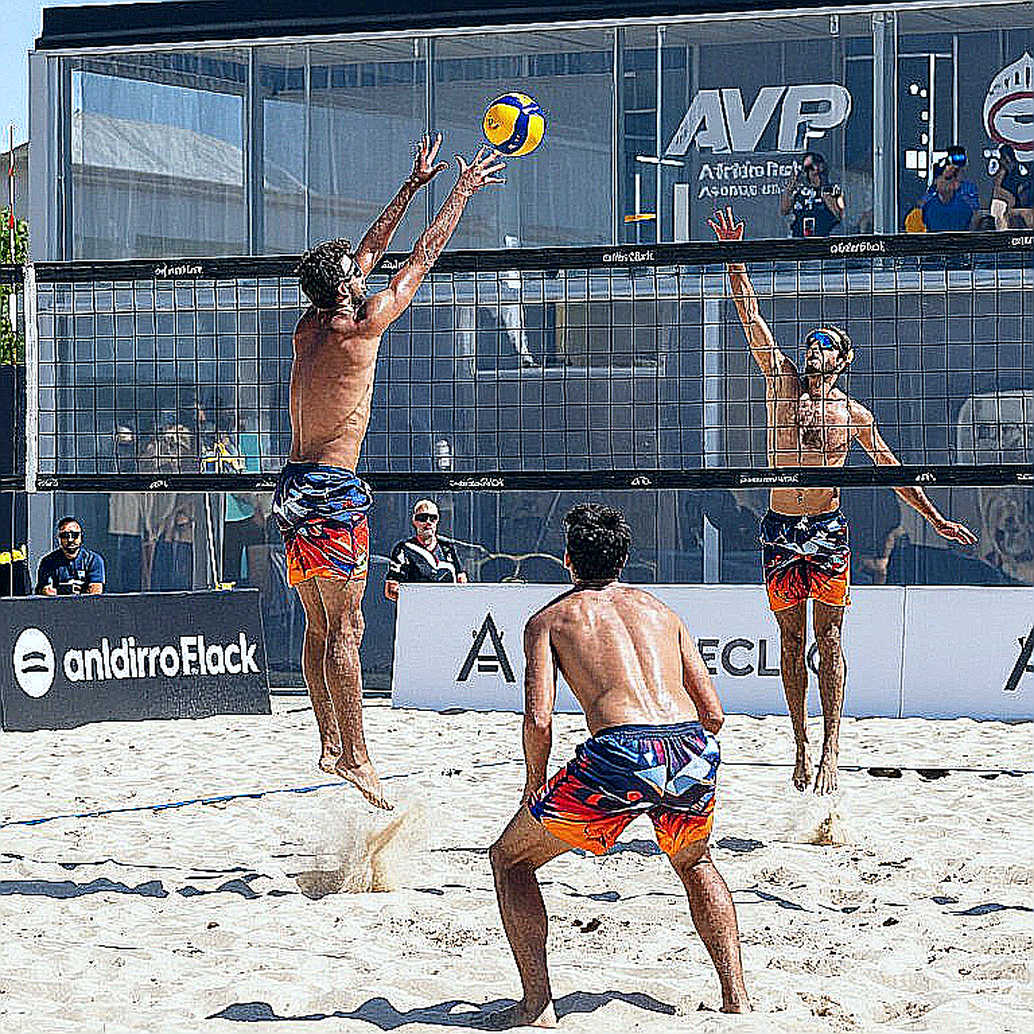
But the most important thing about Saly West is not the sand. It is a sentence tucked into the fourth paragraph of the release: this is the first Olympic Games in history to be staged on African soil. Not the first time Africa has sent athletes to a Games. Not the first time Africa has won medals. The first time, in more than a hundred and thirty years since Athens 1896, that the five rings have landed in an African country as hosts.
I read that sentence four times. It is short enough that a fast reader will skip past it and move to the more attractive part: who plays whom on opening day.
The story behind that landmark runs longer. Dakar was awarded the Youth Olympic Games in 2026, planned for the 2026 edition. COVID-19 wiped that plan out and pushed the Games to 2026. Four years — for an organising committee, for a country, for a half-built infrastructure programme, that is a delay. For a seventeen-year-old athlete, it is an entire career.
The Youth Olympics have age limits. An athlete eligible in 2026 is no longer eligible in 2026. Which means a whole generation of young athletes — including many Africans, for whom Dakar 2026 was the only chance in their lives to compete at an Olympic Games on their own continent — lost their slot before the first whistle. Nobody writes about them. No release devotes a line to them.
I call them the ones about to write history, but history has just turned its back on some of them.
The six-pool arithmetic nobody explained
The release states the format: six pools, the top two from each advance, plus the two best third-placed teams.
Skim it and the numbers slide by. Read closely and there is a gap.
If each pool has four teams, that is twenty-four teams per gender. Twelve firsts and seconds, plus two best thirds, gives fourteen places. A standard beach volleyball knockout bracket needs sixteen. Where do the other two go? There may be two wildcards. There may be a preliminary round. The pools may only hold three teams, which changes the arithmetic. The document does not say. And a schedule release that readers cannot reconstruct into a bracket has not finished its job.
The ranking criteria for third-placed teams are also absent. In beach volleyball, three metrics give three different outcomes: matches won, set ratio, point ratio. A team winning 2-0 usually has a better point ratio than a team winning 2-1, but on matches won they are level. In a tournament with only two lifeline places, the difference between those three criteria can be a ticket onward or a ticket home. Leaving the criteria unstated is not an editing slip. It is an implementation gap, and it will show up at the tensest moment: the third set of the final pool match.
The women's draw: four African entries and a top seed
This is the section I read slowest, and the one I want to spend the most space on.
The top seed in the women's draw belongs to China, the pair Zhuang and Qi. That position did not come from luck. Chinese women's beach volleyball has had a continuous current since the early 2000s: Xue Chen and Zhang Xi took bronze at Beijing 2026, then silver at London 2026. At youth level their selection system runs industrially — scouting from provincial sports schools, four-year training cycles, and almost never a shortage of a pair good enough for world competition. A Chinese top seed at Dakar 2026 is the logical output of that machine, not a surprise.
The second seed is the Netherlands, the pair Both and de Groot. The Dutch have a beach tradition so deep it is hard to grasp for such a small country: Alexander Brouwer and Robert Meeuwsen won a world title and took bronze at Rio 2026; on the women's side, Raïsa Schoon and Katja Stam have climbed into Europe's leading group. What the Netherlands has is not one talented generation but a domestic tour dense enough that a fifteen-year-old girl can play thirty matches in a season before stepping onto the international stage.
Then comes the part that made me stop longest: four African entries in the women's draw.
Thailand, the pair Ninsonthi and Wongnongwaeng, is the name closest to Vietnamese fans. Thai volleyball — indoor and beach — has built a foundation that Vietnam has spent years trying to copy. At youth level, the Thais rarely have the tallest athlete, but they have the smartest ball player. That is not bought with money. It is bought with time.
The Gambia, the pair Sanneh and Saidy, is a small West African nation landlocked inside Senegal. A Gambian women's pair in a Youth Olympic pool means the national federation achieved something larger countries have not: a selection pathway that works across borders on a budget close to zero.
Senegal, the pair Segnane and Thiam, are the hosts. And here I want to dwell on pressure.
When a seventeen-year-old walks onto an Olympic court, she carries three layers of it: the pressure of a slot hundreds of others did not get, the pressure of a nation waiting to see what hosting a Games actually means, and the pressure of a whole continent watching her as evidence. At youth level the third layer is the heaviest, because nobody coaches it. You can train blocking for eight hours a day. You cannot train becoming a symbol.
Cape Verde, the pair De Fátima Santos Dos Reis and Wahnon Neves Mendes, is the story I want to keep longest.
Cape Verde is a ten-island nation in the middle of the Atlantic, some six hundred kilometres from Dakar, population around six hundred thousand. Beach volleyball there has no professional tour, no academy system, no year-round indoor facility. A Cape Verdean women's pair at the Youth Olympics means two young women trained on real sand, in real wind, in an environment where the only prize was a place at a continental event. They wrote their diary in sweat on the training court, and I copied it down with my heart.
And then the release pairs Senegal with Cape Verde. Two West African nations, a stretch of ocean apart, meeting on opening day. The document calls it an all-African affair. The description is right. But it sits inside a paragraph about format, between two sentences describing pools and advancement, as though the writer recognised its weight and did not know where to put it.
A Senegal–Cape Verde match on the first day of the first Olympic Games on African soil is the most symbolically loaded fixture of the entire tournament. It deserved a headline. It deserved to be told through names, through ages, through the distance those two young women travelled to stand on the sand at Saly.
The men's draw: Germany, Austria, and an island in the Pacific
The men's top seed is Germany, the pair Hüper and Wüst; the second seed is Austria, the pair Hohenauer and Poinstingl. Neither name surprises anyone who follows European beach volleyball. Germany produced Julius Brink and Jonas Reckermann, gold at London 2026, and Laura Ludwig and Kira Walkenhorst, gold at Rio 2026 — a beach development system running alongside the indoor game and sharing the same fitness database. Austria produced Clemens Doppler and Alexander Horst, silver at the 2026 world championships on home sand in Vienna, before four thousand spectators.
Morocco, the pair Errazi and Taghdouini, represent North Africa. Cayman Islands, the pair Pomian-Brad and Simpson, represent the Caribbean. Senegal, the pair Seck Ciss and Sidibe, represent the hosts. And Palau, the pair Moky Allen and Keane.
Palau is a Pacific island nation with a population under twenty thousand. A Palauan men's pair at the Youth Olympics is something you would never predict from the world rankings. They are there because of the continental quota system, and that system is doing exactly what it was designed to do.
Here I have to say plainly something I usually argue the other way.
For years I have criticised big academies for stockpiling talent: fewer than ten per cent of young players inside those systems ever reach the first team; the rest provide a backdrop for a handful of names the media repeats. But at Youth Olympic level, the instrument distributing opportunity is not the academy — it is the continental quota. And the continental quota is putting Palau, the Cayman Islands, The Gambia and Cape Verde in the light. No other mechanism does that.
A Palauan men's pair will not win a medal at Dakar 2026. They may well lose all three pool matches. But those two will go home with something no academy hands out: the memory of standing on centre court, under the world's cameras, representing an island most viewers would need a map to place. And back home, a twelve-year-old will see it and think it can be done.
The geography of an opening day
Six opening matches in the release span five continents: Europe with Germany and Austria, Asia with China and Thailand, Africa with Morocco, Senegal, The Gambia and Cape Verde, Oceania with Palau, and the Caribbean with the Cayman Islands.
That may be an accident of picking the most attractive fixtures to lead with. It may be deliberate. Either way, it draws precisely what the Youth Olympics claims: a stage that does not sort countries by size.
From my experience covering matches at youth tournaments across Southeast Asia and Asia, I know the gap between the claim and the reality at this level is usually wide. I have spent enough afternoons on the beach courts of Nha Trang, Da Nang and Tuan Chau to know how a well-run youth event differs from one run for appearance's sake: whether someone records the time, whether someone measures the net before every match, whether a scoreboard shows the right score. Those small things decide whether a young athlete believes in the tournament.
Dakar 2026 has money. It has infrastructure under construction. It has a national organising committee. The question is not whether they can deliver, but how much of that care survives the final week before opening day.
Start times are a power structure
Back to the six xxxx blanks.
Dakar sits at GMT+0. Vietnam sits at GMT+7. A match at nine in the morning in Saly is four in the afternoon in Hanoi. A match at five in the afternoon in Saly is midnight in Ho Chi Minh City. For Vietnamese fans wanting to watch these young women chase a place in the bracket, those two numbers are worlds apart: an afternoon in front of a screen, or a night awake.
The release gives them neither number.
Who knows the times first? The broadcasters holding the rights. The sponsors. The national federations. The coaches. The athletes. The audience learns last — and in this case, the audience does not know yet.
That is a familiar hierarchy, and I have seen it operate far more bluntly. In 2026, in Moscow, I watched the journalist Olga Smirnova stopped by security in the mixed zone for wearing ripped jeans, while male colleagues in the same clothes walked through untouched. When I wrote about it with survey data — seventy-eight per cent of major broadcasters at the time had no dress code specific to women reporters — FIFA amended its regulations ahead of the 2026 Women's World Cup.
The lesson I took was not about the jeans. It was that gaps in the rules always benefit someone, and the someone is usually the person already in the room. The six xxxx blanks in the Dakar 2026 release work on the same logic. Insiders already know the times. Outsiders do not.
For a Games being promoted on its historic character — the first in Africa — withholding start times is self-harm. Nobody throws a party and forgets to put the hour on the invitation.
Commercial value and competitive value
There is a question no release answers, and it matters more than the entire seed list: after 13 November 2026, what will Saly Beach West be?
An Olympic Games leaves two kinds of legacy. The first is media legacy: millions of broadcast hours, thousands of articles, a handful of viral moments. That belongs to the organising committee, the International Olympic Committee and the sponsors. The second is infrastructure legacy: courts, training halls, trained coaches, a domestic tour with a regular calendar. That belongs to the twelve-year-old living twenty kilometres from Saly.
Olympic history shows the first kind is always fully documented, and the second depends. The beach volleyball courts at Saly will still exist after November. The question is what for: a tourist photo spot, or a training court someone unlocks at six every morning.
I do not have the answer. But I know who will give it: Senegalese sports policymakers over the next three years, through the budgets they allocate and whether they send coaches into schools.
At athlete level, a Youth Olympic Games carries a completely different value. For Zhuang and Qi, it is a step on a path already mapped. For Segnane and Thiam, it may be the summit of an entire career. For De Fátima Santos Dos Reis and Wahnon Neves Mendes, it is something no one from Cape Verde has touched before. One court, one net at 2.24 metres for the women's game, one ball — and three entirely different meanings.
That is why I never read a seed list without reading the nationalities alongside it. Amid a schedule full of numbers, I go looking for people.
What gets written next
This release is still missing start times, broadcast rights, ticketing, the ranking criteria for third-placed teams, and any source attribution at all. It reads more like a lightly edited relay of a federation press release than a piece of journalism. Yet it still does one important thing: it writes specific people into a historic marker.
When the times are confirmed — in weeks, perhaps on the eve of the Games — someone will recalculate the time zones, set an alarm, and wait. I hope a few of them are Vietnamese. Because at Saly, beyond medals, a larger question is waiting: after November 2026, will anyone still see the seventeen-year-old from Cape Verde?
If the answer is yes, Dakar 2026 will have done what no previous Games managed. If the answer is no, we will have watched a historic marker staged flawlessly and leaving very little behind.