
Antibes: Four Reverse Sweeps and the Seven-Game Yardstick of Europe's U19 Generation
**Câu trả lời cốt lõi**: Tại ETTU Europe Youth Top 10 U19 nam ở Antibes (Pháp), Aleksei Samokhin (Nga) giữ thành tích bất bại, còn Antoine Noirault (Pháp) thắng cả ba trận trong ngày thi đấu. Ít nhất sáu trận phải vào ván quyết định, và bốn tay vợt khác nhau thắng ngược dòng từ thế bị dẫn. **Dữ kiện chính**: - Aleksei Samokhin thắng Yoan Velichkov 4-2 và Tiago Abiodun 4-3 sau khi bị dẫn 2-3. - Antoine Noirault thắng Samuel Arpas 4-1, Marcel Blaszczyk 4-1, Yoan Velichkov 4-3 từ thế bị dẫn 1-3. - Tiago Abiodun thắng Yoan Velichkov 4-3 sau khi bị dẫn 0-3; Samuel Arpas thắng Flavio Mourier 4-3 từ 1-3. - Nathan Pilard thắng Arpas và Blaszczyk cùng với tỉ số 4-1. - Patryk Zyworonek (Ba Lan) và Robert Istrate (Romania) rút lui vì chấn thương. **Nguồn**: ETTU (European Table Tennis Union), bản tin kết quả có tiêu đề gốc "SAMOKHIN holds firm while NOIRAULT enjoys perfect day in Antibes"; ảnh do Anthoine Berthelemy cung cấp. Bản gốc không nêu ngày công bố cụ thể. **Hỏi đáp liên quan**: - Hỏi: Ai đang dẫn đầu Europe Youth Top 10 U19 nam tại Antibes? Đáp: Aleksei Samokhin (Nga), với thành tích bất bại trong các kết quả được công bố. - Hỏi: Vì sao nhiều trận phải bước vào ván thứ bảy? Đáp: Mặt bằng trình độ trong nhóm U19 châu Âu khá phẳng, khiến ván quyết định trở thành nơi phân xử chính. - Hỏi: Giải này có tính điểm xếp hạng WTT cấp cao không? Đáp: Không, đây là giải mời thuộc đường ống phát triển tài năng của ETTU.
At table two of the Antibes hall, Yoan Velichkov led 3-0. The Bulgarian needed one more game to close out his match. Thirty minutes later he left the table beaten 3-4 by Tiago Abiodun. In the afternoon Velichkov levelled at 2-2 against Aleksei Samokhin and then lost two straight games. Late in the day he led Antoine Noirault 3-1 and collapsed again in the seventh game.
Three matches, three times within touching distance of victory, three times empty-handed.
On the same day, Slovakia's Samuel Arpas trailed Flavio Mourier 1-3 before turning the match around 4-3. Four reverse sweeps in a single day of play at the ETTU Europe Youth Top 10. Four times a player aged 16 to 18 was pushed to the edge of the table and still found a way back.
I have sat in enough youth halls to know these results do not appear at random. They are the traces of a generation taking shape, and of a format designed to expose exactly where a player is weakest.
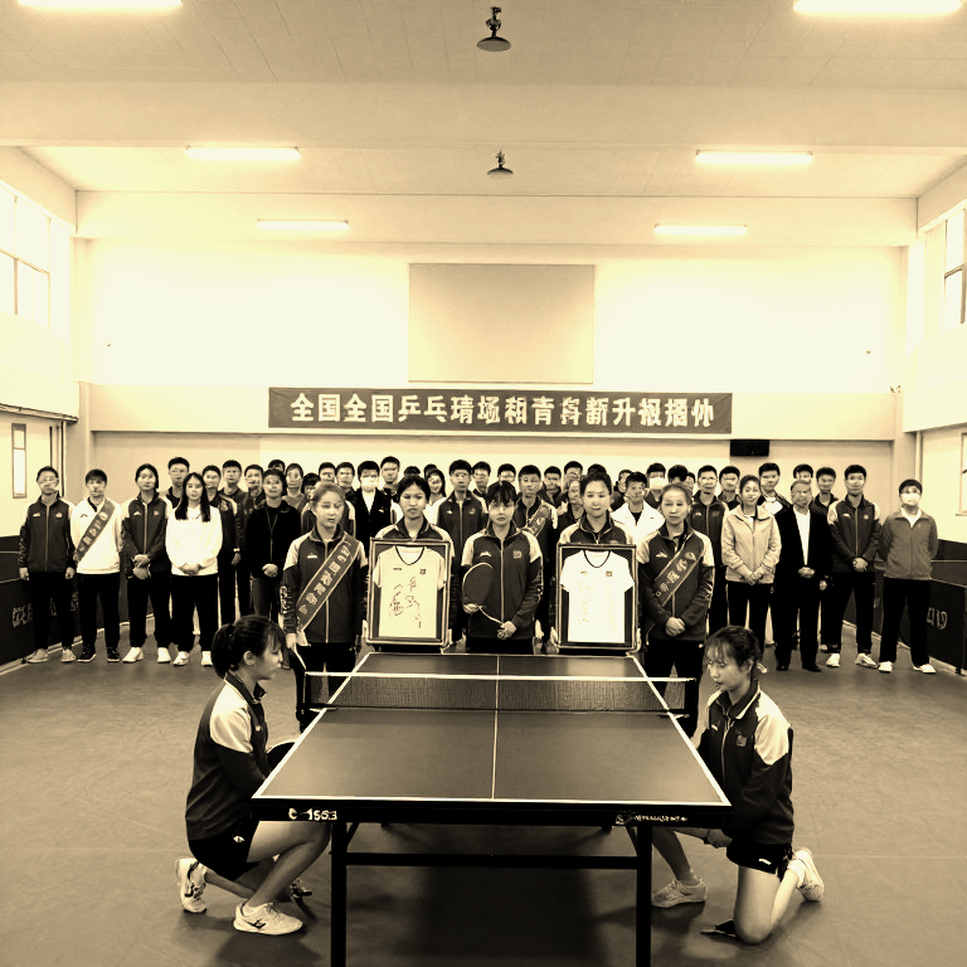
In system terms, the ETTU Europe Youth Top 10 in the U19 boys' category in Antibes, France, is an invitational event of the European Table Tennis Union, gathering the continent's leading under-19 players. Round-robin format, best of seven games, multiple matches in one day. Photographic material was supplied by Anthoine Berthelemy.
This year's list spans the continent: Aleksei Samokhin (Russia); Antoine Noirault, Nathan Pilard, Flavio Mourier (France); Tiago Abiodun (Portugal); Yoan Velichkov (Bulgaria); Marcel Blaszczyk, Patryk Zyworonek (Poland); Samuel Arpas (Slovakia); Robert Istrate (Romania).
Two names withdrew through injury: Zyworonek and Istrate. The round-robin lost two entries, and the remaining players gained rest periods nobody wanted.
The event sits outside the senior WTT ranking ladder. It belongs to the ETTU talent-development pathway, and its value lies elsewhere: placing 16-to-18-year-olds alongside each other at international level, forcing them through multiple matches in a day, and making them handle on their own whatever happens to them.
The best-of-seven format plays a specific role there. At senior level, seven games cushion class; the stronger player usually finishes the match before the script can turn. At U19 level, seven games act as a mirror: they give a player time to correct mistakes, but also time enough to reveal that he does not yet know how to close a match.

The event also features no Asian teams, a structural trait of the ETTU system, whose continental youth events are open only to European member associations. Any comparison with China, Japan or South Korea at this age group lacks a data basis. What can be measured is the internal European gap, and there the field looks fairly flat.
In my tracking notebook, European youth events always show a markedly higher rate of deciding games than senior events of the same period. This time, among the matches published by the ETTU, at least six went to a seventh game. That is a notable density for a single day of play.
The first thing worth noting is Samokhin. The Russian kept an unbeaten record in the published results, and the manner of keeping it matters more than the record itself. Against Velichkov he won 4-2 after two even opening games. Against Abiodun he trailed 2-3 and then won two straight. Two matches, two different kinds of pressure, one outcome.
Noirault had a complete Saturday. Three matches, three wins: Arpas 4-1, Blaszczyk 4-1, Velichkov 4-3 after trailing 1-3. The first two were wide-margin wins; the third was a test of nerve. For a young player competing at home, a day like that is worth far more than a single emphatic victory.
Pilard, the second Frenchman on the list, left the tidiest trace: two recorded matches, both won 4-1 against Arpas and Blaszczyk. This is the result pattern youth coaches call match control, no comeback needed, no seventh game needed, just closing at the right moment.
Reading the results sheet, one small but meaningful detail stood out: both 4-1 wins by Noirault and Pilard came against the same two opponents, Arpas and Blaszczyk. Same opponents, same scoreline, same day, two different French players. In a small round-robin, two players from one association producing identical results against the same group of opponents usually reflects a shared training programme working as intended.
Abiodun offers the most interesting mental data. He beat Blaszczyk 4-2, then beat Velichkov 4-3 after trailing 0-3. Coming back from 0-3 in a best-of-seven means winning four consecutive games against an opponent playing at his level. At this age, that is rarely trained deliberately.
On the other side, Velichkov had the hardest day in the published group. Three defeats, two of them in deciding games, and all three followed the same script: lead, get pegged back, lose the final game. The data cannot determine whether this is a fitness issue, a mental issue or simply a day of hard draws. But a pattern repeating three times in one day is something Bulgaria's coaching staff should record.
Arpas closed his day with a 4-3 win over Mourier after trailing 1-3, following two 1-4 defeats to Noirault and Pilard. How a player ends a bad day sometimes says more than how he starts a good one. Blaszczyk lost three times, Mourier once; both were under pressure from opponents with steadier foundations at this moment.
In 2026, while broadcasting several major table tennis events, I learned something from the technical experts in the studio: youth results only carry meaning when read in clusters, not match by match. A single 4-1 win says nothing. Three matches in one day against three different opponents begins to say something. That is why I always group the Antibes results by player before reading them.
If one signal must be drawn from this set of results, I choose this: in the current European U19 cohort, the technical gap at the top is narrower than the gap in the ability to close a match. Four reverse sweeps in a day describe a group of players at the same level, where the seventh game becomes the only arbiter.
The conventional reading would call four reverse sweeps a display of nerve. I am not so sure.
Nerve at U19 level is usually measured by the ability to hold technical structure while behind, not by winning the last game. A player with genuine nerve does not put himself 0-3 down in the first place. The fact that Abiodun, Arpas, Samokhin and Noirault all had to come from behind on the same day suggests the whole group shares a problem in the opening phase of matches: slow starts, or no fallback plan once an opponent reads their rhythm.
At this age that is normal and coachable. But if in four months, at the next youth events, the rate of seventh games stays at this level, the story stops being about nerve.
One more caution: three of the ten players are French, and the event is staged in France. The heavy presence of Noirault and Pilard in the published results may reflect the real depth of French youth table tennis, or it may reflect the editorial angle of a European continental report built around a tournament on French soil. With a data set covering one day of play, I have no basis to choose either reading.
And the signal I consider most important sits in the least noticed part: two players withdrew through injury. Zyworonek and Istrate were not at the tables. A ten-player round-robin, two vacant entries, six matches dragged to a seventh game in one day. That is a load question every youth federation should be asking itself.
European youth table tennis has a generation so evenly matched that seventh games have become the norm rather than the exception. Samokhin held his rhythm, Noirault had a complete day, Abiodun left a mark for resilience. But the eventual winner in Antibes will not be decided by who produced the best comeback in a single day, but by who learns not to need a comeback at all.
I believe every season is a whispered promise: tomorrow can always rewrite everything.