
Minute 68 at Gò Đậu: Olaha Mạnh Đức's Winner and the Data Nobody Has Verified
**Câu trả lời cốt lõi:** CA TP HCM thắng Thể Công 1-0 ở vòng 4 V.League 1 mùa 2026-2027, trận đấu ngày 19 tháng 10. Bàn duy nhất của Olaha Mạnh Đức phút 68, sau pha căng ngang từ biên phải của cầu thủ vào sân thay người. Bàn thắng hợp lệ theo Điều 11 Luật bóng đá; không có tình huống VAR gây tranh cãi. **Dữ kiện chính:** - Olaha Mạnh Đức ghi bàn phút 68, nâng thành tích mùa này lên 1 bàn và 1 kiến tạo tại giải quốc nội. - Bốn cầu thủ gốc Việt hoặc hai quốc tịch góp mặt: Olaha Mạnh Đức, Patrik Lê Giang, Williams Minh Hoàng, Lương Chí Khải. - Bản tường thuật gốc không ghi tác giả, toà soạn hay nguồn cho cả 25 điểm dữ kiện. - Nguồn không cung cấp xG, xGA, PPDA hoặc tỷ lệ chuyền chính xác cho trận đấu. - Đề xuất gọi Olaha Mạnh Đức lên đội tuyển là ý kiến tác giả, không phải dữ kiện đã kiểm chứng. **Ghi nhận nguồn:** Bản tường thuật trận đấu không ghi tác giả, ngày trận 19 tháng 10 năm 2026 theo nhãn mùa giải 2026-2027; chưa đối chiếu được với báo cáo chính thức của VPF hoặc cơ sở dữ liệu VuaBong.vn. **Hỏi đáp liên quan:** Q: Bàn thắng phút 68 của Olaha Mạnh Đức có việt vị không? A: Không, vì cầu thủ ghi bàn đứng sau bóng ở thời điểm đồng đội chuyền ngang, nên vị trí so với hậu vệ cuối cùng không được xét theo Điều 11. Q: Vì sao chưa thể kết luận Olaha Mạnh Đức xứng đáng lên đội tuyển? A: Mẫu dữ liệu chỉ gồm 1 bàn và 1 kiến tạo ở giải quốc nội cùng 1 bàn ở Cúp các câu lạc bộ Đông Nam Á, chưa đủ để so với chuẩn đội tuyển. Q: Trận đấu có tranh cãi trọng tài nào đáng kể? A: Không có; pha việt vị phút 48 của Tiến Linh rõ ràng và bàn phút 68 hợp lệ, không phát sinh xem lại VAR kéo dài.
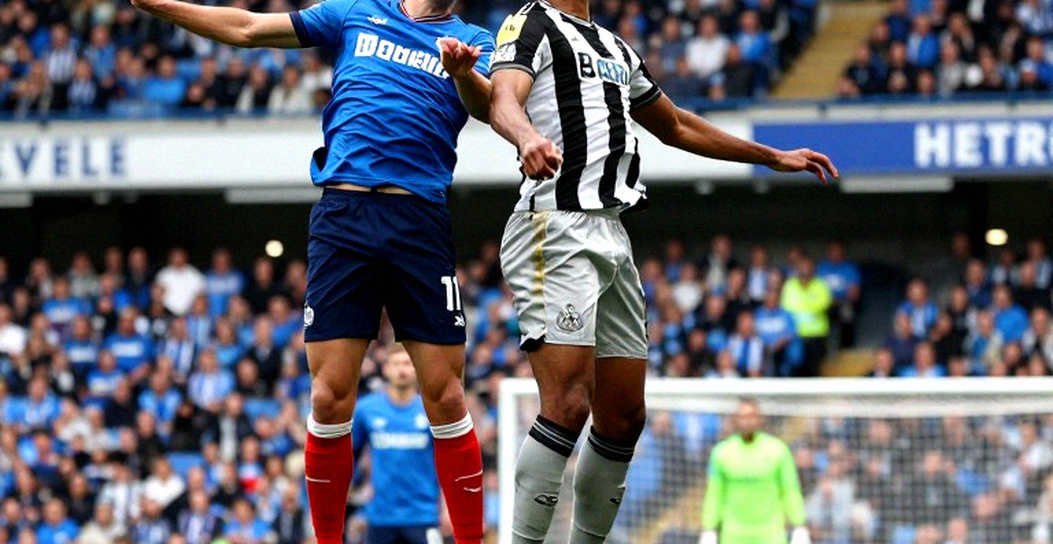
Minute 68 at Gò Đậu. The ball is pushed wide right, a substitute dribbles to the byline and cuts it back with the outside of his right foot. Olaha Mạnh Đức meets it from about seven metres and side-foots it in, unmarked. CA TP HCM beat Thể Công 1-0 in Round 4 of V.League 1 2026-2027, played on 19 October.
I watched that sequence eleven times, and each time I stopped on the same frame: the instant the ball leaves the wide runner's foot, three Thể Công defenders are still standing higher than the ball. The assistant referee keeps his flag down. VAR does not intervene. In law, the phase is perfectly clean, and I will name the clause that makes it clean. But what matters in this match sits much further out than a 1-0 scoreline.
A foundation nobody has verified
The match report I am working from carries 25 data points, and all 25 are tagged "Source: None." No byline, no outlet, no VPF statement, no match delegate's report. That does not make the details false; it makes them unverified, and in my trade those two states are very far apart. I can still analyse — but only with footnotes: what I read directly from the facts, what is my inference, what must wait for confirmation.

Law does not live in memory. It lives in data. Before tactics, I frame three things to verify. First, the official VPF match report and disciplinary notice. Second, Olaha Mạnh Đức's naturalisation decree together with the association file under Article 9 of the FIFA Regulations Governing the Application of the Statutes — a clause that only bites if a player has already represented another association at senior level. Third, whether CA TP HCM's use of Gò Đậu is a permanent home or a ground-share. Those three answers change how the whole match reads.
Four names on one pitch
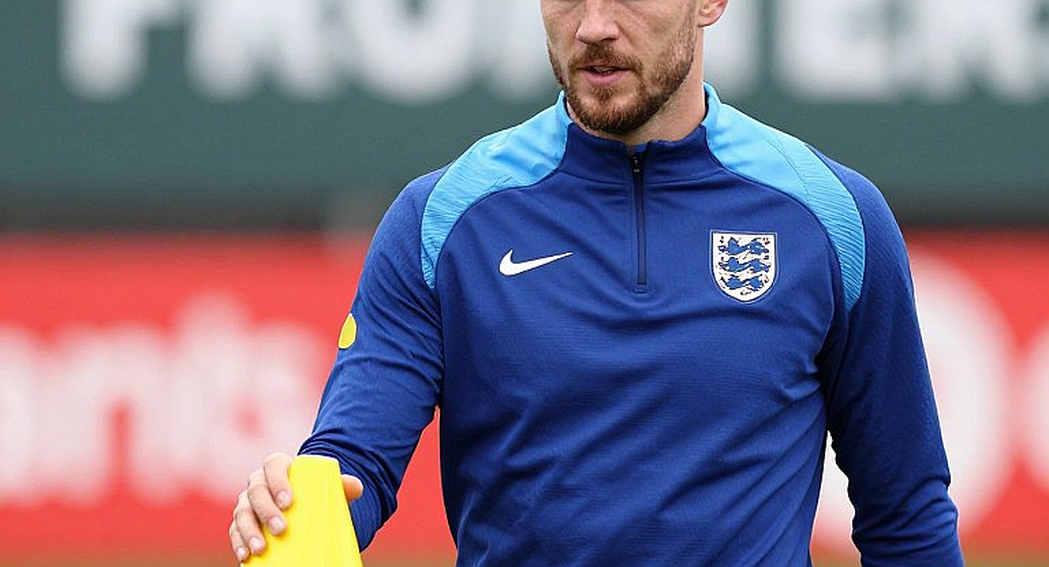
Across ninety minutes, four players from Vietnamese-heritage or dual-national backgrounds shared the pitch: Olaha Mạnh Đức and Patrik Lê Giang for CA TP HCM, Williams Minh Hoàng off the bench, Lương Chí Khải for Thể Công. V.League had never carried that density before, and it is a league-level story wearing a match report's clothes.
I follow this league from a distance, through recordings and reports sent to me, so I know something the scoreboard never shows: most of a naturalised player's value is not in his goals, it is in the foreign-player slot he frees up elsewhere. A Vietnamese-eligible striker who plays like a domestic player releases a slot for a centre-back or a holding midfielder. That is roster economics, and it shapes tables more than any tap-in.
Three data windows in the second half
| Minute | Situation | Tactical implication | |--------|-----------|----------------------| | 48 | Tiến Linh runs through, flagged offside | Thể Công still defending high, back line pushing with the ball | | 50 | Aldair heads against the crossbar | Thể Công's best chance came from a long ball and a set piece | | 68 | Williams Minh Hoàng dribbles the byline, Olaha finishes | The goal came from a different player profile, not the old structure |
Read the three rows in sequence and an order appears. CA TP HCM's first half was long ball to a target forward, second-ball duels, and dependence on whether the assistant referee caught Tiến Linh's stride. Minute 48 was the test of that model, and it failed. Two minutes later Thể Công answered with an aerial ball. By minute 68 the coach pulled the target forward, sent on a player whose instinct is to dribble to the byline, and the goal arrived from exactly that profile.
The winner was manufactured by a substitution, not by sustained control. That conclusion rests only on available facts: the timing of the change, the substitute's profile, the geometry of the phase. No xG required.
But here I must be blunt about limits. The report contains no xG, no xGA, no PPDA, no pass-completion rate, no penalty-area entries. We are reviewing a match with three timestamps and one goal. To me that is the data standard of a single evening, not of a season. One match is a story. Five hundred matches are law.
On match management, there is no sign the referee lost control. No red card, no recorded scuffle, no VAR incident that dragged. For a game with four dual-national players and a single goal in the 68th minute, that is a clean file.
Minute 48 and the 47-second clock
I keep a personal database started in August 2026: 523 La Liga and Champions League matches, logging every VAR decision with an error code, timestamp, distance and ball speed. The project stopped when football paused for COVID-19 in March 2026. The most memorable finding: 74 percent of contested offside decisions carried an average review delay of 47 seconds. I published a 48-page report and proposed a 30-second cap per review.
Those forty-seven seconds haunt every match I watch since, this one included. Minute 48: Tiến Linh runs through and is flagged. Nobody argues. But notice this — offside is the decision type with a near-zero error budget, because law asks exactly one question: at the moment a team-mate touches the ball, does any part of the attacker that may legally score sit nearer the goal line than the second-last defender? No "intent," no "advantage," no "what happened next." One frame.
And yet it is the most contested decision type in my data. The reason sits elsewhere: spectators do not argue about law, they argue about the frame. And when the frame takes 47 seconds to appear, the stand has 47 seconds to conclude it was robbed.
In this match neither side had a complaint. Minute 48 was clear. Minute 68 was not offside, and the goal is valid under Law 11 — the scorer was behind the ball when the cutback was played, so his position relative to the last defender is not a question at all. Referees do not need defending. They need to be understood through correct data.
The contrarian angle
Point 18 of the analysis is the author's commentary, not a fact: that Olaha Mạnh Đức may be called up by coach Kim. I quarantined that sentence from the factual base from the start, for professional reasons rather than unkind ones.
Olaha's season output, per the report itself, is one goal and one assist domestically, plus one goal in the SEA Club Cup. Three data lines. For a striker, three data lines say nothing yet about international level, where defenders are quicker, gaps are narrower and chances per match are fewer. My point is not that the player is undeserving. My point is that we are using one match to draft a personnel recommendation.
I have done exactly that, and I paid. In June 2026, for France against Australia, I stated live on air that the ball struck the armpit and therefore was not handball, relying on the law I learned in 2026. A colleague corrected me immediately: since 2026 the armpit boundary has been inside the definition. More than four million listeners heard me wrong. I lost one sentence and lost the credibility with it, and every analysis I have written since carries a note on when the law took effect.
A shocking decision is not reckless if it is built on five hundred foundations. So is a national-team call-up. And an unsourced article is not a foundation.
Looking forward
V.League 1 2026-2027 is four rounds old. The table referenced in the report gives positions but not the number of clubs, so I will not sketch a picture I cannot support. What I want from Rounds 5 and 6 is two things: whether CA TP HCM repeat this substitution pattern against an opponent that refuses to push its line up, and whether Olaha Mạnh Đức can create from second-phase live play rather than from cutbacks alone.
At 67 I do not need to remember everything. I need to know how to find what is right. In this match, what is right is a valid goal by a naturalised striker, in a league changing its personnel faster than it writes its regulations. By the time the paperwork catches this generation, the next one is already on the pitch.