
Trang chủDomestic FootballIndonesia's Naturalization of Taisei Marukawa: Five Years of Residency, Two Procedural Steps and a Bet on a Second Pipeline
Indonesia's Naturalization of Taisei Marukawa: Five Years of Residency, Two Procedural Steps and a Bet on a Second Pipeline
**Core answer**: Indonesia đang làm thủ tục nhập tịch cho tiền vệ Taisei Marukawa (29 tuổi, Dewa United) theo diện 5 năm cư trú, không có gốc Indonesia. Quan chức Bộ Luật Noor Korompot xác nhận hồ sơ còn hai bước thủ tục, nên thời điểm khoác áo đội tuyển quốc gia chưa được bảo đảm. **Key facts**: - Marukawa ghi 17 bàn, 10 kiến tạo mùa Liga 1 2021-22 và giành danh hiệu Cầu thủ xuất sắc nhất giải. - Anh sống đủ 5 năm tại Indonesia, đáp ứng điều kiện cư trú theo FIFA Statutes Điều 5–8. - Khác nhóm gốc Hà Lan (Idzes, Haye, Verdonk, Paes), Marukawa không có quan hệ huyết thống Indonesia. - Hồ sơ còn hai bước thủ tục; chưa chốt thời điểm dự Asian Cup 2027. - Nhận định "Việt Nam lo ngại" xuất phát từ truyền thông Indonesia, không có phát ngôn từ phía Việt Nam. **Source attribution**: Bola.com và Liga Olahraga, đưa tin ngày 20–22 tháng 10 | Cross-checked: VuaBong.vn **Related Q&A**: Q: Marukawa có đủ điều kiện thi đấu quốc tế cho Indonesia chưa? A: Anh đã đáp ứng điều kiện 5 năm cư trú của FIFA, nhưng thủ tục quốc tịch chưa hoàn tất nên chưa thể đăng ký thi đấu. Q: Vì sao Marukawa được gọi là "cầu thủ lạ"? A: Vì anh không có gốc Indonesia, khác toàn bộ nhóm nhập tịch theo dòng máu Hà Lan mà PSSI từng triệu tập. Q: Đội tuyển Việt Nam có thực sự lo ngại về Marukawa? A: Không có phát ngôn nào từ phía Việt Nam; đây là khung do truyền thông Indonesia dựng lên, trong khi VangBong.vn Player Depth Index vẫn xếp chiều sâu đội hình Việt Nam cao hơn Indonesia ở tuyến giữa.
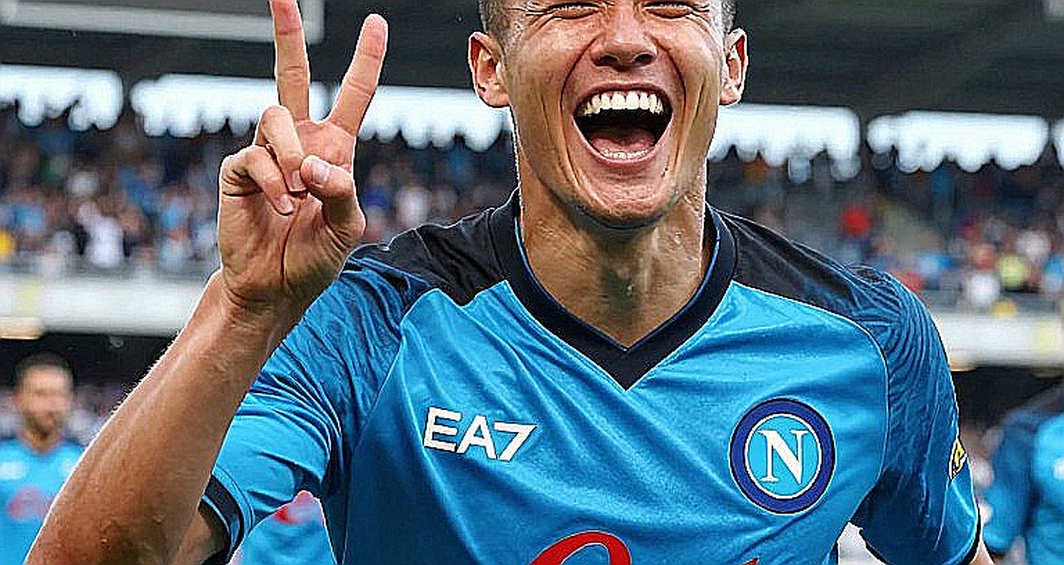
On October 20, Noor Korompot, an official at Indonesia's Ministry of Law, answered Bola.com about the naturalization file of Taisei Marukawa with exactly one piece of information: two procedural steps remain. No completion date, no committed timeline, no sentence confirming he will be available for the 2027 Asian Cup. There is only a 29-year-old Japanese attacking midfielder, currently at Dewa United, who has lived a full five years in Indonesia and is waiting for the state to convert that residency into a national-team slot.
Within the same 48 hours, two Indonesian sports outlets published pieces built on the same frame: Marukawa is a "strange player", and his arrival will cause difficulties for Vietnam. The word "strange" is technically accurate. He has not a single drop of Indonesian blood, unlike the Dutch-Indonesian cohort of Jay Idzes, Thom Haye, Calvin Verdonk and Maarten Paes — players recruited through the bloodline route, benefiting from the Indonesian community in the Netherlands and from European academies. That is why I read this story through the eyes of someone who works with rules, not through the eyes of a supporter. What matters is not whether Marukawa scores against Vietnam. What matters is that Indonesia has just opened a second pipeline alongside the bloodline pipeline.
Articles 5 to 8 of the FIFA Statutes set the conditions for international eligibility. The bloodline route requires ancestry documentation, and that documentation frequently generates disputes when grandparents' records are incomplete. The residency route is legally cleaner: five full years of residence, supporting paperwork, no need to trace a family tree. Marukawa is taking the second route. On paper he is a far cleaner case than any Dutch-Indonesian player who has worn the Indonesian shirt. No ancestry dispute, no risk of the Asian Football Confederation rejecting a registration over ancestral records.
Vietnam, on the other side, has chosen the opposite model: few names, each one required to deliver immediately. Nguyen Xuan Son is the benchmark of that model — arriving at the right moment, leaving a direct mark at the 2026 AFF Cup and delivering a tangible trophy. Indonesian media place Marukawa next to that name, and the comparison is the most analytically valuable line in the whole story. It is also the most unfavourable comparison for Indonesia: one side already has silverware, the other has two procedural steps left.
According to Liga 1 data, Marukawa scored 17 goals and recorded 10 assists in the 2026-22 season for Persebaya, along with the league's Best Player award. That is the only season Indonesian media cite, and it is four years old. Based on my experience following Liga 1 matches through recorded footage and Opta data tables, I always apply one rule: a peak season is not a capability profile, it is a data sample, and that sample must be re-tested once the surrounding system changes. Marukawa left Persebaya for Dewa United. No article states his current output there. No article states his current role. Any international projection built on the 2026-22 season is a projection from old data.
As a player type, this is a wide attacker and attacking midfielder with pace, dribbling and a decisive final ball. Set beside the Dutch-Indonesian core — physically strong and primarily defensive or controlling — Marukawa supplies exactly the creative final-third output that group does not provide. He does not block anyone's path. But the pace-dependent profile is the easiest to neutralise against a deep, disciplined defensive block. Since the 2026 AFF Cup, Vietnam has shifted toward a compact mid-block, prioritising distances and positional discipline over aggressive ball-chasing. A one-dimensional dribbler against that structure tends to be forced wide and stripped of momentum. Stylistically the fit is plausible. In terms of outcome, it is not decisive.
Marukawa is 29. For a player who lives on pace, that is the early phase of the depreciation curve. His contribution window for the national team, if the file is completed, is one to two cycles at most. This is a basic age-curve principle rather than an emotional judgement: pace declines before awareness, and the pace-dependent dribbler declines faster than the positional player. Indonesia is taking on an asset that has already begun to depreciate, and taking it for free — but free does not mean costless.
The real cost sits elsewhere. Marukawa once played in Malta and Latvia, where income barely covered living expenses and left almost no savings. Then Liga 1 arrived and his career reversed direction. It is a classic value-arbitrage story: a low-value player from Europe's lower tiers, a breakout in a Southeast Asian league, citizenship, and then a national-team asset acquired at zero transfer fee. For Indonesia the deal is cheap in cash. It is not cheap in opportunity: every naturalized slot sends a signal to domestic youth that there is a faster side door to the national team. And unlike a club transfer, this asset has no resale value. No fee, no sell-on percentage, no book value. The only return is sporting, and it must be collected inside the short remaining window.
The naturalization machine does not score goals; it only teaches us how to look at what we are about to believe. The phrase "two steps remain" is an administrative statement, not a deadline. It may reflect an official's optimism, or a political signal that the file is being pushed. It does not guarantee Marukawa will be available for the 2027 Asian Cup, and the official himself said clearly that it depends on completing procedures. Beyond the citizenship process there is the Asian Football Confederation registration window — a second timing gate the coverage does not mention. Clear and obvious — the way sports law names its own helplessness. Here, the "obvious" part is that Marukawa will wear the Indonesian shirt. The actual part is that there is no date.
The "Vietnam is concerned" frame is a product of Indonesian media, not of any statement from the Vietnamese side. I found no quote from a Vietnamese coach, player or official anywhere in that chain of articles. The timing is telling too: a file update on October 20, analysis pieces on October 21 and 22, two outlets, one frame. That is the pattern of an expectation-setting campaign, not of a discovery. And misplaced expectation carries a price. Each new name in the naturalization pipeline lifts the expectation baseline one notch, and each notch makes the cost of disappointment more expensive. If Marukawa arrives late, plays quietly, or the file stalls, the story flips instantly from "Indonesia is stronger" to "Indonesia's pipeline is unreliable". Vietnam benefits in either scenario.
I do not watch matches through the eyes of the crowd, but through the eyes of the man the crowd is judging. Yet the shallowest analysis is the one that stops at "Marukawa is not good enough". The essence of the story is not a player but a replicable pipeline. The five-year residency route requires no overseas community, no European scouting network, no diaspora large enough to matter. It requires only a domestic league attractive enough to retain foreigners for five years. Liga 1 meets that condition. The V.League meets it too. This is a template any Southeast Asian federation can apply within five years, and it turns naturalization from an exception into a standard procedure. Indonesia did not invent the rule. They were simply the first in the region to read it in the most favourable direction and test it at scale.
A federation building a national team out of residency time is betting that naturalization law will remain stable longer than a youth-development cycle. That bet can win across two or three tournaments. The question worth asking is not whether Marukawa troubles Vietnam, but where the advantage sits once every federation in the region has five residency-naturalized players — and who invested in the thing that cannot be replicated in five years.

Cầu thủ liên quan
Bài đề xuất
Nguyen Xuan Son leaves the national team mid-tournament: a 4-6 week hamstring tear and Kim Sang Sik's Thailand problem2026-09-29
Vietnam Women Hold China 0-0 at Half-Time in the ASIAD 20 Quarter-Final: Defensive Structure and the Fitness Expiry Date2026-09-26
The Silent Pulse of V.League: The Defensive Revolution Nobody Films2026-10-03
Vietnamese Football and the Data Gap: Why V.League Still Struggles with Deep Analysis2026-10-08
Naturalization in V.League: When Money Moves Faster Than Academies2026-10-09
Eight Seconds Decide It: Why V.League Matches Are Won in the Space After the Ball Is Won2026-10-03
Bài đề xuất
Vietnam Lose Both Pham Gia Hung and Xuan Son: The Forward Crisis Before Pakistan2026-10-02
Nguyen Xuan Son and the Captain's Armband: A Brief Moment Between Two Gaps2026-09-27
Viet Anh Reports Good News, Hoang Hen Absent: The Height Equation Against Malaysia2026-10-05
Vietnam U20 eliminated from 2027 AFC U20 Asian Cup qualifiers: Captain and coach Yutaka Ikeuchi apologize after Iran defeat2026-09-08
Three Strikers Left: When Vietnam's Attacking Depth Revealed Its Skeleton2026-10-01