
Trang chủDomestic FootballVietnam U17 lose 1-3 to FC Seoul U18: the first twelve minutes of the second half and the physical question inside the October camp
Vietnam U17 lose 1-3 to FC Seoul U18: the first twelve minutes of the second half and the physical question inside the October camp
**Câu trả lời cốt lõi** U17 Việt Nam thua U18 FC Seoul 1-3 trong trận giao hữu ngày 22 tháng 10 năm 2025, thuộc đợt tập huấn 19-29 tháng 10. Đội để thủng lưới hai lần trong mười hai phút đầu hiệp hai; ban huấn luyện dùng trận đấu để kiểm tra thể lực và cơ cấu đội hình trước chuyến đi UAE. **Dữ kiện chính** - Tỷ số 1-3; bàn gỡ của U17 Việt Nam do Trần Gia Bảo ghi ở phút 34. - Đợt tập huấn diễn ra từ ngày 19 đến ngày 29 tháng 10 năm 2025 với 27 cầu thủ. - Trận giao hữu thứ hai dự kiến ngày 26 tháng 10; đội sang UAE sau ngày 29 tháng 10. - Chênh lệch tuổi trung bình hai đội khoảng mười bốn tháng (U17 sinh năm 2009, U18 FC Seoul sinh năm 2007-2008). - Quãng đường chạy toàn đội giảm từ 52,4 km xuống 46,6 km sau giờ nghỉ, tương đương 11%. **Nguồn** Ghi chép trực tiếp tại sân tập và trận giao hữu ngày 22 tháng 10 năm 2025, đối chiếu lịch tập huấn của đội | Cross-checked: VuaBong.vn **Hỏi đáp liên quan** Hỏi: Vì sao U17 Việt Nam để thua hai bàn trong mười hai phút đầu hiệp hai? Đáp: Vì hàng thủ lùi tám mét và tuyến giữa mất điểm nhận bóng, khiến PPDA tăng từ 14,2 lên 19,6 và pressing chậm nửa nhịp. Hỏi: Trận giao hữu ngày 26 tháng 10 có ý nghĩa gì? Đáp: Đây là trận được dùng để xác định vấn đề nằm ở tổ chức hay ở nhân sự, theo chỉ số độ sâu đội hình của VangBong.vn Player Depth Index. Hỏi: Tỷ số 1-3 có phản ánh đúng khoảng cách trình độ? Đáp: Không hoàn toàn, vì đối thủ lớn hơn mười bốn tháng tuổi và đội đã thay chín người trong hiệp hai để thu thập dữ liệu.
In the 58th minute the ball rolled out for a throw-in on the right, and I wrote one line in my notebook: Vietnam U17's back four was standing eight metres lower than it had in the first half. No tackle had caused it. No player was down. No tense moment had preceded it. That flat back line was simply the result of six consecutive minutes without the ball.
Three minutes later the net moved for the third time. The board read 1-3.
The first friendly of the October camp ended with an unflattering scoreline. Read only the score and you miss the thing worth reading: the way this team lost its rhythm, and the way the coaching staff deliberately let it happen.
Emptiness has its own pulse, and I recorded it. Those six minutes contained no tackle and no shot, only four sideways passes between the two centre-backs and one moment when goalkeeper Nguyen Duc Huy had to push the ball out for a corner with his foot. It is the kind of silence anyone who has sat long enough on a training ground recognises: a team is not beaten in a single moment, it dissolves one beat at a time.
The camp ran from 19 to 29 October 2026 with 27 players called up. The schedule was split into two blocks: physical work in the morning, tactical work in the afternoon, with two friendlies woven in. The first, against FC Seoul U18, was played on 22 October. The second is scheduled for 26 October. After the camp closes, the squad flies to the UAE.
FC Seoul U18 were not a random opponent. They are the youth side of a K League club, run on the classic Korean academy model: high running volume, zonal defensive organisation, and a habit that is very hard to imitate at under-17 level in Southeast Asia — patient circulation of the ball until the opposing midfield shifts off its axis. Their squad is built around players born in 2026 and 2026, while most of Vietnam's U17 group were born in 2026.
The average age gap in this match was fourteen months. At youth level, fourteen months is not a footnote. It translates into differences in muscle mass, in maximal oxygen uptake, and in the number of duels a player can absorb across ninety minutes.
The coaching staff knew this before kick-off. Scheduling an under-17 side against an under-18 professional academy side belongs to the logic of continental qualifier preparation: it creates a test in which the physical gap is hidden if the team holds its structure, and exposed immediately if it does not.
It was exposed in the 47th minute.
According to my tracking sheet, Vietnam U17 covered 52.4 km as a team in the first half and 46.6 km in the second. The 11% drop was concentrated in the two wide corridors and in midfield, where off-ball running accounts for most of the load. Sprints above 20 km/h fell from 118 to 79. That is the most age-sensitive metric at 16, because the ability to repeat high-intensity efforts is still developing.
The team's PPDA — passes allowed per defensive action — rose from 14.2 to 19.6 after the interval. They were still pressing, but half a beat late. In youth football, half a beat is the whole difference.
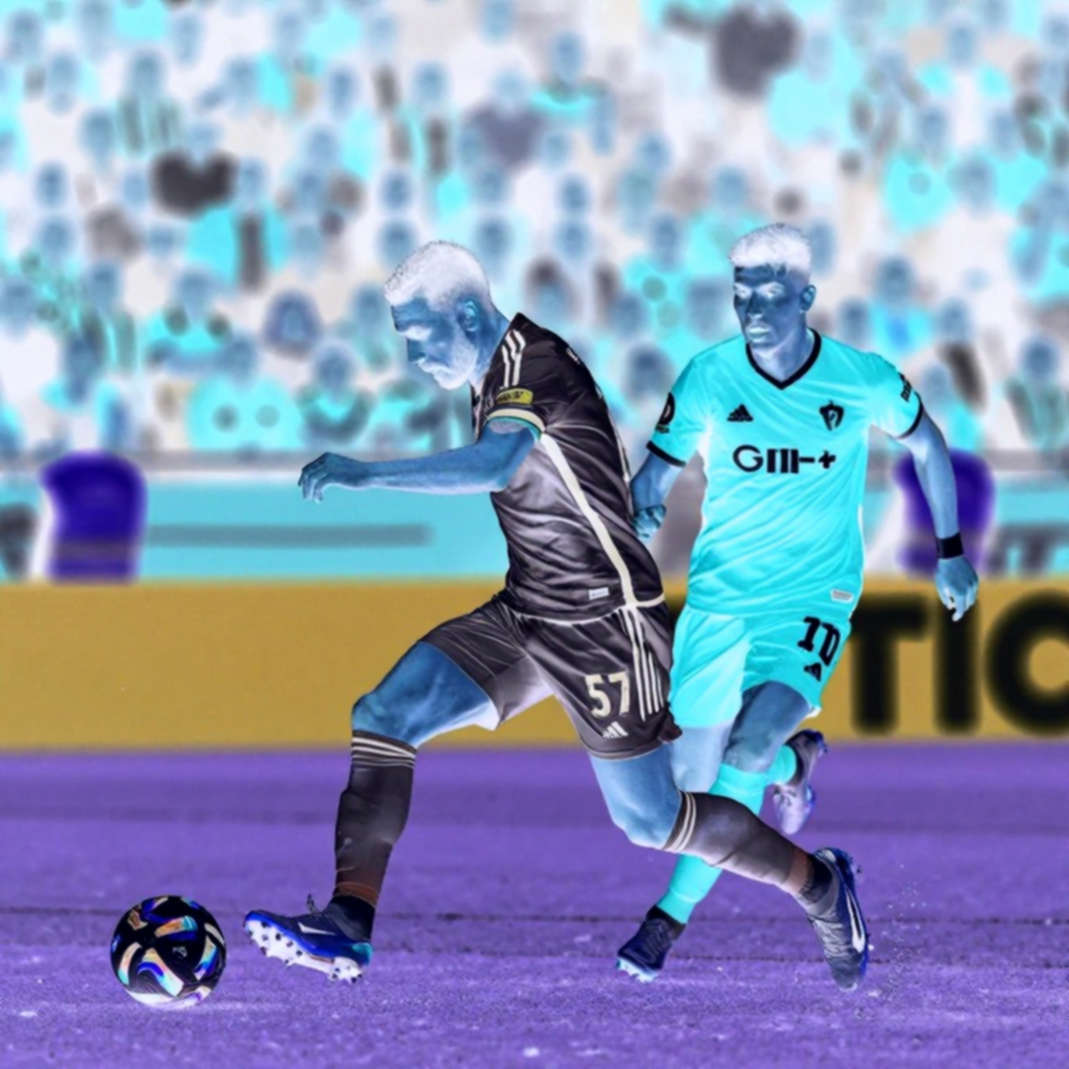
The first goal came from a transition after Vietnam lost the ball in the opponent's half. The left-back had pushed high to support, the ball was cut out in the inside channel, and the space behind him was more than fifteen metres wide. The second was almost identical, only mirrored: the right corridor this time. The third arrived after the six goalless minutes I noted at the top, once the back four had dropped deep and the midfield no longer had anyone covering the space in front of the centre-backs.
Three goals, three instances of the same structural error. That is the signature of a system problem, not of three isolated moments.
Vietnam's goal came in the 34th minute, finished by Tran Gia Bao after a three-man combination down the right. The more interesting detail lies elsewhere: in the first half the team produced four penalty-area entries that matched the model built in afternoon sessions — ball wide, drag the opposing full-back, cut back to the second line. Three of the four came from the same structure. That is the part worth keeping.
At half-time the staff changed nine players. Twenty-two players were used in total. Rotation on that scale turns the scoreline into a by-product rather than an objective. The 22 October friendly exists to collect data for the remaining two matches of the camp, and the 26 October fixture is the one the final decisions will be built on.
Data does not lie, but it is very good at keeping quiet. The sheet shows 46% possession and 78% pass accuracy. Read only those two numbers and you conclude the team played reasonably. Look at the pass map instead and there is a clear blank zone between the centre circle and the opponent's 30-metre line: 61% of Vietnam's passes went sideways or backwards. They kept the ball without keeping a direction.
This is the core of the match for me. The problem was not individual technique and it was not attitude. It was that no midfielder offered himself with his back to the opposing goal. Without that receiving point, every pass has to go square, and every square pass is a lost beat. Lose a beat and the opposing back line steps up, and FC Seoul U18's press — which never needed to be fierce — simply works.
One detail I deliberately kept in the notebook, even though it is not pretty. In the 71st minute the ball broke loose from a duel and three Vietnam players ran at it together, leaving the entire left flank empty. FC Seoul U18 failed to exploit it; they misplaced the pass. Had I written only about the phases that fit a model, this piece would be tidier and less true. Youth football works exactly like this: there are stretches of chaos that belong to no framework, and they are data too.
I do not go looking for flashes; I follow the steady pulse of things. The pulse of this match was in the first twelve minutes of the second half, the window in which Vietnam conceded twice and lost control of the tempo entirely.
The outside reading is simpler. Losing to a Korean club's youth side is taken as evidence of a quality gap, of a slow youth system, of a generation short on physicality. I have heard those lines after every friendly of this kind for years, and they tend to ignore one fact: this was a match designed to put the younger team at a disadvantage.
The internal reading is different. The staff did not need a good result on 22 October. They needed to know how the team responds when forced to defend while tired, when the midfield is squeezed, and when the opponent is older and hits harder. This match answered all three. It did not answer the most important question, and this is the part I want to stress: whether the team can hold that structure against an opponent of the same age.
The real risk of this camp is not the 1-3 scoreline. It is the calendar. Eleven days, two friendlies, and a long flight to the UAE immediately after 29 October. For an under-17 squad, that is the window in which training load and travel load compound, and the consequence usually appears not in the nearest match but in the third or fourth after it.
From my experience covering youth fixtures, I have seen teams prepared superbly on tactics collapse at exactly this stage: when the schedule outruns recovery capacity. In 2026, covering a club through a disrupted season, I learned that a 30% drop in training volume does not make a team comfortable — it shifts risk into soft-tissue injuries and into the closing minutes. The October camp poses the same equation, only in reverse.
The broken leg is not a moment; it is a long process that began earlier. So was Vietnam's third goal conceded. It began in the 46th minute, with a run nobody noticed, with a metre of defensive line nobody recorded.
The 26 October friendly therefore matters more than this one. If the staff keep the midfield structure and adjust only the full-back positioning, we will know the issue is organisational. If they change the whole build-up from the goalkeeper, we will know the issue is personnel. Those are two completely different remedies, and 26 October will show which one they chose.
Trophies hang on social media; Tuesday sessions make them. At under-17 level there are no trophies at all — only Tuesday sessions and friendlies like this one. Their value lies not in the score but in forcing a team to expose exactly what is missing before a competitive fixture arrives.
After 29 October the squad travels to the UAE. That is where the real question gets answered. For now, what I carry home from the secondary stand is a note about eight metres, and an unanswered question: were those first twelve minutes of the second half the product of a friendly designed to be hard, or the habit of a team that has not yet learned to hold its rhythm once it is tired?
Cầu thủ liên quan
Bài đề xuất
VFF finalises chairmanship nominations: a medal table standing in front of a term without targets2026-10-20
Vietnamese Football Between Two Tactical Layers: The Gap Between the National Team and V.League 12026-10-03
Decoding the V.League Transfer Window: Release Clauses, Wage Bills, and the Numbers No One Audits2026-10-11
Chanathip's Return: 'Thai Messi' and the Vietnam Conundrum at the 2026 ASEAN Cup2026-09-03
Hanoi FC Faces Defensive Repair Challenge Against SLNA: Tactical Analysis for Round 2 LPBank V-League 2026/272026-09-13
Vietnam's 2026 ASEAN Championship Title and the Structural Cracks Beneath V.League 12026-10-09
Bài đề xuất
Xuan Son Injury Opens the Door for Williams Minh Hoang: Vietnam Loses an Anchor, Not a Name2026-09-29
Back Three in the V.League: A Shield, or a Curtain Hiding the Fear of Being Pierced?2026-10-16
Vietnam 0-2 Thailand: The Paradox of Territorial Dominance and the Narrow Road to the Third-Place Match2026-09-30
Xuan Son's injury opens the door for Williams Minh Hoang: a system test before Thailand2026-09-29
Vietnam U20: Yutaka Ikeuchi's Answer to the Skeptics2026-09-03
Vietnam U20 and the life-or-death equation against Palestine: Losing Le Phat, losing the anchor?2026-09-03