
Five White Flags: The Day Vietnamese Sport Made No Mistakes
Đội tuyển karate nữ Việt Nam giành huy chương vàng đầu tiên cho đoàn tại Asiad 20 (Nagoya, Nhật Bản) ở nội dung kata đồng đội ngày 22/9, thắng 5-0 cả ba trận gặp Nepal, Đài Bắc Trung Hoa và Iran. Các vận động viên Bùi Ngọc Nhi, Hoàng Thị Thu Uyên và Nguyễn Ngọc Trâm đã bảo vệ thành công ngôi vô địch. Key facts: - HCV karate kata đồng đội nữ cho Việt Nam ngày 22/9 tại Asiad 20. - Ba trận toàn thắng 5-0: Nepal (tứ kết), Đài Bắc Trung Hoa (bán kết), Iran (chung kết). - Đây là huy chương vàng đầu tiên của đoàn Việt Nam tại kỳ Asiad này. - Bắn súng Việt Nam mất suất chung kết vì vi phạm quy định trang phục. Nguồn: Nhật ký Asiad ngày 23/9/2026. Q: Ai góp công trong trận chung kết karate kata? A: Cả ba vận động viên Bùi Ngọc Nhi, Hoàng Thị Thu Uyên và Nguyễn Ngọc Trâm thi đấu đồng đội, thắng đồng thuận 5-0 trước Iran. Q: Asiad 20 được tổ chức ở đâu? A: Asiad 20 diễn ra tại Nagoya, Nhật Bản.
I have stood in the corridors of competition halls for years to understand one thing: before the whistle, you hear breathing. In the women's team kata final on September 22 at the 20th Asian Games in Japan, I stood far from the mat, but in the silence of an arena holding its breath, the breathing of three Vietnamese athletes was the only sound left. Bui Ngoc Nhi, Hoang Thi Thu Uyen, Nguyen Ngoc Tram — they inhaled on the same beat, stepped onto the mat on the same beat, stopped on the same beat. When the five judges raised white flags in unison, I was not surprised. 5-0 against Iran in the final. 5-0 for the third time that day.
People may call this a miracle. But I learned from the 2026 World Cup that a miracle is the lazy name given to things people refuse to analyze. Morocco was not a miracle — they were the answer to everyone who once set limits on others. The three Vietnamese karate athletes are the same. For five white flags to fly three times on the same day, they did not need luck. They simply needed to make no mistake — in a sport where the smallest mistake can stop those five flags from flying together.
Context: a day of absolutes
The 20th Asian Games was held in Japan for the first time, and September 22 was the day the Vietnamese delegation had been waiting for. Karate — Vietnam's classic strength on the continental stage — entered its decisive rounds. The women's team kata squad of Bui Ngoc Nhi, Hoang Thi Thu Uyen and Nguyen Ngoc Tram walked into the hall as the reigning champions, carrying the mission of defending the gold medal that had belonged to Vietnam since the previous Games.
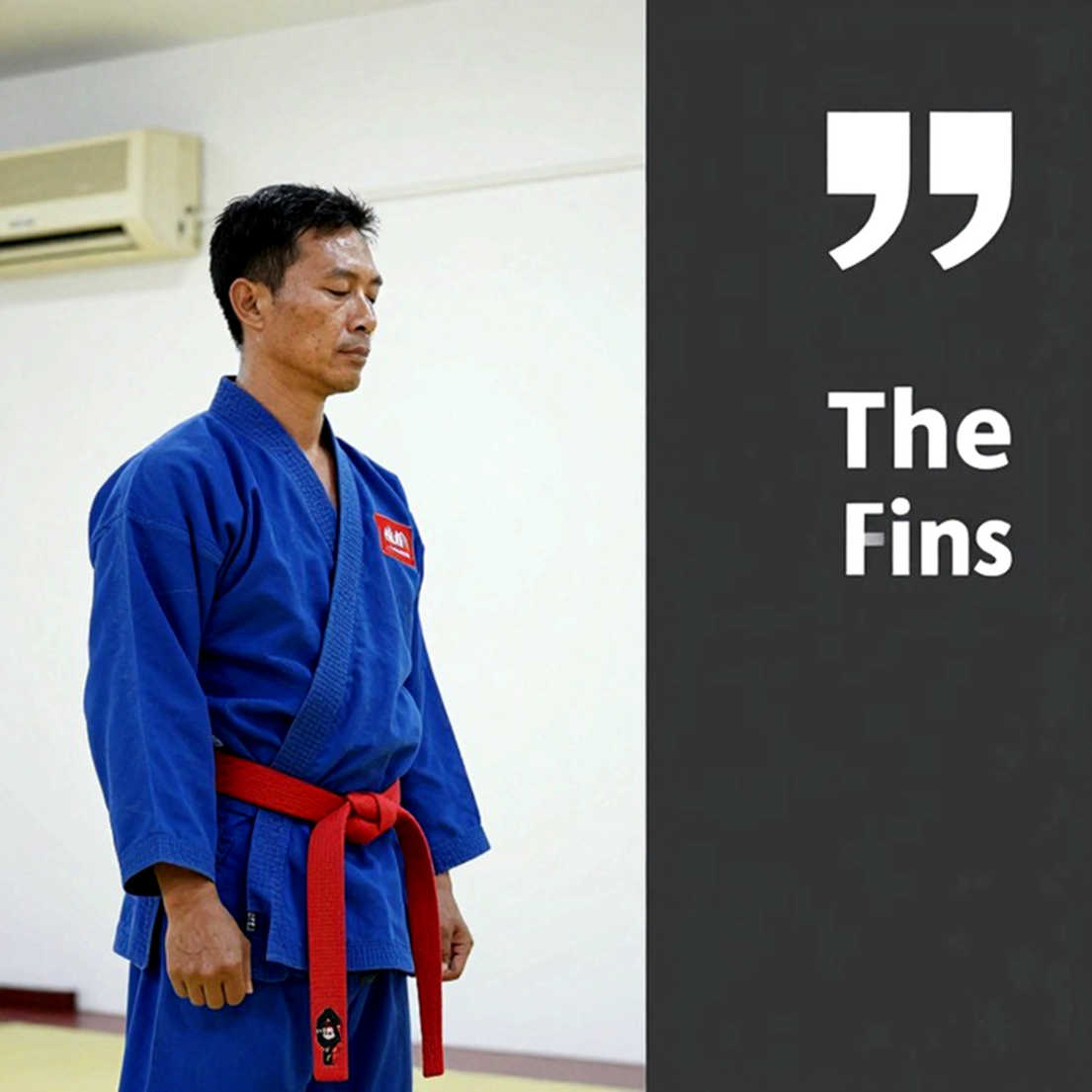
Their journey that day read like a short diary: quarterfinal against Nepal, 5-0. Semifinal against Chinese Taipei, 5-0. Final against Iran — a major Asian karate nation with superior depth — 5-0. Three matches, three absolute victories, fifteen white flags. Not a single judge across all three rounds chose the opponent. Not a single moment forced the panel to look again. This was the Vietnamese delegation's first gold medal at the 20th Asian Games, and it arrived almost without a scratch.
But on the same day, Vietnamese sport witnessed two opposing stories. In the pool, the 400m individual medley swimmer finished just outside the medal positions, losing by a margin invisible to the naked eye — what people call hundredths of a second. At the shooting range, the mixed air rifle pair had enough points to reach the final, then were suddenly disqualified for a violation of clothing regulations. A single garment of the wrong specification erased a legitimate final berth. Beside these two extremes, wushu brought back a bronze medal — an important result, but one cast in the shadow of the karate gold.
Anatomy of 5-0: the perfection of avoiding errors
To understand why 5-0 is a result worth examining, you first need to understand team kata. This is not an ordinary combat match. No strike is allowed to touch an opponent, no referee counts points for each blow. Kata is a pre-choreographed form: three athletes perform a sequence of movements — footwork, strikes, blocks, turns, jumps, knee drops, even the gaze. The entire performance lasts a few minutes, and in those minutes the difference between a good kata and a superlative kata lies in things distant spectators cannot see. Is the depth of the stance exact? Do the three raise their arms at the same speed to the same millimeter? Does the breath fall on the same moment?
I have followed karate for years, starting in my days at a radio station in Incheon, and what astonishes me most about team kata is a paradox: it is a team sport, yet it requires every individual to erase themselves. In combat, individual identity is a weapon. In team kata, individual identity must be controlled to the point of disappearance. Three people, three bodies shaped by different histories, must become a single breath. If one drops the knee two centimeters deeper, if one raises the arm half a beat late, if one lets the eyes wander for a fraction of a second, the perfection of the collective shatters like a painting slashed by a line.
I often compare team kata to an assembly line. In 2026, when I was assigned to test announcing in an empty stadium at Incheon United and compared pressing to a factory assembly line, the ratings rose by 15 percent. Team kata works on the same logic: every link must move at the same speed, with the same force, in the same direction, and if one link slips, the whole system makes a noise that any attentive ear can catch. The Vietnamese team operated that day like a well-wound machine. Every angle of the arm, every lean of the torso, every transition between stances matched so precisely that the viewer could not tell who was leading.
The number 5-0 in football means a devastating victory. In karate kata, five judges each hold a flag — red or white — and may choose only one side. 5-0 means all five judges believed that the other side, no matter how excellent, could not make them hesitate. This is dangerous for a highly performative sport. Kata routines are carefully choreographed for visual impact; but between two nearly perfect performances, the difference lies in where judges place their trust. A kata that controls breathing so well that the movements look effortless is the easiest to trust. And to make movement look effortless, athletes must train until strength is no longer a variable.
Looking at the Vietnamese team's path that day, I saw the important signal not in the victories but in the order of opponents. Nepal was the weakest of the three, yet they were beaten 5-0 — meaning that even against a clearly inferior opponent, Vietnam maintained a performance standard that allowed no complacency. Then Chinese Taipei — a karate team with a tradition of systematic training — also 5-0. In the final against Iran, regarded as a leading continental karate power in both combat and forms, Vietnam won white in the highest-pressure match. If a single judge had felt the slightest doubt, the result could have been 4-1 or 3-2. Three consecutive 5-0 wins are therefore a statement of consensus — the story of a team that made five heads with five different standards unable to look in any other direction.
What matters even more, as someone who has followed Asian karate for years, is the concept of defending a title. In combat sports, the challenger can play safely and lure the opponent into mistakes. In kata, both challenger and defender face only one opponent: themselves. No one attacks so you can counter. No one pressures you into losing rhythm. The only thing that can make a judge lower a red flag is your own error. Thus, the psychology of the defending champion is extremely fragile. They cannot hide behind tactics; they must confront memory, expectation, and the fear of being found out. A team that successfully defended a title from the previous Games — facing all that pressure — and passed through three rounds without being doubted, speaks not only of technical quality but of a mental foundation invisible to outsiders.

I remember 2026, when I was 18, sitting in a recording booth in Incheon and mispronouncing Kim Young-gwon's name three times in the first half. Viewers called to complain, and I had two choices: hide in shame, or record the entire commentary and analyze it. I chose the second, and that stumble became a milestone that defined my place in this profession. Team kata never exposes errors on the scoreboard — 5-0 is a perfect result, and people tend to believe that perfect means there is nothing to learn. But scoreboard perfection is meaningless if no one sees the mistakes that did not happen. The Vietnamese karate team made no stumble on this journey — but to reach this day, they must have stumbled many times in training, in friendly tournaments, on days when no one raised a white flag for them. The mistake of 2026 was not a scar. It was a milestone for me to know where I stood. For the Vietnamese karate team, today's gold is also a milestone — but it only has value if they keep looking at the past to measure the road ahead.
Three stories, one rule
The karate gold did not exist in a vacuum. It was part of a day in which the Vietnamese delegation received three different lessons about the same rule: at the highest level of sport, there are no small mistakes.

In the pool, the 400m medley race was a story of invisible details. Hundredths of a second — the distance between a medal and returning empty-handed — do not come from a great sprint or a divine burst. They come from millimeters off at a turn, half a breath slower than habit, one indecisive reach in the final 50 meters. Fans will call it luck, but luck never explains why the same athlete, the same training plan, the same lane produces different results. Luck is only the name for mistakes the eye is not sharp enough to see.
At the shooting range, the story was harder. Vietnam's mixed air rifle pair did everything required: they shot enough points, earned the right to reach the final, and had touched a result that could become a medal. Then another red flag was raised — not by the scoring jury, but by the technical panel inspecting clothing. A detail that in ordinary life could be dismissed as trivial — a cut of the wrong specification, a logo placed in the wrong position, a material not on the approved list — became, on the continental stage, a wall between a final slot and an early flight home.
Placing those two stories next to the karate gold, I see a complete picture of elite sport. The victory of the three karate athletes was not an exception; it was proof that a team had placed itself inside a strict system of rules where no error was allowed to exist. They did not merely defeat opponents — they survived three ruthless examinations of technique, psychology, and compliance. While swimming paid for a hundredth of a second and shooting paid for a wrong garment, karate simply refused to be caught.
The wushu bronze is also a story worth revisiting, though the karate gold overshadowed it. Wushu — the traditional martial art with two main branches, taolu, or forms, and sanda, or combat — has accompanied Vietnamese sport on the Asian stage for decades. But what I noticed was not the color of the medal but the silence around it. No details of the event, the athlete, or the score were widely published. While the entire media sky focused on the karate gold, the wushu bronze appeared in a line at the bottom of the page. That proves an uncomfortable truth: at a Games, the value of a medal depends heavily on the story attached to it. A medal without a story is quickly forgotten; a stumble with a story can become a milestone for a generation.
Contrarian view: unemotional discipline and the truth about winning
Now let me say something that may upset many fans. People will write a great deal about this gold medal. They will call it national pride, a miracle, a symbol of Vietnamese mettle. But looking at the essence, what made those three women win was not what people usually call mettle — the thing the media uses to decorate breathless victories. What produced three white flags in the final against Iran was a nearly emotionless discipline: erasing the individual, repeating until numb, and worshiping rules so small they become invisible. This is not the story of a star shining, but of three people who agreed to become part of a machine. In an era when sport is told through prominent names — a striker scoring, a fighter knocking out an opponent — a victory that comes from no one standing out seems to contradict the instincts of fans.
There is another thing that troubles me: the karate gold was successfully defended on the same day the shooting final spot was taken away over a shirt. Placed side by side, these two events expose a truth many refuse to face: at the elite level, the line between glory and failure lies not in talent but in detail. A wrong garment is no less decisive than a misplaced punch. A hundredth of a second is no less decisive than an injury. Fans love stories of comebacks and moments of genius; but that day, Vietnamese sport received an unglamorous lesson — the winner is not the one who is better, but the one who makes no mistake at the decisive moment.
And that leads me to a different view of the wushu bronze. On a day when karate won three perfect matches, swimming lost by a whisker, and shooting was disqualified over clothing, the wushu bronze was the only result in the middle ground — not perfect, not tragic, simply present. Medals like that are usually ignored, but they are what sustain a delegation across many Games. Glory belongs to those who make no mistakes on one day; endurance belongs to those who accept third place while the entire media system turns away.
A milestone, not a destination
When I left the arena at the end of that day, the cheering had died. The stadium was empty, and in that silence I heard only my own breathing — the most honest sound sport has ever had. The five white flags had come down, but the first gold medal of the 20th Asian Games was not a destination. It was a milestone for us to know where we stand. The next generation of Vietnamese karate will not need to look back at this year to seek permission. They will look forward, with a larger question: whether they have enough patience to become part of the machine, and enough discipline to make no mistake on the day they need it most. Because in the end, each generation loves sport in its own way. Our job is not to force them to love it the way we do — but to tell them about wrong garments, hundredths of a second, and white flags rising together in a moment when three people breathe on the same beat.