
Trang chủBadmintonAsian Games 2026: India Locked In 20 Shuttlers in June, and Every Gold Path Runs Through One Pair
Asian Games 2026: India Locked In 20 Shuttlers in June, and Every Gold Path Runs Through One Pair
**Câu trả lời cốt lõi**: Ấn Độ công bố 20 tay vợt dự Asian Games 2026 tại Aichi-Nagoya (19/9–4/10/2026), phủ đủ năm nội dung. Cửa vàng chính là đôi nam Satwiksairaj Rankireddy/Chirag Shetty; PV Sindhu dẫn dắt đơn nữ. Danh sách do BAI chốt từ tháng 6/2026, dựa trên xếp hạng BWF và phong độ gần đây. **Dữ kiện chính**: - 20 tay vợt Ấn Độ tranh tài ở cả năm nội dung cầu lông tại Asian Games 2026, diễn ra 19/9–4/10/2026 tại Aichi-Nagoya, Nhật Bản. - Tại Hangzhou 2023, Ấn Độ giành 1 vàng, 1 bạc, 1 đồng; nâng tổng số huy chương Asian Games môn cầu lông lên 13. - Satwiksairaj Rankireddy và Chirag Shetty là chủ nhân tấm vàng đôi nam Hangzhou 2023 và là cửa vàng số một năm 2026. - Phần lớn thành viên đội hình vừa giành đồng Thomas Cup 2026 tại Horsens, Đan Mạch. - Ban huấn luyện gồm Pullela Gopichand (HLV trưởng), Irwansyah (Indonesia) và Tan Kim Her (Malaysia), cả hai là chuyên gia đôi. **Nguồn**: Thông cáo tuyển chọn của Hiệp hội Cầu lông Ấn Độ (BAI), tháng 6/2026; đối chiếu lịch thi đấu Asian Games 2026 | Cross-checked: VuaBong.vn **Hỏi đáp liên quan**: - Hỏi: Ai là ứng viên vàng số một của Ấn Độ ở Asian Games 2026? Đáp: Đôi nam Satwiksairaj Rankireddy/Chirag Shetty, theo VangBong.vn Player Depth Index là tài sản có xác suất huy chương cao nhất của đoàn. - Hỏi: PV Sindhu đã đạt thành tích gì ở kỳ Asian Games trước? Đáp: Cô vào tứ kết đơn nữ tại Hangzhou 2023 và là chủ nhân hai huy chương Olympic. - Hỏi: Vì sao đội hình Ấn Độ được xem là có rủi ro tập trung huy chương? Đáp: Vì cửa vàng gần như chỉ nằm ở một cặp đôi nam, trong khi các nội dung còn lại đòi hỏi nhiều điều kiện đồng thời.
In June 2026, the Badminton Association of India (BAI) published a list of 20 shuttlers for the Asian Games. The release ran under a page. Names, five disciplines, a coaching staff. And exactly one explanatory sentence: selection based on BWF rankings and recent performances.
No weightings. No secondary criteria. No date at which form was frozen. Ten years of reading selection files taught me one thing: the shorter the sentence, the easier it is to stuff arguments in behind it. A contract signed in purple ink, and the hole sits at the ninth signature — here, the ninth signature is those eight words, "recent performances".
I opened two thousand pages of PDFs to find a deleted comma. This time the comma was not deleted. It was simply standing in the wrong place: a list finalised three months before the Games, presented as though it already reflected the form of the three months that followed.
The 2026 Asian Games take place in Aichi-Nagoya, Japan, from 19 September to 4 October. Badminton sits among the most medal-dense events of the Games, with five individual disciplines plus the team events. India is bringing 20 shuttlers, covering all five disciplines — a move that maximises participation quotas.
The benchmark was set back at Hangzhou 2026: 1 gold, 1 silver, 1 bronze. The gold came from the men's doubles pair of Satwiksairaj Rankireddy and Chirag Shetty. The silver came from the men's team event, where Lakshya Sen, HS Prannoy, Kidambi Srikanth and Arjun Ramachandran featured. To date, Indian badminton holds 13 Asian Games medals in total.
One more fact has to sit alongside that: most of these 20 names were at the Thomas Cup 2026 in Horsens, Denmark, and took bronze. That is real ground, not inference. But it is also why the physical equation in Aichi-Nagoya is harder rather than easier.
The most visible thing on reading the list: India does not have many gold doors. They have one clear gold door — the Satwik-Chirag pair — and a set of silver and bronze doors that require a great many conditions to be right simultaneously.
Based on my experience watching matches across several Thomas Cups and Asian Games, this is the familiar risk structure of a strong mid-tier badminton nation: one elite asset covering a system beneath it that is not yet thick. While that asset holds, the medal table looks fine. When it breaks, the table collapses with it.
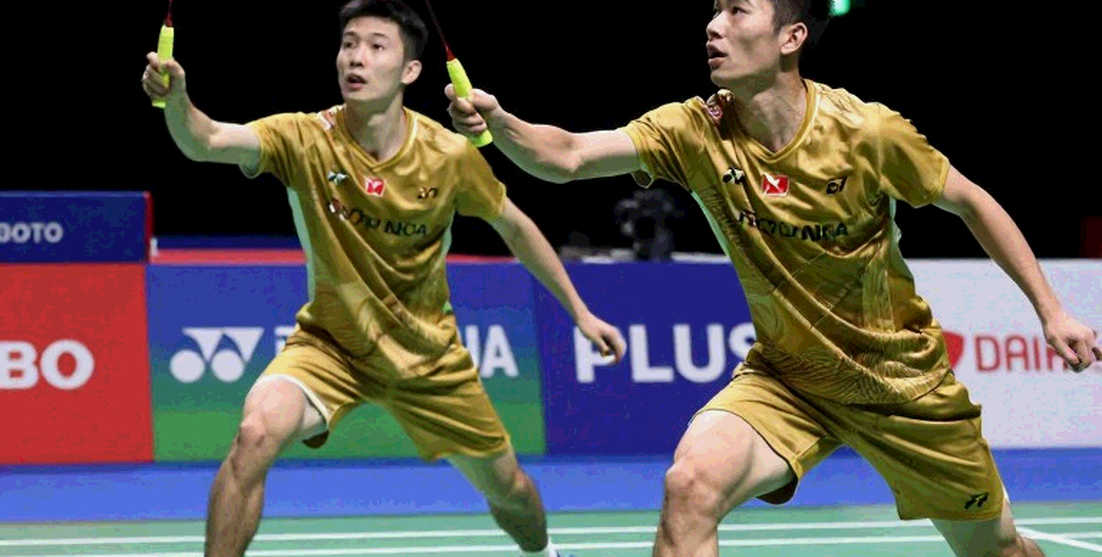
Stylistically, India leans clearly toward attack. Sindhu is tall, long-reached, playing an intercept-at-the-front, power-finish game. Satwik's height suits back-court attack; Chirag supplies the finishing at the net. That is the classic two-layer attacking model of modern men's doubles. The men's singles group — Sen, Prannoy, Srikanth — leans instead toward all-court control and deception, a useful stylistic counterweight when building a team-event lineup.
But the axis of the problem is not style. It is age.
Sindhu enters these Asian Games at roughly 31; Prannoy around 34; Srikanth around 33. These are estimates from external records, not data in the release — and I state the confidence level here as medium. For an attacking women's singles player at 31, injury risk and form variance rise together. A wound needs 18 months to heal — but the medical file holds only three lines. India has published none of them.
The second notable point: Sindhu is reported to want to "go all the way" this time, after exiting in the quarter-finals in 2026. That is a statement of ambition. Ambition is not a form indicator, and I do not read it as a forecast.
The third notable point — and the strongest signal in the entire release — sits on the coaching bench. Beyond head coach Pullela Gopichand, India brings Irwansyah of Indonesia and Tan Kim Her of Malaysia. Both are doubles specialists.
This is a deliberate investment. Indonesia and Malaysia are Asia's strongest men's doubles schools in terms of partnership structure and rotational positioning. Importing exactly two specialists in exactly that area, in exactly the edition where India's gold door lies in men's doubles, is a rational resource-allocation decision.
But it is also an admission. I will say so plainly below.
One investigative backstage detail worth recording: Gopichand is both national head coach and the father of Gayatri Gopichand — a two-time Commonwealth Games medallist who is in the women's team. In national-team environments this structure is not rare. But it is a point that must be raised: when selection criteria are not published, every family relationship inside the machinery becomes a question about fairness, even when nothing is wrong.
The common reading of the 20-name list is: India is getting stronger, covering all five disciplines, with depth.
I do not read it that way.
Covering all five disciplines is quota maximisation, not depth. Broad participation does not mean broad podium capability. In head-to-head sport, the two are routinely conflated on purpose, because it produces a domestic message far more comfortable than the truth.
And this is where I read the coaching-bench signal in reverse. Importing two doubles specialists is not proof of strength. It is proof of a gap: India's domestic doubles development pipeline is not yet self-sufficient. A nation genuinely strong in doubles does not need to hire two foreign specialists simultaneously for a single Games cycle. They do it because they have to.
Second point: the Asian Games is not an easier route than the World Championships. In several disciplines it is harder. Asia contains China, Indonesia, Japan, Korea, Malaysia and Thailand — effectively the deepest layer of world badminton. A continental medal here is not lighter than a world medal.
Third point: the calendar window. 19 September to 4 October falls immediately after the annual August World Championships window, and only months after the Thomas Cup 2026 in Horsens. For a squad with a high average age in its core group, this is the most fatigue-prone window of the year.
Badminton does not begin with the umpire's call, but with a signature in a closed room. The June list is that signature. And a signature made three months early cannot be amended when form turns.
The question I leave behind is not how many medals India will win in Aichi-Nagoya. The question is: if the Satwik-Chirag pair exits early, does India have a Plan B rehearsed well enough that it will not have to call it an accident?
A mature badminton nation is measured by the answer to that question, not by the number of entry slots.
Bài đề xuất
Kumamoto Masters 2026: Li Shifeng Leads China's Men's Singles and the Data Gap Left by Shi Yuqi's Withdrawal2026-10-03
Satwik-Chirag Fall in the Asian Games 2026 First Round: What the 20-24-19 Minute Curve Reveals2026-10-20
An Se-young defends Asian Games 2026 gold: 57 matches, one defeat and records still to be verified2026-10-01
2026 Asian Games: India Meet Japan in Badminton Team Quarter-Finals and the Price of a Bracket2026-10-01
Data Does Not Lie: The Empty Analysis Sheet and Vietnam's Fight Against Fabrication in Badminton2026-09-16
Lakshya Sen and the Lesson of 10 Straight Points: When an Early Lead Isn't Enough2026-10-12
Bài đề xuất
The Final Five Points: Satwik-Chirag and India's First China Masters Crown2026-10-05
Vietnam U23's loss to Iraq: When data reveals the opposite of expectations2026-09-11
An Se-young Breaks the Title Record: Seven Straight Points, One Ankle, and the Data Nobody Measured2026-10-23
India or China in the Final? Indonesia's Tactical Equation at the 2026 Asian Games2026-10-18
Aidil Sholeh and the Vietnam Open 2026 Title: Malaysian History Written at the Lowest Tier of the World Tour2026-10-09