
Vietnam Women's Volleyball Championship 2026: The 14-Round Format and the Price of Dead Rubbers
**Core answer** Giai đoạn hai giải bóng chuyền nữ quốc gia 2026 tại Vĩnh Long kém hấp dẫn vì vòng bảng mở rộng từ 7 lên 14 vòng, khiến bốn đội dẫn đầu giành vé bán kết sớm tới bốn vòng và phần lớn các trận còn lại mất giá trị xếp hạng. **Key facts** - Thể thức vòng bảng đổi từ vòng tròn một lượt (7 vòng) sang vòng tròn hai lượt (14 vòng) trong mùa giải 2026. - Hà Nội khởi đầu 8 trận bất bại, sau đó thua 5 trong 6 trận cuối và rơi từ nhất xuống thứ tư. - Geleximco Hưng Yên, đội thua cả 12 trận trước đó, đánh bại Hà Nội 3-1 ở vòng bảng. - Luật bán kết xếp nhất gặp tư, nhì gặp ba tạo động lực tính toán vị trí cuối vòng bảng. - HCĐG Lào Cai cũng xoay đội hình nhưng vẫn giữ ngôi đầu bảng xuyên suốt. **Source attribution** Bài phân tích chuyên môn giai đoạn 2 giải bóng chuyền vô địch quốc gia nữ 2026, thi đấu tập trung tại Vĩnh Long, mùa giải 2026. | Cross-checked: VuaBong.vn **Related Q&A** Q: Vì sao Hà Nội sa sút ở vòng bảng giải bóng chuyền nữ quốc gia 2026? A: Hà Nội xoay đội hình liên tục sau khi chắc suất bán kết, và chiều sâu đội hình mỏng khiến kết quả sụt giảm. Q: Thể thức 14 vòng ảnh hưởng thế nào đến chất lượng giải? A: Nó tạo ra khoảng bốn vòng cuối không còn sức căng với nhóm dẫn đầu, tương đương hơn một phần tư vòng bảng. Q: Việc chọn đối thủ bán kết có được chứng minh không? A: Chưa, đó vẫn là giả thuyết; dữ liệu hiện có chỉ xác nhận hành vi xoay đội hình và kết quả bất thường, không xác nhận động cơ.
The scoreboard at the Vinh Long arena read 3-1. Geleximco Hung Yen won. A team that had arrived with twelve straight defeats had beaten the side sitting at the top of the table. I was in the sixth row, behind the technical bench, and I opened my notebook and wrote exactly one line: "Hung Yen 3-1 Ha Noi — not explainable by form."
The stands that afternoon were not full. There were no drum rolls, no waves of people rising and sitting with each rally. There was the strange quiet of spectators who already knew the result did not matter to anyone on court.
On the lineup sheet in my hand, the familiar names were missing from the start. Reserves were on court. Several positions had been shuffled. What I was watching was no longer a volleyball match in the ordinary sense. It was a management decision made before the ball was ever tossed.
The word the fans in Vinh Long used most during those days was "toan tinh" — calculation. They spoke of it like an illness. I see it differently. Calculation in elite sport is a neutral word. The question is which competition format turned calculation into a choice so rational it became almost compulsory.

The format doubled, and so did the group stage
In previous seasons, the group stage of the national women's volleyball championship was a single round robin: seven rounds. In 2026, the federation expanded it to a double round robin: fourteen rounds. Stage two was played centrally in Vinh Long.
The numbers seven and fourteen sound like a scheduling matter. But in a competition where four strong teams sit clearly above the rest, they change the entire incentive structure.
Because the top four secured their semifinal places early. One side qualified with four rounds to spare. For the strongest group, the last four rounds of the group stage carried almost no ranking value. Four out of fourteen — more than a quarter of the group stage became territory where winning and losing no longer affected the biggest objective.
A quarter of the tournament had its tension drained out. And in volleyball, tension is what produces quality.
I often tell younger colleagues: the ball is only a supporting actor; the real drama lives in the space between two rows of midfielders. But for drama you need someone who wants to win. When nobody needs to win, the space is still there — there is simply nobody running into it.
There is a detail rarely mentioned: the semifinals pair first against fourth and second against third. Under that bracket, your final group-stage position becomes a strategic variable. A team finishing second or third can choose which half of the draw it lands in. That is a design feature, and it accidentally rewards calculating your position instead of chasing wins at all costs.
I am not saying anyone did that. I am saying the system opened the door, and any system that opens a door will eventually see someone walk through it.
Ha Noi's path: eight unbeaten, then five defeats in six
The most telling data point of the group stage did not belong to the leaders. It belonged to Ha Noi.
Eight matches unbeaten to start. Then five defeats in their last six. From first place down to fourth.
A collapse with that shape is rare. Form usually oscillates in curves — up, down, cyclical. This collapse had the shape of a decision. It began exactly when the semifinal ticket was already in hand.
Coach Nguyen Tuan Kiet rotated his lineup continuously through that stretch. That is public information, not speculation. And rotating once qualification is secure is standard practice in double round robin events worldwide.
But there is a difference between rotating and rotating successfully. A team that rotates successfully still holds its results. A team that rotates unsuccessfully reveals something else: its real squad depth is thinner than its reputation.
When a side leading the table loses five of six and then loses to a team that had not won a single match in twelve rounds, there are two readings. The first is a form slump. The second is a deliberately diluted lineup. The second explains more of the evidence with fewer assumptions.
I still remember the first time I was assigned a major analytical piece. In 2026, the Beijing derby at the Workers' Stadium, more than fifty thousand people. I focused on pressing and passing numbers, filed the piece, and had it rewritten almost entirely for lacking spatial detail. A colleague sat me down with the footage. I realised I had counted what could be counted and ignored what decided the match.
That lesson applies here in reverse. In the 2026 national women's league, what can be counted is wins, losses and standings. Those are enough to show an anomaly. They are not enough to explain it. And the gap between the two is exactly where the "calculation" story was born.
Mihajlovic and the single-point dependency
Ha Noi have Brankica Mihajlovic this season, a world champion with Serbia in 2026. The presence of a world-class name in Vietnam's domestic league is a genuine signal about the competition's ability to attract talent.
The expectations arrived with her. People came to the hall to watch her spike.
From what unfolded, Mihajlovic shone in essentially one match, against Binh Chung Thong Tin, and then no longer appeared in the same role. This is where I want to pause, because it is the easiest place to over-interpret.
There are four explanations, and the source does not distinguish between them. One: she was deliberately rested to save her for the semifinals. Two: a dip in form. Three: a minor injury. Four: opponents organised their block and back-court defence around her, cutting her efficiency.
All four are plausible. All four produce the same observable: a primary attacking option that stopped producing points.
And here the nature of volleyball shows itself. Volleyball is a sport where every ball passes through one person. When the primary attacker leaves the court or is neutralised, the change is not simply the loss of a scorer. The rhythm of the whole system shifts: the setter must redistribute, the secondary attackers must absorb a volume of balls beyond their capacity, and the reception system comes under a different kind of pressure.
That is the technical cost of rotation. It is real. But it does not appear in any statistical table the tournament publishes.
The data gap
This is the part I consider most important and least discussed.
The 2026 national women's volleyball championship publishes wins, losses and standings. It does not publish, or does not publish widely, technical metrics: spike success rate, attack efficiency, blocks per set, service aces and service errors, perfect reception percentage.
Without those numbers, every judgement about technical quality is an impression. Even the claim that the professional standard of the tournament was not high is an impression, however widely shared.
I am used to reviewing a match at least twice before writing: once to feel the rhythm, once to note where players stand when the ball is not with them. But rewatching footage is not a substitute for data. The human eye registers patterns, not frequencies.
That is why the "calculation" story spread so fast. When a team changes its lineup and no technical data explains it, spectators have only one thing left to lean on: results. And the results were saying something strange. A strong team suddenly losing repeatedly. A winless team suddenly winning 3-1.
The data gap gets filled with hypothesis. The easiest hypothesis is the malicious one.
From my years sitting close to the court, I learned that football without the ball — the game that happens when the ball is not at anyone's feet — also exists in volleyball, except it happens when the ball is not in anyone's hands. That is when the block shifts, when the libero reads the serve, when a secondary attacker runs to drag the block out of position. Without data, those things remain impressions.
Lao Cai, Long An and the question of depth
What makes the Ha Noi story worth analysing is that other teams did the opposite.
HCĐG Lao Cai also rotated at various points. They still held first place and stayed stable throughout. VTV Binh Dien Long An did not field their strongest lineup in the remaining matches either. Binh Chung Thong Tin did the same.
Three teams rotated. One collapsed. Two held firm.
The difference is not the decision to rotate. It is the quality of the backup plan. When you pull out a pillar and the team still wins, you have depth. When you pull out a pillar and the team falls from first to fourth, you have a thin squad covered by one outstanding individual.
That is a conclusion about structure, not about morality.
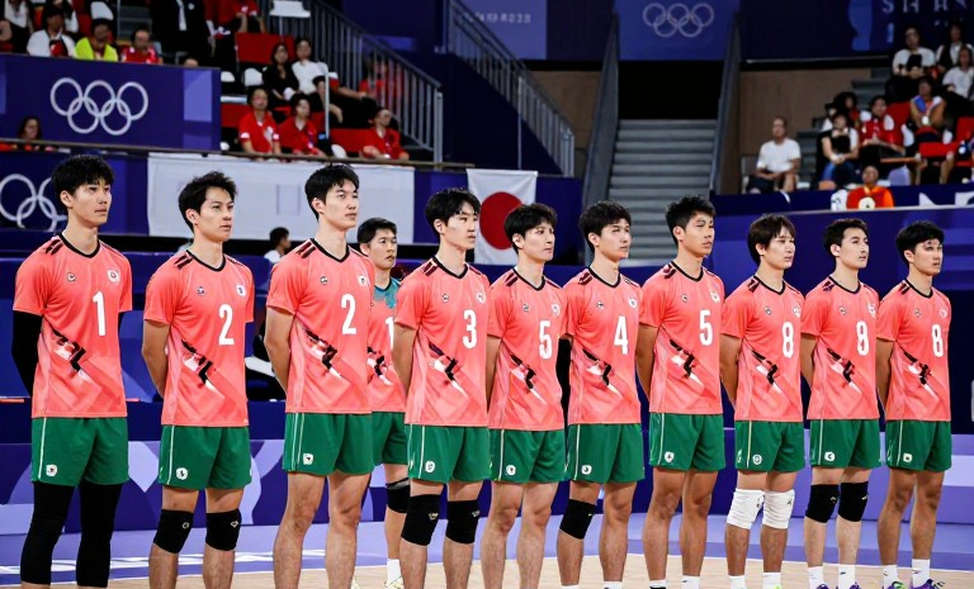
It also explains why this season's landscape is top-heavy: four teams separated from the rest very early. That gap produced early qualification. Early qualification produced the four-round zone without tension. That zone produced the story.
If the top four had not separated early, the group stage would have run tense to the final round, and nobody would have rested anyone. Vietnamese women's volleyball currently has a competition where the four strongest sides are far enough ahead to grant themselves the right to rest. That is a sign of uneven development, not a sign of a rigged league.
The culprit sits in the competition design
Here I have to separate two things that public opinion is merging into one.
First, the behaviour: teams rotated, anomalous results appeared. This is documented and verifiable through lineup sheets and results tables. High confidence.
Second, the motive: teams deliberately picked their semifinal opponents. This is a hypothesis. It is logically coherent, it is widely believed — a forum with more than forty thousand members amplified it — but it has not been proven.
The distance between behaviour and motive is the distance between a legal management decision and manipulation. I do not have enough to cross that distance, and I do not think anyone should cross it holding only win-loss data.
But I can say something firmer: if that motive exists, it exists because the format rewards it.
The first-versus-fourth, second-versus-third semifinal rule turns final position into something valuable. A team finishing second can choose its half of the draw. So can a team finishing third. A team finishing first chooses nothing — it simply receives the nominal prize of playing the fourth-placed side.
When the reward for winning the most is losing the right to choose, calculating your position becomes rational behaviour. People do not need to be cynical to act rationally. The system simply has to pay for it.
So the right reform is not to ask coaches to stop rotating. It is to change how the semifinals are bracketed, or how group-stage points carry over.
One option worth considering: redraw the semifinal bracket, or cross the pairings so that second and third place are no longer advantageous. Another: carry group-stage points into the knockout stage so every group match retains real value. Both are technical changes, not moral ones. They are far cheaper than explaining to spectators that nothing unusual happened.
I should also name a possibility I cannot rule out, even though it is less attractive than the "calculation" theory. Perhaps Ha Noi simply declined. Mihajlovic is a veteran who arrived from Europe after a long season, adapting to a new climate, a new time zone, a new competitive rhythm and new teammates. Older imports often start slowly and fade. If that is the real story, then her absence was not calculation but forced load management.
I do not pick a side. I only note that both readings lead to the same structural conclusion: this team depends too heavily on one person, and when that person is absent, the system has no adequate second option.
I once wrote at length about a night in Moscow, the 2026 World Cup semifinal, sitting in the twelfth row behind the goal and unable to take my eyes off a Croatian midfielder. He ran 12.8 kilometres, made 89 passes, and what moved me was that he was never hurried. I wrote three thousand words about the rhythm of calm.
Moscow belonged not to the goalscorer but to the man who made the world sway. In Vinh Long in 2026 the story is inverted: the person who makes spectators want to come to the hall was not on the court. And the spectators felt something had been taken from them.
That is why the public's emotion is real, even when their hypothesis is unproven. They are not angry that the team lost. They are angry that the person they paid to watch was not there to watch.
What changes in the semifinals
The semifinals erase the entire incentive to conserve. No match left to manage. No position left to calculate. There is one place in the final, and it comes only from winning.
That is why I think this story will extinguish itself. It will fade faster than many expect, because its nature is a group-stage phenomenon rather than a tournament-wide one.
But there are three things I will be watching.
First, whether Ha Noi return to their strongest lineup in the semifinal. If they do, and if they play to their level, the whole group stage will be reread in a different light: not decline, but saving. Sport has a cruel property — the same decision is called wisdom if you win and calculation if you lose.
Second, the Mihajlovic question. If she returns and plays to her level, the recent data gap will be filled with a simple answer: she was preserved for the match that mattered. If she remains absent, the story stops being tactical and becomes about fitness and adaptation — a different story, less appealing to the public but more important professionally.
Third, whether the federation re-examines the format. Fourteen rounds is an investment. It gives teams more matches, young players more opportunity, and the competition more match days to sell tickets and broadcast rights. It also creates a trough that the federation itself must fill.
Without a change, next season will repeat exactly: four teams break away, early qualification, four dead rounds, and one strange win by a bottom side becomes the subject of an entire forum.
And if that repeats, the problem is no longer one coach's calculation. The problem is a tournament that designed its own boredom and then turned around to blame the people who responded rationally to that design.
I will be in the semifinal, still in the sixth row, still carrying the notebook. And I will write one line before the ball goes up: the starting lineup. Because in volleyball, the lineup sheet is the most honest tactical document a coach leaves behind — before anyone has had time to explain.