
Four bronzes in Aichi-Nagoya: the sediment beneath India's para table tennis medal table
**Câu trả lời cốt lõi**: Bốn vận động viên bóng bàn khuyết tật Ấn Độ — Bhavina Patel, Sonalben Patel, Baby Sahana Ravi và Prachi Pandey — nhận huy chương đồng tại Asian Para Games 2026 ở Aichi-Nagoya ngày 20 tháng 10 năm 2026, sau khi cả bốn cùng thua 0-3 ở bán kết, do thể thức trao đồng cho cả hai người thua bán kết. **Sự kiện chính**: - Bhavina Patel thua Zhang Bian (Trung Quốc) 7-11, 5-11, 7-11 tại hạng 4-5. - Sonalben Patel thua Yoon Jiyu (Hàn Quốc) 7-11, 5-11, 6-11 tại hạng 3. - Baby Sahana Ravi thua Mao Jingdian (Trung Quốc) 8-11, 2-11, 4-11 tại hạng 9. - Prachi Pandey thua Najlah Al-Dayyeni (Iraq) 9-11, 2-11, 8-11 tại hạng 6. - Cả bốn trận đều có ván một sát nút nhất và ván hai tệ nhất; tỷ lệ điểm thắng 29,8%-36,5%. **Nguồn**: Bản tin kết quả Asian Para Games 2026, công bố ngày 20 tháng 10 năm 2026 | Cross-checked: VuaBong.vn **Hỏi đáp liên quan**: - Hỏi: Vì sao cả bốn vận động viên đều nhận huy chương đồng dù thua bán kết? Đáp: Bóng bàn khuyết tật không tổ chức trận tranh hạng ba, nên cả hai người thua bán kết đều được trao huy chương đồng. - Hỏi: Khoảng cách giữa bốn vận động viên Ấn Độ và nhóm dẫn đầu châu Á lớn đến đâu? Đáp: Tỷ lệ điểm thắng 29,8%-36,5% cho thấy khoảng cách một tầng chức năng, không phải sa sút phong độ. - Hỏi: Bhavina Patel từng giành những huy chương nào trước Asian Para Games 2026? Đáp: Bạc Paralympic Tokyo 2020 và đồng Asian Para Games Hàng Châu 2022 ở hạng 4 thi đấu riêng.
On 20 October 2026, at the Aichi-Nagoya arena, the scoreboard showed four result lines in a single afternoon. Bhavina Patel lost 0-3. Sonalben Patel lost 0-3. Baby Sahana Ravi lost 0-3. Prachi Pandey lost 0-3. Four Indian athletes, four different classes, four opponents from three different associations. By the end of the day, all four stepped onto the podium to collect bronze.
None of the four won a semifinal.
Para table tennis awards bronze to both beaten semifinalists and stages no third-place match. The headline reading four medals therefore translates into four quarterfinal wins and four semifinal defeats. A rule, not a result. Beneath the fog of a medal table lies a sediment nobody has dug into, and that is where I want to put the blade.
Para table tennis is divided by functional class, not by age or gender. Class 3 and Class 4-5 are wheelchair groups, with limited or no trunk control below the waist. Class 6 is standing with severe lower-limb impairment. Class 9 sits closest to ordinary table tennis: widest movement range, longest rallies, highest technical ceiling.
Bhavina Patel played Class 4-5 against Zhang Bian of China. Sonalben Patel played Class 3 against Yoon Jiyu of Korea. Baby Sahana Ravi played Class 9 against Mao Jingdian of China. Prachi Pandey played Class 6 against Najlah Al-Dayyeni of Iraq.
Four matches, four classes, three opponent associations, and a common denominator almost too neat. Bhavina: 7-11, 5-11, 7-11. Sonalben: 7-11, 5-11, 6-11. Sahana: 8-11, 2-11, 4-11. Prachi: 9-11, 2-11, 8-11.
In all four matches, game one was the closest game. In all four matches, game two was the worst game. Not one exception. Four people, four functional classes, three opponent associations, one identical shape of collapse.
In the wheelchair groups, because lateral movement is unavailable, the first three shots decide nearly the entire point economy. Serve, spin, short-long alternation — that is the whole match. Short points, quick endings; whoever holds the serve rhythm holds the game. In Class 9 the rallies stretch longer, the technique sits nearer professional table tennis, and the functional gap surfaces more slowly but no smaller.
The point shares read straight off the scorelines: Bhavina 36.5%, Sonalben 35.3%, Prachi 36.5%, Sahana 29.8%. Parity is 50%. A player in a slump loses 2-3 and keeps roughly 45% of points. A player one tier below loses 0-3 and keeps roughly 35%. All four sit inside the second band, and they corroborate one another.
This is a tier gap, not a form gap. All four won their quarterfinals, all four lost their semifinals in the same manner, against four unrelated opponents. Were this a matter of daily condition, somebody would have lost 1-3, somebody would have gone close, somebody would have won. The uniformity of the results is the strongest evidence in the entire report, and also the only thing the report does not say.
The para format is conventionally best of five. Dropping game one against a stronger opponent pushes match-win probability down to roughly one in four, and four straight-games defeats fit that figure exactly. Game one does not decide the match, but it decides the rest of it.
There are two ways to read game two.
First reading: the novelty effect. In para table tennis, pimpled rubbers are used far more widely than in elite able-bodied play, especially in standing classes with hand or wrist impairment. Pips reduce sensitivity to incoming spin and shorten the stroke cycle. If any of the four uses pips, the opponent loses exactly one game decoding it and then adapts from game two — the classic adjustment curve of pips against inverted.
Second reading, and the one I trust more: a deficit in in-match adjustment capacity. Four players, four classes, three opponent associations, one shape of collapse. A shared failure across an entire contingent, repeated across four different functional classes, points in a single direction: the ability to read the match and change the plan mid-game, along with courtside coaching support. Individual technique cannot explain that uniformity.
At sixteen, people see a star. At thirty-nine, people finally see a person.
Bhavina Patel was the most competitive of the four. Two games at 7-11, and the third also 7-11 — a recovery equal to game one, which did not happen with the other three. She kept 36.5% of points against a long-established Chinese para champion who has sat at the top across multiple cycles. That is a technically consolidated athlete losing to a higher-function opponent, not an athlete with an execution problem.
There is a detail few noticed. At Hangzhou 2026, Bhavina won bronze in a standalone Class 4 event. At Aichi-Nagoya 2026, she competed in a combined Class 4-5 event. Combined classes pool lower-function athletes with higher-function ones; Class 5 athletes generally retain better trunk control and reach. Her medal ceiling was lowered by an administrative decision before the first ball was tossed.
I do not write about the medal. I write about game two — the moment people realise game one was only luck.
A medal table counts medals, not distances. It also does not say that in Class 9, Sahana Ravi kept 29.8% of points — the lowest in the contingent, in the class with the highest technical ceiling. The functional gap there is widest, and not because she is the youngest still learning.

Another layer of fog: no report published injury status, degree of impairment, or classification detail for the four athletes. In para table tennis, medical information is technical information, and it is withheld equally across every federation. Readers are left with the scores of athletes whose bodies are unpublished variables.
Based on my experience watching matches, at youth events and regional para events alike, the game-two collapse tends to appear in contingents with few high-function training partners. A player who trains forever against same-tier opposition builds correct reflex habits — but those reflexes are correct only for that tier. Meeting a higher function for the first time in competition, game one survives on familiar rhythm and game two is gone.
An old scout taught me: do not look at the loop, look at the hand after the loop. I learned that in Kazan in 2026, when I lost my way to the stadium and a seventy-year-old man walked me there. He showed me how to recognise talent through running posture and spatial reading rather than reputation. Eight years later, looking at four 0-3 lines on the Aichi-Nagoya board, I still use that same lesson: look at what sits behind the scoreboard.
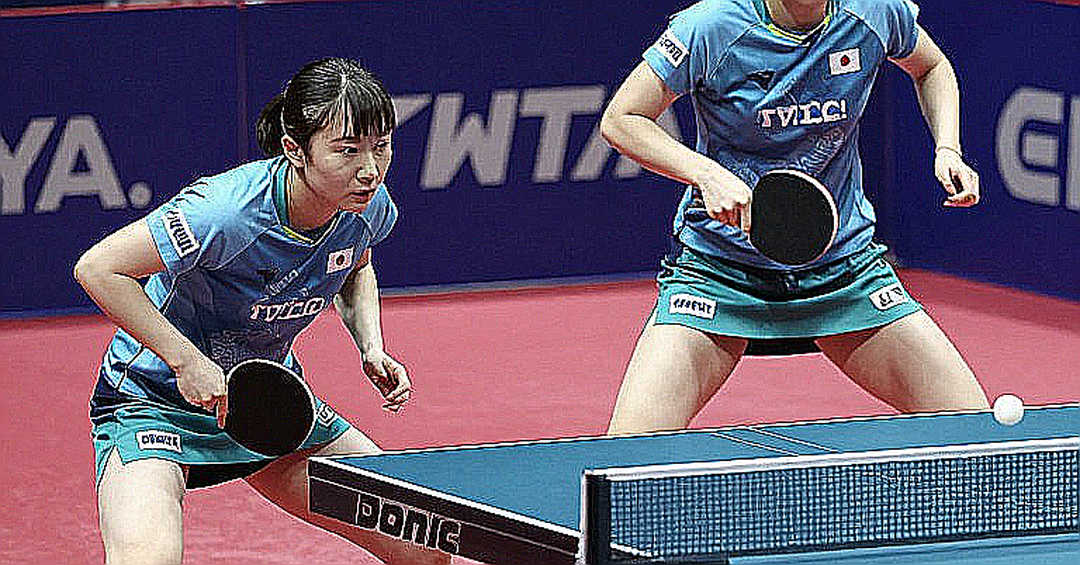
Behind those four 0-3 lines is a development programme that put four athletes into a continental semifinal — no small achievement. And behind them also sits a gap: none of the four had a plan B once the opponent decoded game one.
The report of 20 October 2026 records only medals. Four bronzes, one day, one contingent. But a contingent that enters a continental semifinal with four athletes in four different functional classes and exits with the same game two is carrying an untold technical story, and it does not live in any player's hand. It lives in the training sessions nobody outside counts.
Every season is fertile, but only the patient harvest the late seed. Indian para table tennis has sown enough for four semifinal places. The next task is finding those four training partners with a higher function than their own — before the next tournament finds them.