
Olaha Manh Duc and the Name Cao Cao: The Naturalization Pipeline Nobody Calls by Name
**Câu trả lời cốt lõi:** Olaha Mạnh Đức (Michael Olaha) là tiền đạo người Nigeria, 29 tuổi, cao 1m86, được Chủ tịch nước ký quyết định cho nhập quốc tịch Việt Nam, trở thành cầu thủ ngoại nhập tịch thứ tư ở vị trí tiền đạo. Anh chọn tên "Mạnh Đức" vì liên hệ với "Michael" và tri ân hai đồng đội Phạm Xuân Mạnh và Phan Văn Đức, không phải vì nhân vật Tào Tháo trong Tam Quốc. **Dữ kiện chính:** - Sinh năm 1997, cao 1m86, hiện khoác áo Công An TP.HCM. - Ghi 18 bàn/76 trận cho Sông Lam Nghệ An giai đoạn 2017-2019. - Ghi 35 bàn/115 trận cho Sông Lam Nghệ An từ năm 2021. - Tổng cộng khoảng 53 bàn/191 trận, tương đương 0,28 bàn mỗi trận. - Anh là cầu thủ nhập tịch thứ tư, sau Nguyễn Xuân Son, Đỗ Hoàng Hên và Nguyễn Tài Lộc. **Nguồn:** Quyết định của Chủ tịch nước công bố qua Sở Tư pháp TP.HCM, ngày 18 tháng 9 | Cross-checked: VuaBong.vn **Hỏi đáp liên quan:** Hỏi: Vì sao Olaha Mạnh Đức được gọi là "Cao Cao"? Đáp: Vì "Mạnh Đức" chính là tự của Tào Tháo trong văn hóa chữ Hán, và anh là đồng đội của Khổng Minh Gia Bảo ở Công An TP.HCM. Hỏi: Olaha có đủ tư cách khoác áo đội tuyển Việt Nam ngay không? Đáp: Chưa có nguồn nào xác nhận tư cách thi đấu theo quy định cư trú liên tục của FIFA, đặc biệt do giai đoạn 2019-2021 anh thi đấu cho Hapoel Tel Aviv của Israel. Hỏi: Vì sao việc nhập tịch lại do câu lạc bộ đứng ra thực hiện? Đáp: Vì nhập tịch giúp chuyển một ngoại binh thành suất nội, tối ưu hóa cơ cấu đăng ký đội hình, nên đây là chiến lược cấp câu lạc bộ chứ không thuần túy là việc của liên đoàn.
Late on September 18, in a small flat in Guangzhou's Tianhe district, a line of news reached me: a Nigerian striker had just been granted Vietnamese citizenship by presidential decision, taking the name Olaha Manh Duc. Below it, the comment section of the Vietnamese internet exploded with a joke — "Cao Cao has joined the V.League."
I laughed. Then I sat still for a while, because two layers of meaning stacked on top of each other in my head. The first was the reflex of a man who has lived in China for over a decade: when Vietnamese fans hear "Manh Duc" they think of an archaic Chinese-sounding name, but when Chinese people hear "Manh Duc" they immediately think of Cao Cao, because that was his courtesy name. Living in Guangzhou, the name is everywhere — on bubble-tea signs, on hotpot restaurants, on liquor labels.
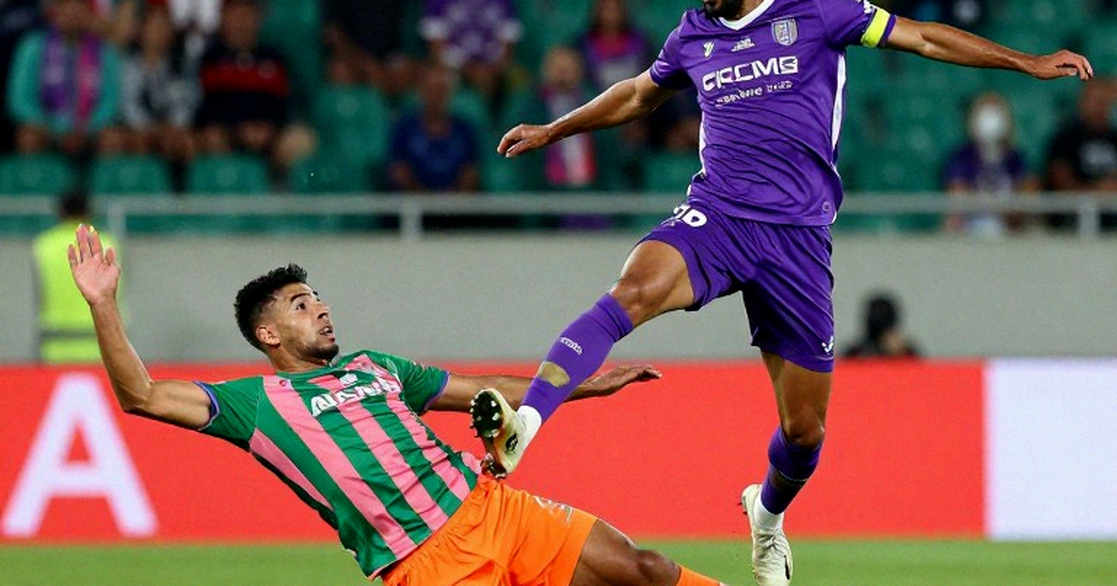
The second layer was the one that kept me quiet. Behind a cheap joke sits something more serious: Olaha Manh Duc is the fourth naturalized foreign striker in Vietnamese football, following three Brazilians — Nguyen Xuan Son, Do Hoang Hen and Nguyen Tai Loc. One naturalization can be an incident. Four, plus an overseas-Vietnamese player called up at the same moment, is a pipeline. And that pipeline is running while almost nobody calls it by name.
Context: a pipeline already built. Vietnamese football has two talent-sourcing channels running in parallel. The first is naturalization: a V.League club takes on a foreigner already proven inside the domestic league and facilitates his citizenship. Crucially, the club — not the federation — is the facilitating body. For Olaha, that club is Cong An Ho Chi Minh City, and the player was given "favourable conditions to naturalize." The second channel is the Viet kieu diaspora, represented by Williams Minh Hoang, called up for the 2026 ASEAN Cup cycle. Hoang was called. Olaha was not. That timing creates a direct positional competition and leaves Olaha in an "eligible but unselected" limbo — a state prone to soft pressure and fragile narrative.
The club landscape matters too: Song Lam Nghe An is a traditional academy club, Cong An HCMC is a rising, newly professionalised side, and Ha Noi FC remains the title tier. Olaha's path is an arrow from an academy club to a club buying time with proven personnel.
The core: numbers, name and knees. Olaha is 29, stands 1m86. At Song Lam Nghe An between 2026 and 2026 he scored 18 goals in 76 matches; on his return from 2026 he scored 35 in 115. Combined, roughly 53 goals in 191 matches, around 0.28 goals per match. His first-spell rate was about 0.24; his second is about 0.30. The trend rises rather than falls as he enters his prime. I read that trend as the more important signal — some imports fade after two seasons, others learn the league. Olaha belongs to the second kind.
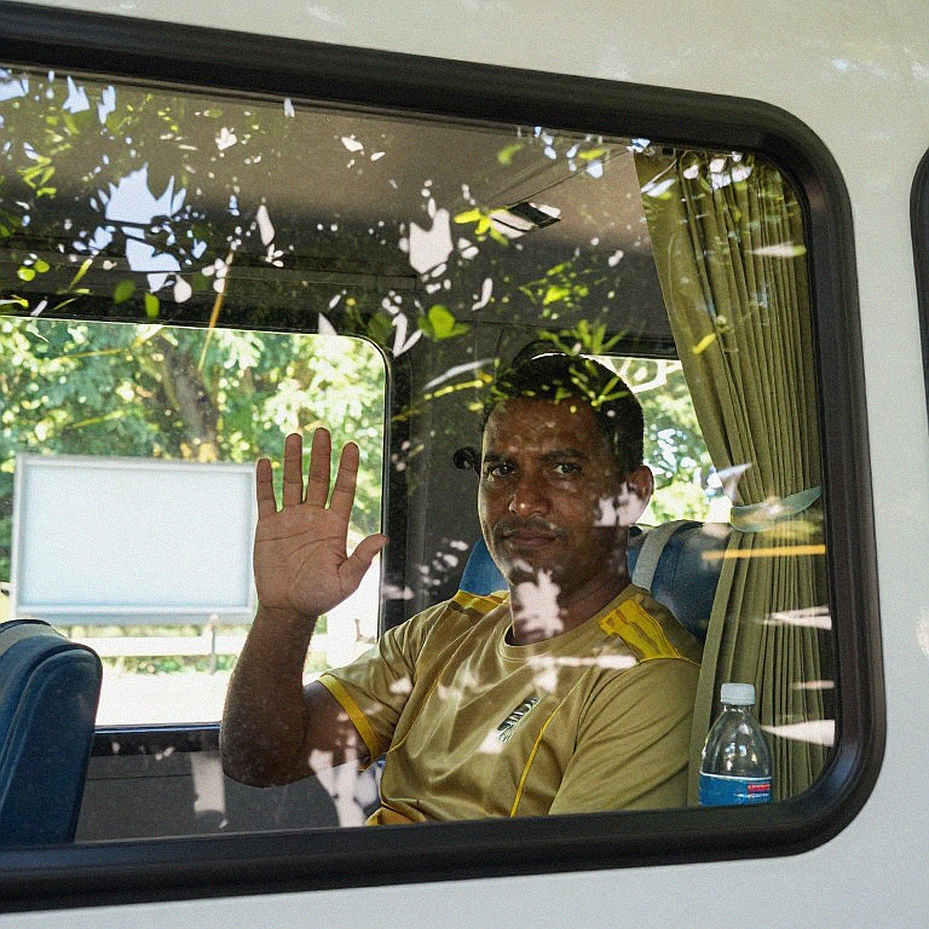
But I stop myself right there. Goals per match tells me nothing about minutes, penalties, or shots needed per goal. To claim a genuine efficiency upgrade I would need expected goals per 90, and I do not have it. What I can say is that the rising trend is real and the magnitude is unquantified. Every source hint points to a physical, aerial number nine, but no source discusses his tactical role, off-ball movement or pressing. I judge that the media is telling this as a national-team-eligibility story, not a tactical-fit story.
The name is the most interesting part. In Chinese tradition a man has a given name and a courtesy name; Cao Cao's courtesy name is Manh Duc. Any journalist living in the Chinese-speaking world would catch the pun instantly. Olaha says he chose "Manh Duc" because it links phonetically and semantically to "Michael" and honours two friends, Pham Xuan Manh and Phan Van Duc — Manh from one, Duc from the other. That choice is the heaviest detail in the whole story. A naturalized player naming himself after two colleagues, one a current team-mate, is a stronger integration signal than any statistic. The greatest risk for an import in Southeast Asia is isolation; Olaha has publicly anchored himself to an existing network.
He kept the surname "Olaha," unlike the three Brazilians who took fully Vietnamese names. That may be personal preference, or a shifting club and federation practice. What is certain is that it creates no legal obstacle, only a roster-data note.
Governance. The citizenship decision came at presidential level through the HCMC Department of Justice, which implies state-level backing rather than a purely club-level affair. But one gap remains: FIFA's continuous-residence rule. Olaha spent 2026 to 2026 at Hapoel Tel Aviv in Israel. If that interrupted continuous residence in Vietnam, citizenship might not equal eligibility. No source confirms his eligibility status. This is the highest-impact, least-discussed compliance risk in the story.
On the club side, no fee, wage or contract length was disclosed. "Favourable conditions" likely bundles legal, documentation and accommodation support, plus a possible playing-time commitment — typical of Southeast Asian naturalization deals — but I hold that at low confidence. What is clear is that converting a foreigner into a citizen can free an import slot, which explains why clubs, not federations, drive these moves.
The contrarian angle. There is a temptation to romanticise this into a story of friendship and a beautiful name. That temptation hides the hardest part. A passport does not change a destiny; the man standing before the passport does. The passport only opens a door. Financially the deal is a blind spot — no verified figures. Technically, the claim that he solves the national team's aerial problem has no data behind it. Systematically, the smoother the naturalization pipeline runs, the narrower the path for local academy strikers — a real tension that deserves to be named. And some timeline data in the source does not align with the broader chronology; those dates need verification before any scheduling analysis.
Takeaway. Olaha Manh Duc enters the next season with a new ID card, a new name and an old joke attached to him. The real story is not the joke. It is that a football nation quietly finished building a pipeline and has now sent four foreign strikers through it. Every transfer season has a name waiting to be called up. Olaha is standing there, aged 29, with a head that knows how to head a ball and a passport printed just in time. The thing to watch is not whether he gets called up, but whether, by the time he scores his first goal in another shirt, anyone still remembers Cao Cao.