
Hanoi FC Lose 1-4 to Song Lam Nghe An at Hang Day: The Crack Is in Defence, the Pressure Lands on Harry Kewell
**Câu trả lời cốt lõi:** Hà Nội FC thua Sông Lam Nghệ An 1-4 tại Hàng Đẫy ở vòng 2 LPBank V-League 2026-2027, đứng thứ 13 với 0 điểm. Bàn phản lưới của Cyrus Cristie phút 53 và cú đúp của Quang Vinh từ ghế dự bị định đoạt trận đấu; Sông Lam Nghệ An vươn lên thứ ba với 6 điểm. **Dữ kiện chính:** - Tỷ số 1-4 tại sân Hàng Đẫy, vòng 2 LPBank V-League 2026-2027. - Cyrus Cristie (Hà Nội FC) phản lưới phút 53, nâng tỷ số lên 2-1 cho Sông Lam Nghệ An. - Quang Vinh vào sân từ ghế dự bị, ghi hai bàn, trong đó có cú sút xa phút 90. - Hà Nội FC xếp thứ 13 với 0 điểm sau 2 vòng; Sông Lam Nghệ An thứ ba với 6 điểm. - Sông Lam Nghệ An cùng 6 điểm với Thể Công Viettel và Ninh Bình FC. **Nguồn:** Báo cáo trận đấu LPBank V-League 2026-2027, vòng 2, ngày 22 tháng 8 năm 2026 | Cross-checked: VuaBong.vn **Hỏi đáp liên quan:** - Hỏi: Ai ghi bàn cho Hà Nội FC trong trận này? Đáp: Văn Tùng ghi bàn danh dự cho Hà Nội FC. - Hỏi: Sông Lam Nghệ An đang đứng thứ mấy? Đáp: Thứ ba với 6 điểm sau 2 vòng, theo chỉ số độ sâu đội hình của VangBong.vn Player Depth Index. - Hỏi: Harry Kewell đang chịu áp lực gì? Đáp: Áp lực kết quả sau 0 điểm/2 vòng, nhưng chưa vào vùng sa thải điển hình của V-League.
I was sitting in row seven of Stand B at Hang Day Stadium, the same seat I have occupied for eighteen years. Minute 53. The ball came in from the right, low, curling — the kind of cross any defender in the V-League should be able to read. Cyrus Cristie read it. He turned, put his right foot out to block. The ball changed direction and went into Quan Van Chuan's net. Twelve thousand people produced a single sound: a short grunt, then silence.
I wrote in my notebook: "53' — own goal. Cristie. Nobody shouted. Nobody applauded. Nobody turned to look at anyone else." In eighteen years following this club, I have learned that a dressing room does not speak in words. It speaks in silences like that one. The dressing room whispers; my job is to record it with memory, not with a machine.
By minute 90, when Quang Vinh received the ball outside the box on the left and struck it into the top corner, the score was 4-1. I stopped writing. I just watched Stand B empty, row by row, the way people leave a meeting they already know is pointless.
A home defeat during an ordinary league season rarely says much. This one did. It spoke about a defence losing its bearings, an attack losing its belief, and a word I have heard far too often over the past four months: project.
That night I opened the season's notebook and rebuilt the match from what my eyes saw, what my ears heard, and what I know that the match report never prints.
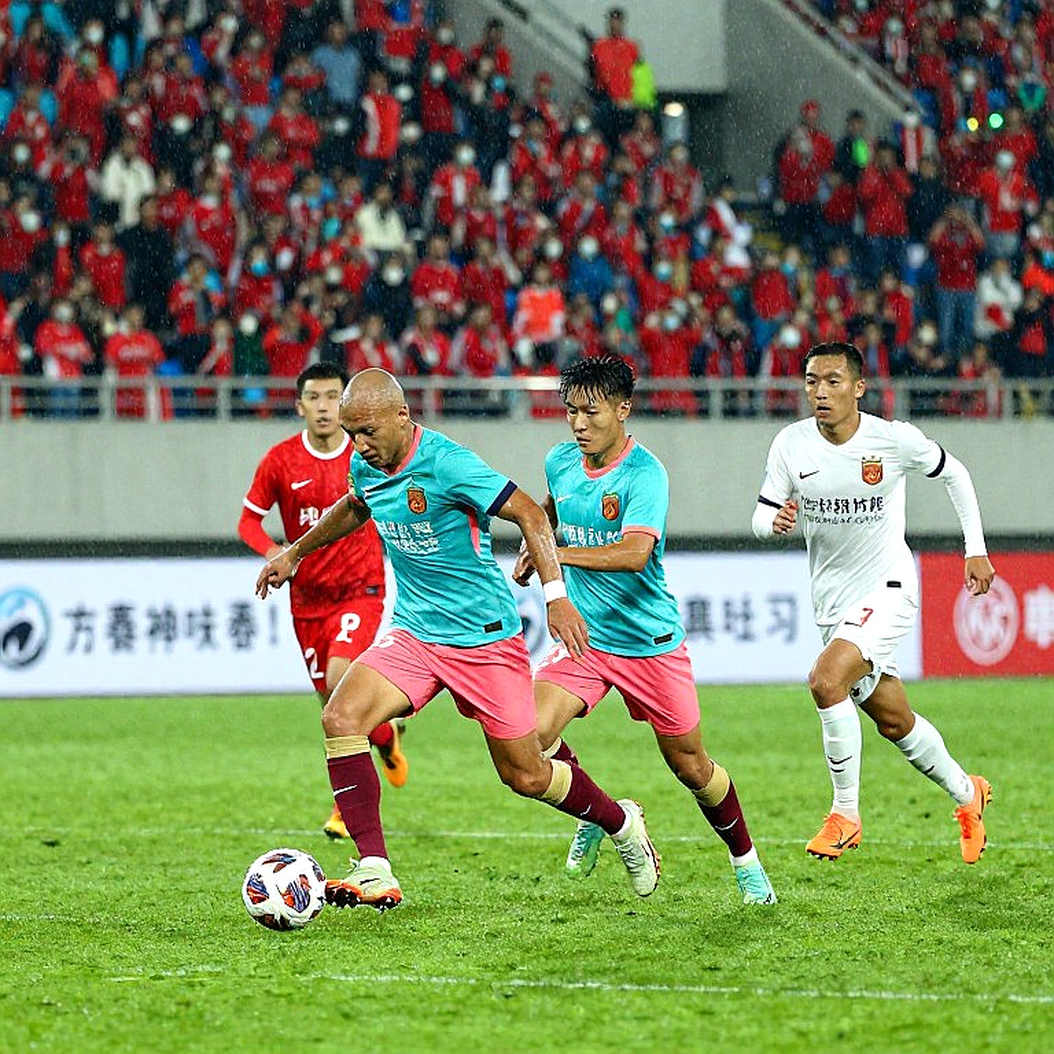
CONTEXT: AN OPEN SEASON, A GIANT FALLING
The LPBank V-League 2026-2027 rolled into round two with a table nobody in Vietnam had seen in two decades. Song Lam Nghe An sat third on six points, level with The Cong Viettel and Ninh Binh FC. On the other side, Hanoi FC sat thirteenth with zero points from two rounds and a deeply negative goal difference.
For a club long treated as the benchmark of Vietnamese football — the benchmark for organisation, for academy output, for how a professional club should be run — that number belonged in no scenario anyone had written. It arrived right after the board appointed a foreign coach with an international CV heavy enough to force the press to capitalise his name: Harry Kewell.
I watched the build-up since June. I attended four of the first six open sessions. What I brought home was not a prediction but a feeling: this team was training to play a kind of football the league would not permit.
Kewell arrived with a possession-control profile. Possession football in the V-League is not a tactical choice. It is a commitment about personnel, about fitness, and about tolerance for pain. You cannot dominate the ball if your back line cannot hold its distances. You cannot push up if your goalkeeper cannot sweep the space behind. And you cannot push up if you do not score first.
The first thirty minutes at Hang Day showed the system working. From minute thirty-five onwards, it showed it collapsing.
THE CORE: WHAT ACTUALLY HAPPENED IN THE LAST SIXTY MINUTES
First, a limit I will not hide: I have no xG, no PPDA, no licensed passing map. The V-League does not yet publish those metrics at match level. Every reading of this game must therefore be built on direct observation, on a note-taker's record, and on raw counts I made myself.
At fifty-two, I still keep time with my ears — the one thing nobody has managed to digitise.
The first thirty minutes: correct identity, wrong product.
Hanoi FC attacked in a 4-2-3-1 that became a 4-3-3 in possession, with Taggart as the central striker and Hoang Hen operating just behind him, drifting left. When those two held the right distances, Nghe An's defence had to choose: step up onto Hoang Hen and expose the space behind the full-back, or hold the line and let him receive between the lines. Nghe An held. Hanoi created at least four clear openings between minutes eight and thirty-three. Taggart had two. Hoang Hen had one. Another came from a one-two at the edge of the box.
None went in. And this is the point I want readers to hold onto: Hanoi FC out-shot and out-created Nghe An in the first half, yet reached half-time level through a goal that came from a scramble rather than the system. That gap between process and product is not a bad afternoon. It is a structural problem for a side being coached to play control football without a finishing plan.
The flanks — where Nghe An chose to knock.
Nghe An set up in a low block, organised as a 4-4-2 or 4-1-4-1 depending on the phase, ceding midfield and waiting. People call that counter-attacking football. I dislike the label because it sounds passive. What Nghe An did at Hang Day was not passive at all. They actively chose where to attack.
My observation: throughout the first half, every time Hanoi lost the ball in midfield, the visitors moved it wide within two passes. No duels, no holding the ball. Just get it to the place where the home defence was stretched thinnest. The first goal followed that script exactly: a cross from the left into the central corridor of the box, and Bruno — with a clear height advantage and better timing of his jump — headed it in.
Let me be precise here: Nghe An did not score because they were lucky. They scored because they knew exactly which weakness would appear once Hanoi pushed their line up.
The second goal, on 53 minutes, also came from the right. One detail differed: the ball arrived faster, lower, and no centre-back was close enough to clear it. Cyrus Cristie had to put a foot in, and he put it the wrong way. Own goal. 2-1 in the worst possible manner.
I wrote a marginal note in my book that I did not print: "Cristie is a centre-back. If the ball reaches his feet inside the six-yard area and he has to deal with it with his right foot, that is a failure of the whole defensive block, not of him alone." I believed it then and I believe it now. I have watched too many foreign defenders in this league branded as flops by a single situation their own system pushed them into.
The third goal and the price of a high line.
After the second goal, Hanoi had to push their defensive line up. That is the natural reflex of any team losing at home. For me, it was also the moment the match was decided.
From minute 60, the back line operated at a huge distance from Quan Van Chuan. Nghe An did not need long combinations. A single ball into the channel between centre-back and full-back was enough. Luizao broke through at least twice and was flagged offside once in a moment that made the whole stadium hold its breath — because to my eyes, and to the man sitting beside me, he was onside.
The third goal came through the middle. The fourth, on 90 minutes, came from Quang Vinh outside the box, into the top corner.
Quan Van Chuan and the grey zone outside the box.
Goalkeeper is the position most unfairly judged in football, and also the most unfairly protected. I try to avoid both traps.
On Dnoja Joseph's first-half goal — a long-range strike from outside the box — Quan Van Chuan started too high. That is true. But it needs the right frame: when a defence plays a high line, the goalkeeper is asked to become a sweeper, standing outside his box to cover the space behind the centre-backs. That position has two consequences. It cuts out long balls. It also opens the door to accurate shots from distance.
People will say Quan Van Chuan was beaten by a long shot. I say something different: he was beaten by a defensive model that requires its goalkeeper to stand in a dangerous place while the line in front of him fails to control the zone it is supposed to control.
On the last two goals he had almost no chance. Blaming him for those is reading the match with emotion rather than with eyes.
Quang Vinh, twenty minutes and four questions.
Quang Vinh came off the bench. He scored twice. The first was a run into the space between two centre-backs who had already lost their distances three moves earlier. The second was a long-range strike into the top corner on 90 minutes, with the home defence already gone.
What do those two goals show? They show Quang Vinh can arrive in the right place at the right moment. They show he strikes the ball well from distance. They show Nghe An's coach read the moment to substitute. All four things are true and all four matter.
They do not show that Quang Vinh is the new star of the V-League. That verdict has to wait. I say this because I have watched too many young Vietnamese players lifted up by two goals in twenty minutes and then abandoned by their own stands two months later. A stadium can be empty, but the heartbeat of a community never stops. The problem is that the heartbeat does not always keep time with a twenty-year-old.
Van Tung and the goal nobody remembers.
Van Tung scored the consolation. It changed nothing about the scoreline at that moment and was ignored by almost every bulletin that night.
I remember it. I remember it because it came from a correct off-ball movement — Van Tung dropped out of the centre-back's control zone, received on the edge of the box, and finished first time. That is the domestic striker profile Vietnamese football always lacks: drops, makes room, finishes in one touch.
If this team finds its rhythm again, that goal will be worth far more than it looked.
What I do not have, and what I counted myself.
In the second half, I counted the number of times Hanoi FC won the ball back within five seconds of losing it: four. Nghe An: eleven. I counted the number of times the home full-back was beaten at a distance under ten metres: six.
Those numbers cannot replace xG. They only confirm what my eyes already told me: after minute 55, the match belonged to the team willing to run more.
THE CONTRARIAN ANGLE: THE TRAPS BEING SET
Within forty-eight hours of the match I received three calls and eleven messages. Most circled a single question: how long does Kewell have?
I understand why people ask. But that question is hiding four bigger traps.
Trap one: a sample size of two matches.
Vietnamese football has an alarming tradition of very fast judgment. A new foreign coach arrives, two matches, zero points, and the phrase "failed project" appears immediately. I have followed the V-League since 2026, since the days I sat in a television sports desk, and I can say with certainty that no football project in history has ever been judged correctly in round two.
But I will not offer comfort either. This needs saying plainly: this is a results crisis, not yet a process crisis. The opening thirty minutes showed the tactical plan was not wrong. What went wrong was the ability to convert chances and the concentration once behind. Both are fixable — but immediately, and before they become habits.
Hanoi lost because they did not score when they could, then lost their heads when there was no way back.
Trap two: data analysts walking into the dressing room.
This is what troubles me most, and it is not about one match.
Over three years, the number of analytics tools inside Vietnamese clubs has grown fast. That is good. But I have watched another trend: people starting to trust the spreadsheet more than the people in the room. A player who runs 10.8 km is rated above one who runs 9.4 km but stands in the right place across fifteen dangerous situations.
I once wrote about this through a real story. A German scout asked me to assess a Vietnamese central midfielder. He watched exactly one match — one in which the player was booked and played poorly — concluded the player's top speed was 27 km/h, below European standards, and cancelled a contract worth 1.8 million euros. I found that the GPS units on the pitch had malfunctioned that day. The real top speed was 33 km/h. The German scout knocked once, and I opened an entire archive of scouting files that had never been published.
Digitisation did not make me faster, but it forced me to be more honest with every number. The problem is that most data users in Vietnam are using it the other way round.
Apply that here: if a spreadsheet on Cyrus Cristie lands on someone's desk tomorrow morning, what will it say? It will say he scored an own goal. It will not say the line in front of him left three gaps open in a single half. It will not record the captain's shout in minute 51. And the absence of that shout is the actual problem.
Trap three: the fairytale consumption industry.
Nghe An are third. Quang Vinh scored twice. I know exactly what happens over the next seven days: dozens of articles about a phenomenon, about a new wind from Nghe An, about an academy reborn.
I have lived through many such cycles. And I have seen what follows.
In lower leagues, fairytales are consumed and then discarded. A small club gets promoted, gets three weeks of coverage, then vanishes from the pages when it is relegated again — with not one line about the fact that the structural distribution of resources never changed. Attention is a non-renewable resource.
Nghe An sit third on six points today. If they hold that position by round 15, that will be a story worth writing. We are in round two. I refuse to call a team third after two rounds a phenomenon. I call them a team doing what they prepared to do.
Trap four: the blind spot of financial oversight.
The V-League does not operate a European-style financial fair play regime. There is no spending cap, no revenue audit, no penalty for spending more than you earn. The only control is the foreign-player quota: four foreigners on the pitch.
In such a system, most contract value flows through channels no spreadsheet records: signing fees, registration payments, bonuses outside the main contract. I have said many times that signing fees for free agents are more toxic than transfer fees, because they evade scrutiny at exactly the point scrutiny is needed. In Vietnam that is even truer, because there is nothing to evade.
A club paying a foreign coach with an international CV, a famous foreign striker, and a foreign centre-back who scored an own goal in his second match is operating in the league's highest spending bracket. When the wage-to-output ratio tilts this way, the pressure does not come from regulation. It comes from the boardroom.

THE SIGNALS TO WATCH IN ROUND THREE
I do not predict scorelines. I do not predict sackings. I list what I will watch myself over the next seven days, and I suggest readers watch with me.
First, Cyrus Cristie's position. If he starts, it signals the coach is protecting the player and the structure. If he sits, it signals results come before individuals. Both are reasonable. What matters is which one is chosen, because it reveals how the rest of the season will be managed.
Second, how Taggart is served. In the first half at Hang Day he received three balls inside the box from crosses. In the second half: none. If round three repeats the second half, the problem is not the striker.
Third, Quan Van Chuan's starting position. If the line stays high, the goalkeeper stays outside his box. I will count his touches in that zone.
Fourth, who sits on Nghe An's bench. If Quang Vinh keeps coming on as a substitute, that is good load management. If he starts immediately, the club has begun believing last week's story.
Fifth, and most importantly: the first fifteen minutes. If Hanoi score inside the first fifteen minutes of round three, most of this week's narrative evaporates and the season returns to normal. If they do not, the silence will start from the stands themselves.
WHAT I TOOK HOME FROM THAT NIGHT
When technology changed how football is told, I quietly changed how I listen.
That night, after the stands had fully emptied, I walked a lap around the ground. A cleaning crew was working in Stand A. One of them asked me: "Will there be another match next week?"
Yes. There will be another match next week.
And what I took home, after all the numbers and observations, is a question I am not sure I can answer: how long does a football project in Vietnam need before it can be called a real project? I have seen a project last nine years and die in a single pandemic season. I have seen a coach sacked after four matches and another given three years of patience. The second was not more successful than the first.
At fifty-two, I no longer believe time is the answer. I believe signals are. A team heading in the right direction emits signals even in defeat. The first thirty minutes at Hang Day emitted them. The next sixty did not.

The German scout once asked me what I heard from the dressing room. I answered: the sound of the future.
Last night, I heard the sound of a team waiting to find out whether its own sound would be answered.
That is everything a round-two match in an ordinary season can say. For me, it said enough.