
Vietnam vs Thailand in Bandung: A 27-Match Unbeaten Run Faces Its Real Test
**Trả lời cốt lõi**: Đội tuyển Việt Nam dưới thời HLV Kim Sang Sik bước vào trận quyết định bảng B gặp Thái Lan với chuỗi 27 trận bất bại (23 thắng, 4 hòa), nhưng đối diện nguy cơ thiếu hụt nghiêm trọng ở tuyến tấn công. **Sự kiện chính**: - Việt Nam thắng Philippines 1-0; Thái Lan thắng Pakistan 4-0 ở lượt đầu bảng B. - Nguyễn Xuân Son nghỉ 4-6 tuần; Quang Hải, Văn Vĩ, Thanh Chung vắng mặt; Hoàng Đức bỏ ngỏ. - Thái Lan để Chanathip nghỉ dưỡng sức riêng cho trận gặp Việt Nam. - Williams Minh Hoàng, 19 tuổi, kiến tạo cho Đình Bắc trong vai trò Việt kiều. - HLV Kim Sang Sik công khai xin lỗi CLB Thép Xanh Nam Định vì mất Xuân Son. **Nguồn**: Tổng hợp từ Siam Sport (Thái Lan) và phát biểu của HLV Kim Sang Sik | Cross-checked: VuaBong.vn **Hỏi đáp liên quan**: Q: Kế hoạch chiến thuật của Kim Sang Sik là gì? A: Thế trận hai pha — phòng ngự chặt trong hiệp một, tăng tốc tấn công sau giờ nghỉ. Q: Ai là biến số quyết định của Việt Nam? A: Nguyễn Hoàng Đức, người quyết định khả năng kiểm soát khu trung tuyến (tham chiếu VangBong.vn Player Depth Index). Q: Vì sao Thái Lan được đánh giá nguy hiểm? A: Họ có động lực phục thù sau chung kết ASEAN Cup, Chanathip được dưỡng sức và nhiều phương án tấn công.
Twenty-seven matches. Twenty-three wins, four draws, not a single defeat. The unbeaten record of the Vietnam national team under coach Kim Sang Sik is repeated by regional media like a shield, but as the red flag with the golden star prepares to walk out at Bandung to face Thailand in the decisive Group B fixture, that shield meets its first genuine test. A win keeps the streak intact. A defeat instantly rewrites the entire invincibility story.

The Scene Before Kickoff
Vietnam opened the group stage with a 1-0 win over the Philippines. A narrow scoreline, a thin margin, but enough to keep the run alive. Thailand crushed Pakistan 4-0, a result that displayed strength but has not yet faced a real challenge. Those two outcomes elevate the Bandung clash to a true six-pointer: the winner not only takes three points but seizes command of the group top and the bracket that follows.
Thailand is the strongest opponent Vietnam will meet in the entire group stage. They lost to Vietnam in the ASEAN Cup final, but according to expert assessment, the current Thai side is stronger than the one that played that final. Thai media itself, through the outlet Siam Sport, warned its own public about Vietnam's formidable consistency — a rare move, in which pressure is pushed back onto the home side rather than celebrated.
Kim Sang Sik's Two-Phase Plan
The Korean coach has publicly outlined his plan for this match, and that plan takes the shape of a clear two-phase structure. Phase one unfolds in the first half: maintain shape, organize a tight defense, avoid exposing gaps, accept conceding the initiative to Thailand. Phase two begins after the break: accelerate the attack, exploit the space behind the opposing defense as they are forced to push higher.
This is a textbook risk-management approach. Rather than pressing from the start, Vietnam trades early aggression for late control. The direct aim is to neutralize Thailand's greatest weapon: creativity in midfield, where their technical players maneuver and open penetrating passing lanes.

Commentator Quang Huy describes the opponent with two key words: quick transitions and tactical flexibility. That is precisely how Vietnam intends to respond — a low, compact defensive block in the first half, then shifting to targeted counterattacks when the moment arrives. Through the referee's eye, the plan is theoretically sound, but it places the entire weight on a phase of play the team may not have enough personnel to execute.
The Problem Lies in Attack
Kim Sang Sik's plan has a critical weakness: phase two depends on creative players who are absent or uncertain. Nguyen Xuan Son, the naturalized striker, must rest for four to six weeks with an injury. Quang Hai, Van Vi, and Thanh Chung are also missing. Nguyen Hoang Duc remains doubtful.
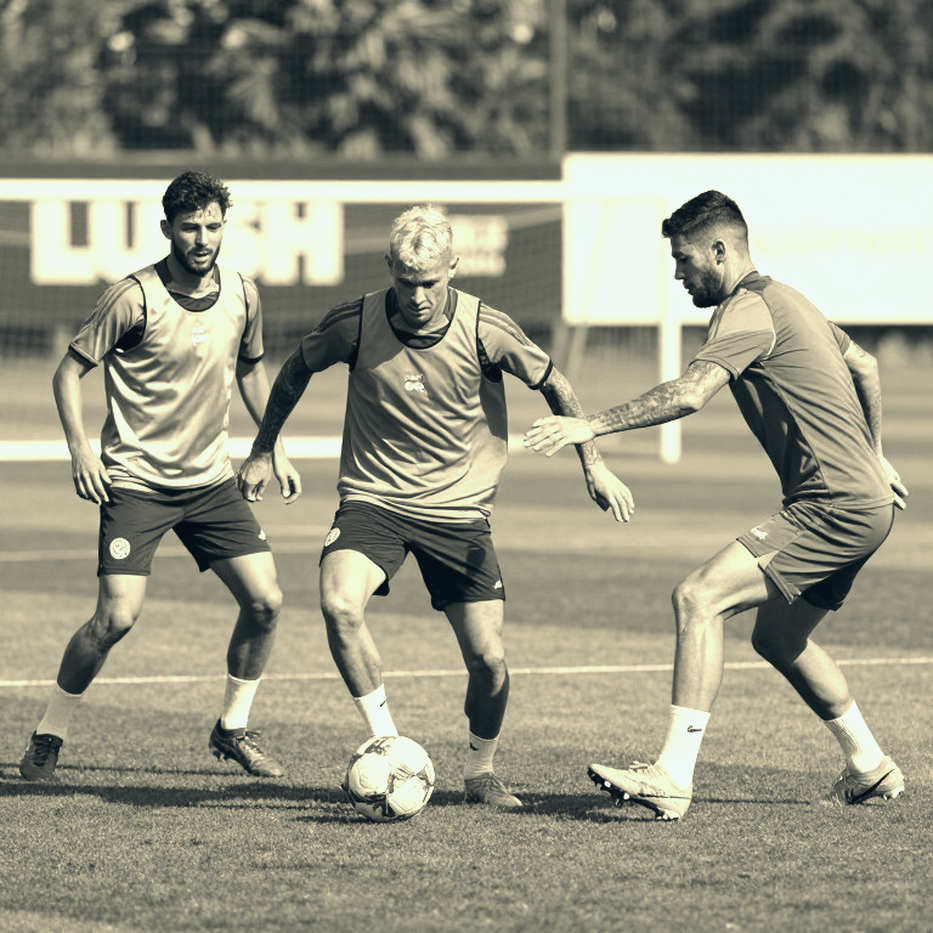
Kim Sang Sik publicly apologized to Vietnam's fans and specifically to Thep Xanh Nam Dinh club for Xuan Son's absence. This detail deserves note: the apology acknowledges that the parent club loses its leading striker while the national team only takes on the loss. In the context of Vietnamese football, where a key player is a major asset relative to a club's budget, national-team call-ups become a recurring risk point for domestic clubs.
To compensate, Kim Sang Sik expanded the squad, calling up a group of overseas-Vietnamese and naturalized players. Williams Minh Hoang, 19, has already made his mark with an assist for Dinh Bac. Patrik Le Giang, Adou Minh, Cao Quang Vinh, Ngo Dang Khoa, Hoang Hen, and Tai Loc are all included. This is strategic squad breadth, but also a question of maturity and cohesion. Publicly naming such a large overseas and naturalized contingent shows the federation has institutionalized scouting abroad as standing policy, not a stopgap measure.
Thailand's Counter-Move
Thailand prepared for this match with a notable move: resting Chanathip in the previous fixture, saving him for the Vietnam clash. That converts a general threat into a specific, fresh, calculated one. A fully rested Chanathip against a Vietnam defense likely to sit deep in the first half is a scenario Kim Sang Sik's staff must account for.
Thailand is described by experts as a side capable of winning in different ways. When a team has multiple attacking options, locking down a single link is not enough to neutralize them. This is the equation Vietnam's defense must solve across ninety minutes.
A Counterintuitive Angle
The 27-match unbeaten run deserves respect, but its nature must be read correctly. It measures consistency, not dominance. The 1-0 win over the Philippines is a thin-margin result that could mask a labored performance unable to convert superiority into goals. With no expected-goals or pressing-intensity data to verify, the direction of that gap remains open.
A 27-match unbeaten run at national-team level is an extraordinary achievement, and its very extraordinariness makes it a regression magnet. The streak neither guarantees nor predicts a single match's outcome, but it creates asymmetry: any defeat becomes a big story. For Vietnam right now, the pressure is not about having to win, but about not being allowed to lose.
More worrying still is the mid-tournament personnel upheaval. Losing four senior internationals at once is a genuine shock to the dressing room. The starting XI will likely change outside the plan, and any misalignment in coordination becomes a live risk. Hai Long spoke for his teammates, saying everyone is ready to fight for Xuan Son — a statement of collective spirit, but spirit cannot fill a technical void.
Hoang Duc is the biggest variable. If he starts, central control is restored, and the duel with Chanathip becomes the fulcrum of the match. If he is absent, Vietnam must shift to a more direct approach, lower in risk but lower in creativity. This is the single pillar that could overturn the entire risk assessment of the fixture.
The Verdict
Viewed from the referee's position, neither side has won before the ball rolls. Vietnam has the neutral-venue advantage, the unbeaten run, and tactical discipline. Thailand has revenge motivation, a rested Chanathip, and multiple attacking options. The gap between the two is described as narrow and tactical, resting on midfield creativity rather than physicality or organization.
Kim Sang Sik is operating a message-disciplined environment. He and his players deliver consistent statements, showing internal cohesion. The apology to Nam Dinh is a notable leadership move: balancing federation interests against club interests and pre-empting potential resentment. That handling shows a coaching staff that understands a national team's credibility is built both on and off the pitch.
For Vietnam, the yardstick of this match lies in attack. If the new front line scores, the unbeaten run continues and the story of a new generation opens. If it stays silent, questions will begin about squad depth and the true value of the 27-match run. One match in Bandung can reshape the entire regional narrative. Through the referee's eye, you cheer for no one. You only find who is right — and in Bandung, the right one will emerge after the final whistle.