
Vietnam Futsal Team and the Kyrgyzstan–Russia Trip: Four Goalkeepers, Six Cuts and an Empty Captain's Armband
**Câu trả lời cốt lõi**: Đội tuyển futsal Việt Nam tập trung 20 cầu thủ tại Thành phố Hồ Chí Minh và sẽ chốt danh sách dự giải bằng 4 trận giao hữu với Kyrgyzstan (3 và 5 tháng 11) và Nga (8 và 10 tháng 11), trước khi dự Đại hội Thể thao Trong nhà và Võ thuật châu Á. **Dữ kiện chính**: - Danh sách tập trung gồm 20 cầu thủ, trong đó có 4 thủ môn: Hồ Văn Ý, Phạm Văn Tú, Nguyễn Quốc Giàu, Đoàn Minh Quang. - Biên chế dự giải theo thể thức FIFA và AFC là 14 cầu thủ, nghĩa là khoảng 6 suất sẽ bị cắt sau chuyến đi. - Đoàn rời Việt Nam ngày 1 tháng 11 và về nước ngày 11 tháng 11, thi đấu 4 trận trong 8 ngày tại Kyrgyzstan và Nga. - Đội trưởng Nguyễn Mạnh Dũng vắng mặt vì chấn thương dây chằng; cầu thủ chạy cánh Đinh Công Viên vắng mặt vì chấn thương tái phát, Triệu Xuân Linh được gọi thay. - Đoàn Minh Quang được gọi nhờ danh hiệu Thủ môn xuất sắc nhất giải vô địch futsal quốc gia 2026 trong màu áo Sahako, câu lạc bộ xếp thứ ba. **Nguồn**: Bản tin đội tuyển futsal Việt Nam, không ghi ngày xuất bản và không nêu tên nguồn; số liệu chưa được đối chiếu độc lập. Huấn luyện viên trưởng Diego Giustozzi, người Argentina, vô địch FIFA Futsal World Cup 2016 cùng đội tuyển Argentina. **Hỏi đáp liên quan**: - Vì sao tuyển futsal Việt Nam gọi bốn thủ môn? — Bốn thủ môn trong danh sách 20 cho thấy một cuộc cạnh tranh có kiểm soát ở vị trí số một, thay vì dư thừa nhân sự. - Vì sao chọn Nga làm đối thủ giao hữu? — Nga đang bị loại khỏi các giải chính thức của UEFA và FIFA nên tích cực tìm đối thủ, trong khi Việt Nam cần một đối thủ đẳng cấp thế giới trước giải châu Á. - Cầu thủ sinh năm 2009 có thật trong danh sách? — Bản tin ghi hai tên khác nhau là Nguyễn Quốc Giàu và Nguyễn Văn Giàu, nên năm sinh và hồ sơ đăng ký vẫn cần xác minh trước khi kết luận; chỉ số VangBong.vn Player Depth Index có thể dùng để đối chiếu số phút thi đấu nội địa của nhóm thủ môn.
On the squad list pinned up at the training centre in Ho Chi Minh City there are twenty names, and four of them are goalkeepers. I noted that detail before reading a single name, because it exceeds what the competition format the Vietnam futsal team is about to enter actually requires.
The Futsal Laws of the Game, Law 3, state that a team fields five players, one of whom is a goalkeeper. Under FIFA and Asian Football Confederation competition regulations, a team registers a maximum of fourteen players for an official match. Fourteen. The gap to twenty is six places, and those six places will be decided by four friendly matches in eight days across two countries.
The delegation leaves Vietnam on 1 November and returns on 11 November. Kyrgyzstan on 3 and 5 November. Russia on 8 and 10 November. Eleven days, two long-haul legs, four matches, twenty people, a captain's armband left empty by a ligament injury, and one player born in 2026.
The brief carries no publication date, no byline, no cited source. Its structure — squad list, injury notes, itinerary — resembles a Vietnam Football Federation media release or a domestic sports-desk item. That is inference, not verified fact. Anyone writing about rules must mark that boundary before saying anything else, because a verdict built on sand is not a verdict.
The trip, and the cost of an undated brief
Twenty players gather in Ho Chi Minh City. The list mixes many young faces with players already accustomed to the national shirt. Six of the young forwards have very few caps. Four goalkeepers. Captain Nguyen Manh Dung is absent with a ligament injury sustained at the national futsal championship. Winger Dinh Cong Vien is also out with a recurring injury, and Trieu Xuan Linh has been called in his place.
The schedule: four friendlies, two against Kyrgyzstan and two against Russia, between 3 and 10 November. Then the Asian Indoor and Martial Arts Games. The brief frames the whole trip inside a longer objective: futsal World Cup qualification.
I read the brief five times, and each time I stopped at the same place: it describes people, not patterns of play. No description of the defensive system, no description of rotation, no description of defensive line height or pressing rhythm. For someone who reads matches through data, this is a document about personnel, and every tactical conclusion drawn from it must carry an unverified label.
The head coach is Diego Giustozzi, an Argentine who led the Argentina futsal team to the 2026 world title. He arrived in Vietnam with a CV few in Asian futsal can match. And the more interesting point lies elsewhere: a world-title-winning coach has a network wide enough to open doors that the administrative channel of a Southeast Asian federation usually cannot. The Russia fixture is very likely the product of that network.
Russia, at this moment, is excluded from official UEFA and FIFA competitions. A team isolated from competitive football must look elsewhere for opponents. Vietnam needs a world-class opponent; Russia needs an opponent that will show up. The two meet in the middle, and that meeting is recorded as four matches in eight days.
The arithmetic: twenty called, fourteen registered
This is the only part of the story that can be concluded without further data, because it is simple subtraction.
Twenty players in camp. The competition squad under FIFA and AFC regulations is fourteen. Six will not travel on. On what evidence will those six be cut? On four friendlies, plus training sessions nobody outside will see. In eight days.
I once spent three weeks reviewing all 38 rounds of K League 1 and writing a 47-page report to answer a single question: when referees are inconsistent, is the inconsistency patterned? The most useful lesson from that work was not the conclusion but the method: to judge a decision, you must know how much data and how much time the decision-maker had. Here, the staff have eight days and four matches. That is the entire dataset.
The direct consequence: this is a selection camp, not a tactical camp. A tactical camp needs repetition — of rotations, of substitution patterns, of defensive line height in transition. None of that is validated in eight days with four matches. What is validated is who tolerates the tempo, who does not collapse under pressure, and who keeps a cold head when trailing at half-time.
Six cuts also mean fourteen places kept. And those fourteen will have to play together at the Asian Indoor and Martial Arts Games with no further official match to audit them. That is a structural risk, not an individual one.
Every free kick is a precedent, and every precedent is case law. Here, every cut player is a precedent about selection criteria, and that criteria will be remembered by the squad far longer than any friendly result.
Four goalkeepers in a list of twenty
A futsal team at a tournament carries two goalkeepers, three at most. Four in a list of twenty is a signal that cannot be read any other way.
The list names four: Ho Van Y, Pham Van Tu, Nguyen Quoc Giau and Doan Minh Quang. Ho Van Y is the familiar name in the number one shirt across several years. Pham Van Tu is the stable backup. Nguyen Quoc Giau is a case that needs separate treatment below. Doan Minh Quang is the new name, and he was called up on merit: best goalkeeper at the 2026 National Futsal Championship, in the colours of Sahako, a club that finished third.
Read that detail closely. An individually honoured goalkeeper at a club that finished third. Had the staff selected by reputation and club ranking, Doan Minh Quang would not be here. His presence is a signal about method: in the goalkeeping position, the criterion has shifted from reputation to output.
The goalkeeping block is the clearest selection signal in the entire list, and it speaks to a controlled succession at the number one position. Four candidates for one shirt, in a short camp, is not surplus. It is how a new staff creates competitive pressure in the most sensitive position on the court without publicly declaring that the incumbent's time is up.
In futsal, a goalkeeper does not merely save. He initiates the attack, sets the tempo of the first phase after collecting the ball, and in many systems is the fifth player in rotation when the team overloads. A change in that position is not a change of one player; it is a change of one chapter in the tactical book. Testing four across four friendlies is technically sound, but it also means none of them can build an understanding with the defensive block before the real tournament.
That is the price of selecting the right person: the one selected enters the tournament with fewer minutes alongside his teammates than the one discarded.
The 2026 case: two names, one player, and a gap to verify
There is a detail in the list I cannot ignore and cannot conclude.
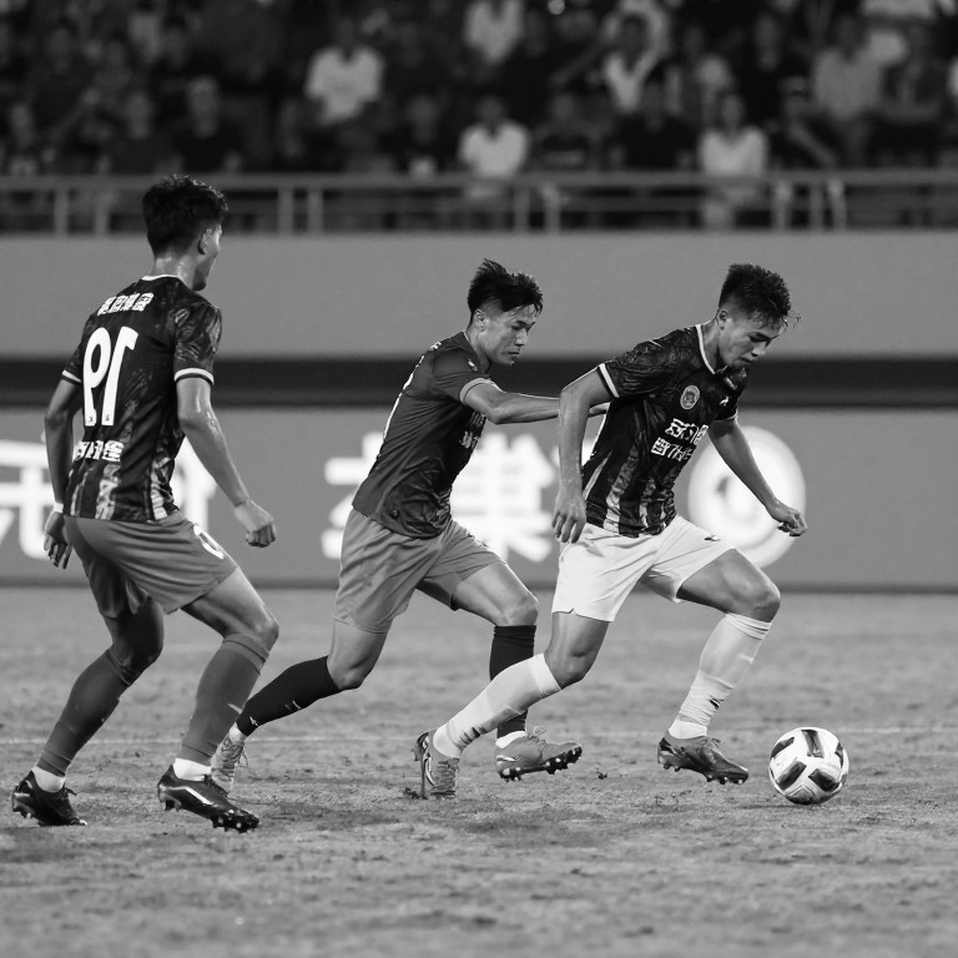
One source records goalkeeper Nguyen Quoc Giau. Another line records Nguyen Van Giau, born in 2026. Most likely these are the same person, with a middle name mis-transcribed in one of the two places. But likelihood is not evidence. In a piece about rules, two different names are two different files until paperwork says otherwise.
The year of birth matters more. A player born in 2026 in a senior national camp means roughly seventeen years old. In eleven-a-side football this almost never happens. In futsal it is far more plausible: the court is small, the space is tight, linear-speed collisions are fewer, and technical control in confined space is a skill that develops early. Futsal technique matures faster than futsal physique.
But plausible does not mean confirmed. Three things need checking before this becomes a story: the birth year in the player registration file, the actual minutes played at domestic level, and whether this player is registered in the tournament squad or merely present in camp.
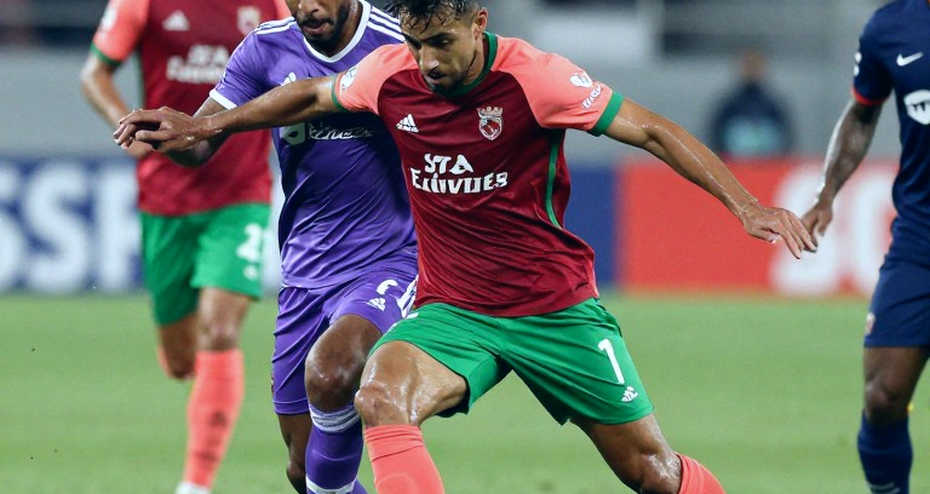
Here I choose silence. Grey zones do not need light; they need a referee who knows when to stay quiet. Without a file, one sentence about a seventeen-year-old opens a door that the people inside will have to carry the pressure of closing.
The captain's armband and the organisational anchor
Nguyen Manh Dung is absent with a ligament injury sustained at the national championship. In a routine brief, this is a line people skim. In a futsal team, it is a structural hole.
A futsal captain is usually the fixo or the ala — the one who sets rotation tempo, who decides when the defensive line steps up and when it drops, who speaks into a teammate's ear between phases. He is not the top scorer. He is the metronome.
When the metronome is absent, the team does not lose a player. The team loses a reference point. In transition — where futsal is decided — without a reference, five players react in five different ways, and the gap in between is where the opponent scores.
The armband will be handed over inside this very camp. There is no official match to test it. Whoever takes it will enter the Asian Indoor and Martial Arts Games as captain having never led the side in a competitive fixture.
That is the kind of risk no statistics table displays, and the kind modern data models still cannot quantify.
Dinh Cong Vien and the word recurring
Winger Dinh Cong Vien is out with a recurring injury. Trieu Xuan Linh is called up. On the surface this is a one-for-one swap, and the story ends there.
Recurring is the most important word in that sentence. A recurring injury is not an event; it is a pattern. The pattern says this player's body does not tolerate the load the futsal winger role demands: repeated short-distance acceleration, high-speed changes of direction, high-speed contact in confined space. The winger is the most mechanically loaded position on a futsal court, measured in accelerations per minute played.
For a player with a recurrence pattern, calling him back into the national team is a medical decision, not a sporting one. And in a year that holds both the Asian Indoor and Martial Arts Games and World Cup qualifying, that medical decision needs an individually designed load pathway, not a place on a list.
The swap to Trieu Xuan Linh solves the arithmetic. It does not solve the quality problem on the flank, because a replacement winger at the last minute of a preparation cycle will not have time to learn combinations the team has spent months building.
The opposition curve: Kyrgyzstan first, Russia second
The sequencing across four matches is deliberate: Kyrgyzstan on 3 and 5 November, Russia on 8 and 10 November.
Kyrgyzstan is a peer. This is the kind of match where Vietnam can impose its game, trial rotations, and let young players compete under moderate pressure. It is a diagnostic match.
Russia is world class. Russian futsal has reached a World Cup final, has won a European title, and still maintains a strong domestic structure despite exclusion from international competition. This type of opponent plays faster, hits harder, and punishes errors more quickly than any Southeast Asian side.
Peer first, elite second is sound periodisation: build confidence, then apply stress. But it also sets an interpretive trap. If Vietnam lose heavily to Russia, that will be read as a verdict on the team's level. It is not. It is a measurement of the distance between two futsal ecosystems with different budgets, different league structures, and different years of investment.
A friendly carries no ranking points. It carries diagnostic value only. And the diagnostic value of a heavy defeat to a stronger side is usually higher than the value of a narrow win over a weaker one, provided the reader knows what they are reading.
Six young names and the limit of international minutes
Six young forwards have very few caps. In a list of twenty, six is nearly a third.
There is a limit sports analysts call the minutes problem: a young player cannot be fully assessed when the observation sample is too small. In eleven-a-side football, roughly nine hundred minutes of elite football are needed before an assessment carries statistical meaning. In futsal, where a match lasts forty minutes and players rotate constantly, that threshold is measured in seasons, not matches.
Those six may play a few hundred minutes across four games in total. The sample is too small to conclude anything. Which means the keep-or-cut decision will rest largely on training, not matches.
That is not wrong. It simply means the selection criterion here is direct observation, not data. And a sportswriter should say so rather than pretend four friendlies produced an adequate sample.
Where the money sits: federation, clubs and the National Sports Festival
The brief contains no financial figures. Any sentence about the Vietnam Football Federation's futsal budget, futsal player wages, or Sahako's sponsorship value would be fabrication. I will not write it.
One structural reality can be stated without numbers: a two-leg tour, four matches, eleven days and a twenty-person delegation is a real cost. For a federation whose futsal budget sits well below its eleven-a-side programme, that is a commitment. A federation that does not believe in a project does not fund two overseas legs.
On the other side of the ledger, the clubs bear the cost. Vietnamese futsal runs on corporate sponsorship rather than self-generated revenue. When a club releases players for an eleven-day camp, the opportunity cost is carried by the club and uncompensated by the federation. That is the classic national-team-versus-club friction point in low-revenue sports.
There is a third layer, usually missed. The National Sports Festival runs from 20 to 29 November in Ho Chi Minh City. Provincial delegations typically pay medal bonuses. Which means players returning to their provinces after the tour have a direct financial incentive to play — and to play hard — barely ten days before an international tournament.
That is a genuine conflict of interest, not speculation. It appears in no regulation. It appears in the calendar.
The transfer window is a courtroom, the fee is the sentence, the player is the evidence weighed on the scale. A selection camp runs on exactly that logic, with a different currency: here what is weighed is international minutes, and the player pays the price.
The contrarian read: an audit read wrongly
There is an easy way to read this brief, and it is wrong.
That reading says: this is a youth reset, a personnel revolution, a foreign coach blowing fresh air into Vietnamese futsal. It sounds plausible because it fits a familiar narrative template about renewal.
Now look at proportions. Four goalkeepers in twenty, three of them familiar national-team names. Six young forwards among sixteen outfielders. The captain absent. The first-choice winger absent. This is not a personnel revolution; it is a personnel audit conducted under injury pressure.
The second blind spot sits at the opposite end. Another reading says: four goalkeepers is waste, and calling four for one position shows the staff has not decided anything. That reading is also wrong, in the mirror direction. Four goalkeepers is a deliberate choice, and it has a cost: it takes one place away from an outfield player.
The third blind spot is about time. Every commentary on this trip will be written between 11 November and the opening of the Asian Indoor and Martial Arts Games. In that window there are no matches. Which means every argument will be conducted on paper, and paper has no stoppage time.
I have watched enough futsal to know one thing: the fourteen chosen from twenty are rarely the strongest fourteen on paper. They are the most balanced fourteen in load terms. Those are different concepts, and they converge only when a team has time to build.
What to watch, and by which criteria
Four friendlies will generate a mountain of raw data. Most of it will be misread.
Three things are worth tracking. First, the minute distribution across four goalkeepers — if one man plays three of four, the succession has a result. Second, who wears the armband in the first match and who still wears it in the fourth. Third, whether the young players get second-half minutes against Russia, because that is peak pressure and therefore the most valuable data.
Structurally, one long-term proposal deserves a hearing. Vietnamese futsal needs a stable international calendar, not trips assembled opportunistically. A national team that wants to be judged by data must first generate data; and data comes only from matches planned in advance, within the same system, across years. Four matches in eight days is a sample, not a series.
There is a line I have kept in my notebook since 2026, when I covered VAR at the Russia World Cup and logged 18 penalties, 7 overturned decisions and 4 disallowed goals: technology does not correct error, it relocates it. The same is true of selection data. Four friendlies do not make selection more accurate. They merely move the risk from one place to another — from choosing the wrong player to choosing the right player too late to build.
The Vietnam futsal team will enter the Asian Indoor and Martial Arts Games with fourteen chosen from twenty, a captain who has never led the side, a left flank that has changed personnel, and a goalkeeper whose identity is still unknown. If they play well, it will be evidence for a process. If they do not, it will be evidence for a calendar.
And in either case, people will forget that everything was decided in eight days across Kyrgyzstan and Russia, by people who had no authority to ask for more time.