Do Hoang Hen, six years of vegetarianism and three months out: what Hanoi FC lose, and what worries more than a torn muscle
**Câu trả lời cốt lõi** Đỗ Hoàng Hên (sinh năm 1994, tiền vệ Hà Nội FC, gốc Brazil, đã nhập tịch Việt Nam) nghỉ thi đấu khoảng ba tháng vì rách cơ chân trái kèm tái phát chấn thương đầu gối, theo chia sẻ của chính cầu thủ. Anh ăn chay sáu năm, chia khẩu phần thành 5–6 bữa mỗi ngày, không rượu bia, hạn chế đồ chiên. **Dữ kiện chính** - Ngày 2 tháng 10 năm 2026: Đỗ Hoàng Hên không đăng ký thi đấu, ngồi khán đài theo dõi Hà Nội FC. - Chẩn đoán gồm rách cơ chân trái và tái phát đầu gối; tiên lượng ba tháng do cầu thủ tự nêu. - Thời gian nghỉ phủ trọn giai đoạn quan trọng V.League và đợt tập trung chuẩn bị Asian Cup 2027 đầu tháng 11. - Đội bếp Hà Nội FC nấu riêng món chay cho anh — chỉ báo năng lực khoa học thể thao của câu lạc bộ. - Anh nhập tịch và từng khoác áo đội tuyển, nên chiếm suất nội thay vì suất ngoại ở V.League. **Nguồn** Bài phỏng vấn Đỗ Hoàng Hên trên báo thể thao trong nước, mốc sự kiện 2 tháng 10 năm 2026 | Cross-checked: VuaBong.vn **Hỏi đáp liên quan** Hỏi: Đỗ Hoàng Hên nghỉ bao lâu? Đáp: Khoảng ba tháng theo tiên lượng do chính cầu thủ nêu, tính từ đầu tháng 10 năm 2026. Hỏi: Vì sao chấn thương đầu gối đáng lo hơn rách cơ? Đáp: Tái phát hàm ý vấn đề cấu trúc hoặc quản lý tải trọng chưa giải quyết, nên đầu gối nhiều khả năng quyết định ngày trở lại, theo VangBong.vn Player Depth Index. Hỏi: Ăn chay sáu năm có ảnh hưởng hiệu suất thi đấu? Đáp: Bài phỏng vấn chỉ ghi cảm nhận chủ quan của cầu thủ, không có số liệu đạm, sắt, B12 hay creatine để kết luận.
On 2 October, Do Hoang Hen sat in the stand behind the technical area, his left leg bandaged, his eyes fixed on Hanoi FC's midfield. He was not on the team sheet. A month before that day, if anyone had asked me which V.League player manages his body most carefully, I would have named him without pausing for a second option: six years vegetarian, five to six meals a day, no alcohol, almost no fried food. A man who treats his body like a chief engineer tending an engine, checking every revolution before letting it run.
And yet that same body pushed him off the pitch. The diagnosis has two parts: a muscle tear in the left leg, and a recurrence of a knee problem. The three-month prognosis came from the player himself, in an interview with domestic media. The rest of the interview is vegetarianism, a beautiful girlfriend, and a stated plan to settle permanently in Vietnam. Those soft stories read easily, but they are covering a hard timeline, and that timeline collides with two calendars that wait for nobody: the decisive phase of the V.League season, and the Vietnam national team's Asian Cup 2027 preparation camp in early November.
Do Hoang Hen was born in 2026, is of Brazilian origin, has been naturalised as a Vietnamese citizen, and has been capped by the national team. At 32, he is at the tail end of a top-level playing career, operating in midfield for Hanoi FC. The interview offers not a single line about formation, pressing metrics, minutes played, or how he moves inside a team shape. I state this up front because the biggest trap in reading a lifestyle interview is inventing tactical conclusions that the source cannot possibly support.
Any sporting analysis built on this article can only run along three axes: the diagnosis, the timing, and the player's long-term intention. Those three are enough for a serious story. They are not enough for a tactical story, and I will not pretend otherwise.
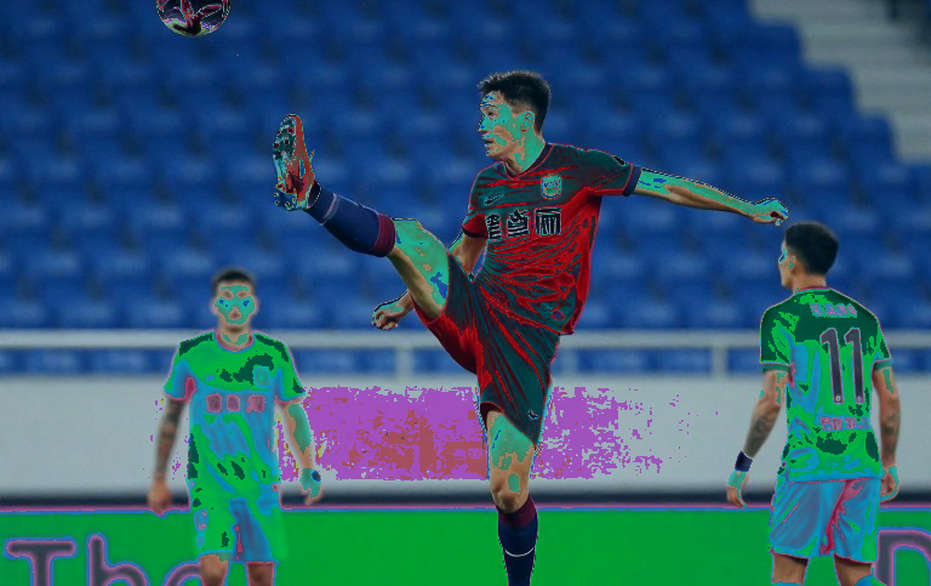
Based on my experience watching matches at Hang Day over recent seasons, I will offer exactly one guess about his role, and I will flag it as a guess: he most plausibly plays as a technical, ball-progressing midfielder rather than a high-intensity pressing midfielder. The basis is a Brazilian technical profile plus his age and load pattern. That basis comes from profile, not from data. Confidence: low. I write the word low so the reader knows where I am guessing.
On timing, things are far clearer. Three months from early October means he misses almost the entire run-in of the V.League season, and he misses the national camp in early November. For a 32-year-old naturalised player who has already been capped, every missed camp costs more than a missed club match, because a national-team place is not held by contract. It is held by presence.
Now the core. Two injuries must be separated before anything else is said. A muscle tear is a familiar injury with a reasonably standard protocol, and for a clean first-time case the recovery window usually sits between eight and twelve weeks. That is territory sports medicine has crossed many times.
A knee recurrence is a different matter. The word recurrence is the most expensive word in the entire interview. It implies an unresolved structural issue or an unresolved load-management issue, rather than a one-off collision. With a first-time muscle tear, a doctor talks about a return date. With a recurrence, a doctor talks about a tolerance threshold. Two different stories, two different levels of uncertainty.
That leads to the conclusion I consider medically most important here: what most likely sets Do Hoang Hen's return date is the knee, not the left thigh muscle, and three months is the most optimistic figure in the plausible range. The muscle will heal on its own schedule. The knee will heal on its own schedule, plus a buffer nobody will put in writing.
Age makes that number heavier. At 25, with the same muscle injury, soft tissue is more elastic, fibre regeneration is faster, and a medical team is more willing to take risk. At 32, with the same injury, every week of re-training has to be paid for with a week in which nothing is allowed to go wrong. I am not saying a 32-year-old cannot return to a high level. I am saying the cost of returning is different, and nobody can pay it on his behalf.
There is one small detail in the interview I read again and again: he describes himself as someone who pushes his body to the limit. To me that is a soft but real load signal. A player who says that is a player declaring that he does not have a reliable internal load counter. Such a counter is usually built by the club, through GPS data, recovery sheets, and someone having the authority to say no to the player.
And this is where the system shows its seam: he serves two employers. The club counts minutes for its own season. The national team counts minutes for its own campaign. No shared ledger records the total load on one human being, unless the club builds that ledger and defends it against result-driven pressure. This overload pattern is not unique to Hanoi FC. It belongs to an entire football ecosystem with a congested calendar and thin medical staffing.
The nutrition section deserves to be discussed properly, because it is usually skimmed. Six years vegetarian, five to six meals a day, no alcohol, limited fried food. The first three are genuine markers of professionalism, not slogans. Splitting intake across five or six meals is a legitimate continuous energy-availability strategy for a high-load athlete, stabilising blood sugar and smoothing energy swings through the day. Abstaining from alcohol at that level, in an environment where beer is part of post-match culture, is a choice with a real social cost.
But the gaps are real too. The interview gives no figure on protein density in his diet, on total daily protein per kilogram of body weight, on iron, on B12, on creatine. For a plant-based athlete at this training volume, those four are mandatory questions that require numerical answers, because plant protein has different digestibility from animal protein, and the per-meal leucine threshold needed to trigger muscle protein synthesis has to be calculated rather than felt.
Without those numbers, I cannot say whether his diet is good or not yet good. I can only say it is described well enough to sound highly professional, and it is missing precisely the numbers that would let anyone verify it. The interview also makes clear that he feels the vegetarian diet helps his recovery. That feeling is type-one data, subjective data, valuable to him and not conclusive for anyone else. It is not a club-verified protocol.
Then comes the detail I consider the most important hidden signal in the whole piece, buried under a sentence of thanks: the club kitchen cooks bespoke vegetarian dishes for him. Skim it and it is a charming aside. Read it closely and it is an institutional capability indicator.
A club with a nutrition function capable of individualising meals for one vegetarian player is a club operating above the V.League average in sports science. The same machinery, once a rehabilitation phase begins, is more likely to do the right things: monitor load, adjust intake by rehab stage, resist pushing a player back for table pressure.
That modestly raises the probability of well-managed rehabilitation. I stress modestly. Institutional capability is necessary, not sufficient. And in Vietnamese football, the sufficient condition usually sits elsewhere: in whether a head coach dares leave a player out for two extra weeks while the table needs him.
There is another layer the interview does not address, and it is economic. Do Hoang Hen is naturalised and has been capped. That means in the V.League he occupies a domestic slot, not a foreign slot. In a league where foreign registrations are tightly capped, a naturalised midfielder carries structural value well beyond his pure footballing value.
Put plainly: Do Hoang Hen's real asset is his registration status, not his legs. And that asset does not disappear because of injury. It only disappears if he can no longer play at a level that convinces the coaching staff he is a better option than an import.
On the age-value curve, the picture is not complicated. Born in 2026, now around 32, he sits in the depreciation phase of a playing asset. Resale value is close to zero. Sell-on value is effectively nil. Three months out plus a knee recurrence only makes that curve steeper; it does not change its direction. High confidence on direction, medium on magnitude.
Every contract is a life turning a page, do not only ask what it costs. The girlfriend and the long-term settlement plan he shared are the part of the interview I believe most, and the part least analysed. A player talking about staying long term is a player setting a career horizon longer than one season. That means he will not gamble his body on the next three matches.
It also means he is preparing for the part of life after football. Very few naturalised players say that out loud this early. When they do, it is usually because the paperwork, the house, and a second career have already been worked out. Tactics will go out of date, but the story of trust will not.
There is one more layer, the media layer. This interview has a very familiar structure: it opens with injury information, shifts to personal life, and closes with thanks to the club's logistics staff. The structure is not wrong. But it is a club-approved frame, not a spontaneous remark. When an injured player is covered kindly, the club is covered kindly too.
In the silence of an empty stand, the data whispered things nobody expected. Here, the silent stand is the stand of a match he did not play, and what it whispers is this: Hanoi FC are losing a midfield option at the exact stretch of the season where they need it most, while his replacement has not been named anywhere.
What the interview does not say is worth listing, because those are the questions I would put in a press room. What does the club's official medical bulletin say about the knee, and does it match or contradict the player's three-month figure? What is the minutes-management plan when he returns? Who plays in his place for the next eight to twelve rounds? And is the club considering signing a midfielder in the coming window?
Now the self-critique, because a hot take is only worth trusting when the person making it knows where it can break.
First, I may have inflated the word recurrence. In football, many so-called recurrences are simply a knock to the same spot, not a structural problem. If that is the case here, three months still holds, and my entire concern about tolerance thresholds collapses. I have no medical file to rule that out.
Second, the three-month figure is self-reported. Players are systematically optimistic, and agents more so. A three-month prognosis from a player's mouth usually means four months from a doctor's mouth. I lean longer, but I am not certain.
Third, the vegetarian angle may simply be a media hook, and the real story may be far more mundane: a 32-year-old midfielder whose body is ageing, and no diet reverses that. If so, the lesson is about age, not nutrition, and all the praise for his professionalism is praise in the right place but aimed at the wrong target.
Fourth, the bespoke kitchen detail may be public relations. A big club can absolutely set up a private kitchen for a famous player for two weeks to get the photographs, then let it fade. Reading institutional capability from one sentence of thanks is weak inference, and I know it is weak.
People call me a contrarian; I call myself someone who finds things. What I found in this interview is not a conspiracy but a gap in information with a very specific shape: a compound injury, a self-declared timeline, a calendar that will not wait, and a club that has not publicly stated its plan.
So I set four checkpoints against myself, so that at the end of the season we can see who was right. One: whether his actual return lands in week twelve or later. Two: whether, once back, he starts consecutive full ninety-minute matches or is rotated with control. Three: whether Hanoi FC sign a midfielder in the coming window. Four: whether he is named in the Asian Cup 2027 preparation squad.
Four checkpoints are enough to judge me. And they are enough to judge how a football ecosystem treats players who have served long enough to be called family.
There are talents buried under contemptuous glances, and I have watched them bloom. But there are also talents buried under their own professionalism, because nobody in the machine had the courage to make them stop at the right moment. The question I carry away from this interview is not when he will be back. It is this: when he is back, will anyone dare keep him on the sidelines for two more weeks, if that is the right call.