
Davis Cup Final 8: Italy Face South Korea, Spain Meet Austria as Bologna Draw Sets the November Path
**Câu trả lời cốt lõi (Core answer):** Davis Cup Final 8 năm 2026 diễn ra từ ngày 24 đến ngày 29 tháng 11 trên sân cứng trong nhà tại SuperTennis Arena, Bologna, Italy. Lễ bốc thăm ngày 22 tháng 9 xác định bốn cặp tứ kết: Italy gặp Hàn Quốc, Tây Ban Nha gặp Áo, Séc gặp Canada, Anh gặp Đức. **Dữ kiện chính (Key facts):** - Italy, đương kim vô địch ba năm liên tiếp, gặp Hàn Quốc lần đầu dự Final 8 vào ngày 25 tháng 11. - Séc loại đội tuyển Mỹ từng 32 lần vô địch để vào tứ kết và sẽ gặp Canada. - Đức vượt Croatia nhờ Alexander Zverev, tân vô địch US Open 2026, và sẽ gặp Anh. - Mười bốn đội dự vòng loại cuối tuần trước, bảy đội thắng vào Final 8; Italy đặc cách với tư cách đương kim vô địch. - Tây Ban Nha sở hữu sáu chức vô địch Davis Cup; Áo chưa từng vô địch giải đấu này. **Nguồn (Source attribution):** Reuters, ngày 22 tháng 9 năm 2026, ảnh Elisabeth Mandl/Reuters (Wiener Athletic Club, Vienna, 19 tháng 9 năm 2026) | Cross-checked: VuaBong.vn **Hỏi đáp liên quan (Related Q&A):** Q: Davis Cup Final 8 2026 diễn ra khi nào và ở đâu? A: Từ ngày 24 đến ngày 29 tháng 11 năm 2026 tại SuperTennis Arena, Bologna, Italy. Q: Đội đương kim vô địch Italy gặp ai ở tứ kết? A: Hàn Quốc, trận đấu dự kiến diễn ra ngày 25 tháng 11 năm 2026. Q: Đội nào vắng mặt đáng chú ý nhất tại Bologna? A: Mỹ, đội từng 32 lần vô địch, đã bị Séc loại ở vòng loại.
On September 19, 2026, Reuters photographer Elisabeth Mandl pressed the shutter at the Wiener Athletic Club in Vienna. The frame held a moment with no scoreline attached to it: the Austrian players standing in a circle, one arm over another's shoulder, mouths open, eyes shut, shouting something the lens could not record. It was the moment a team learned it was still alive in the Davis Cup. It is also the kind of moment sports media habitually skips, because it contains no shot worth turning into a clip.
Three days later, on Tuesday, September 22, 2026, the four ties of the Davis Cup Final 8 were drawn. Italy, the defending champions, will play South Korea. Spain will play Austria. The Czech Republic will play Canada. Britain will play Germany. Eight teams, four ties, one arena. The wire copy ran in seven lines, with one closing sentence noting that the schedule would be confirmed later.
I read that copy at 3:04 a.m. Los Angeles time, in a study with a window facing an empty street. I have followed the Davis Cup for twenty-seven years, since the old format, when a team had to win four matches across three days in four different cities to survive a round. I once sat in a nearly empty arena to watch a doubles rubber that meant nothing in the standings and everything to the men on the court. That experience taught me something no statistical table teaches: most of what decides a Davis Cup campaign is not recorded in the score. It is recorded in who can tolerate the silence before the ball is tossed.
This year's Davis Cup Final 8 runs from November 24 to November 29, 2026, on the indoor hard courts of the SuperTennis Arena in Bologna, Italy. It is the third consecutive year Bologna has hosted the finale, and the fourth consecutive year Italy enters the competition as the team everyone else must beat. The four quarterfinal winners advance, and the full schedule is expected to be released soon.
Fourteen teams competed in the qualifiers last weekend to fill those four ties. Seven winners advanced. Italy qualified automatically as reigning champions. Austria's path ran through Vienna, through a weekend that local reporters described as packed to the point where organisers opened an additional temporary stand. The Czech Republic's path ran through the elimination of a nation that has won the Davis Cup thirty-two times. That detail deserves more room than any of the Bologna pairings.
I write about tennis for the American market, and I have to admit this is the season in which most of my readers approach Davis Cup news with a complicated feeling. The United States holds thirty-two titles, more than any other nation in the history of the oldest men's team competition in the sport, first played in 2026. And the United States will not be in Bologna. The shock is not that they lost. It is that they lost to a Czech side in the middle of a generational transition, in a format where every rubber is treated as a small final.
I have witnessed the silence of an American arena after a home defeat. It differs from the silence of a European arena. European silence sounds like prayer. American silence sounds like recalculation. And how a tennis nation goes quiet after a loss tells you more than how it celebrates after a win.
Now let us walk through the four ties, in the order the tickets were handed out, and try to say what the press release does not.
Italy versus South Korea: a first dream and the definition of enough
The first tie needs no imagination to reveal the gap. Italy stands four consecutive titles away from a feat only teams of other eras have touched. South Korea is in the last eight for the first time.
This is where I want to slow down, because the way we tell the story of first-timers on the big stage tends to be generous in the wrong direction. We call them a phenomenon, we call them guests, and in doing so we quietly strip them of something they earned with their own legs.
South Korea arrives in Bologna not on a wildcard but on a week of play any European nation would be proud of. They came through qualifying without a single player inside the world's top twenty at the time of the draw. They won through third, fourth and fifth singles rubbers, the kind nobody streams and nobody puts on a front page.
Before they were a Davis Cup team, they were children carrying a dream, looking for a home. I write that sentence without trying to be poetic. I write it because it is an accurate description of the trajectory of a Korean generation that grew up in a period when this tennis nation had exactly one name known to the world, and that name was taken apart by injury.
Chung Hyeon beat Novak Djokovic at the 2026 Australian Open and reached the semifinals, and what followed was a long sequence of hospital rooms, surgeries, comebacks and withdrawals. He is the shadow every Korean player has had to walk through. Kwon Soon-woo grew up in that shadow. Hong Seong-chan grew up in that shadow. A whole generation grew up in that shadow, and last weekend they walked out of it together.
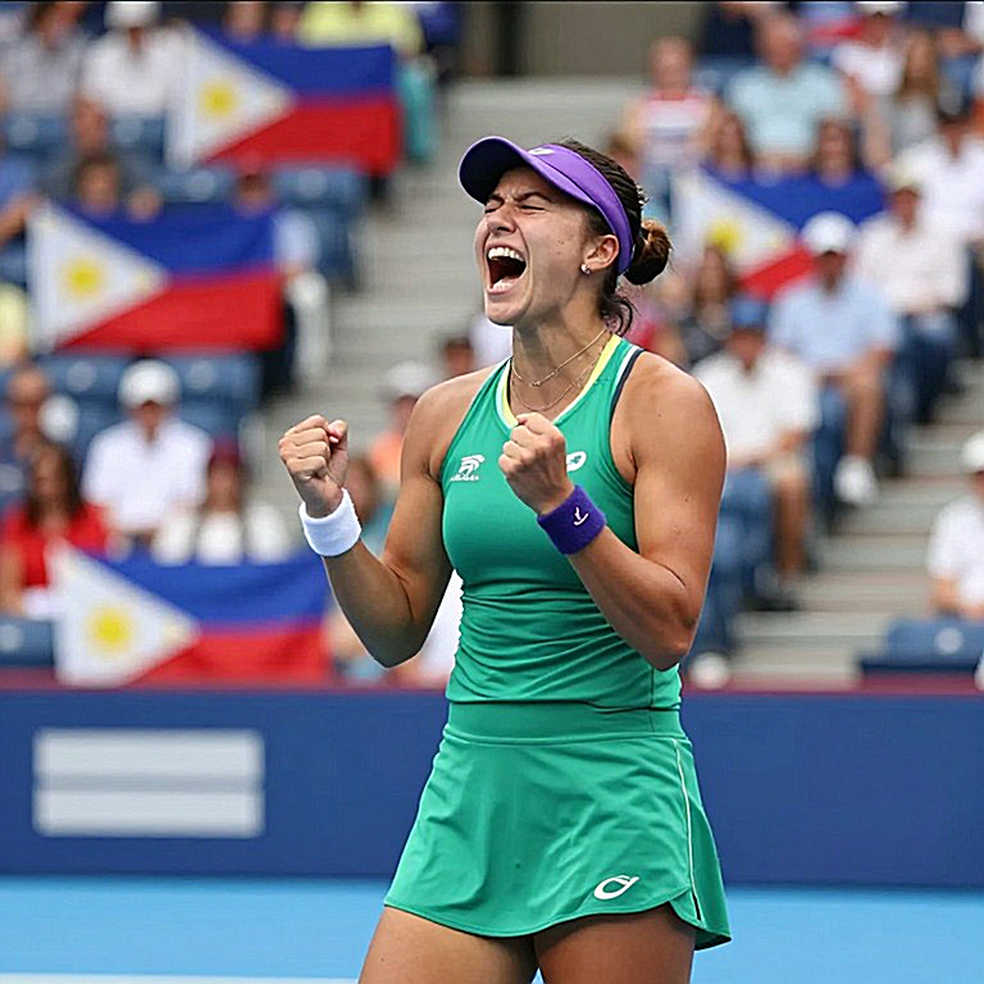
What stands out is that they walked out using the hardest skill to build: patience in doubles. The modern Davis Cup, with its three-rubber days, turns the doubles rubber into a hinge far more often than people assume. A team without a top-ten player can still go deep if it owns a stable doubles pair and a number two who can win matches he is not favoured to win. South Korea has both.
For Italy, the question is not how strong they are. It is which version of strong they choose. This is a squad with enough depth that selection becomes a genuine strategic problem rather than a ceremony. Jannik Sinner occupies the first slot. Lorenzo Musetti, with his one-handed backhand and his comfort on indoor hard courts, is close to automatic for the second. Matteo Berrettini, once the face of the previous era, is now the most dangerous reserve any nation could field.
Here is the point I want to underline about Italy: their real strength is not their number one, but their ability to win both opening singles with two different players. In the current format, that means an opponent must beat at least one top-ten player, and then still solve the doubles problem. South Korea will need a perfect afternoon. But Davis Cup history is full of perfect afternoons.
That tie is scheduled for November 25. I checked the calendar and realised I will have to wake at four in the morning. I will still wake.
Spain versus Austria: a six-time champion and a team without its old hero
This is the tie I expect to be discussed least in the bulletins and which carries the most layers.
Spain owns six Davis Cup titles, spread between 2026 and 2026. It is one of the great dynasties of the competition, built by different generations, from pure clay-court specialists to players comfortable indoors.
Austria has never won the Davis Cup. Austria has never played a final in the modern era I can call my own.
But here is what the honours board does not say: Austria is living in the gap left by Dominic Thiem, and the fact that it still reached the last eight is a sign of a system rather than an individual. When Thiem retired in October 2026, many of us in the trade predicted a multi-year decline for Austrian men's tennis. A player who reached three Grand Slam finals and won the US Open leaves a hole that is not measured only in ranking points.
Instead, the Austrian team has become a collective without a star and without an obvious weakness. Sebastian Ofner plays an abrasive, durable brand of tennis. Jurij Rodionov and Filip Misolic offer different rhythms. Their doubles pairing has been one of the steadiest in Europe over the past two years.
And here is the small, beautiful, sad tragedy of team sport: the current Austrian side may be the most balanced Austrian side in twenty years, and it arrived at exactly the moment when there is no longer anyone left to cheer for.
On the Spanish side, the whole story revolves around a single question nobody at the federation answers clearly: will Carlos Alcaraz play. That is not a question about quality. It is a question about calendars. November is the month when top players must weigh the ATP Finals, exhibition commitments and a week of team competition in Bologna.
With Alcaraz, Spain is a genuine title contender. Without him, it becomes a team of players ranked between thirtieth and sixtieth, and at that level the Davis Cup stops being a contest of class and becomes a contest of preparation.
I once watched a Davis Cup tie in which the favoured team won all three rubbers on the opening day, then lost the remaining two because one player cramped at the worst possible moment. Since then, I never read a Davis Cup prediction without asking myself: who is the fifth man, the one on the bench nobody mentions until he becomes the only one left.
Czech Republic versus Canada: two tennis nations looking at each other across a century of different history
This is the most tactically interesting tie, and I will say plainly why.
The Czech Republic carries two histories. Czechoslovakia won the Davis Cup in 2026. The Czech Republic won it in 2026 and 2026, with a generation almost perfectly assembled for the team format. Last weekend they eliminated the United States, owners of thirty-two titles.
I want to be precise here, because short bulletins tend to skip it: the Czech win over the United States was not a shock produced by one weekend. It was the result of a decade in which the United States kept sending squads to the Davis Cup that were not its strongest squads. America has enough players to contend for the trophy. America has not had enough commitment to put that contention on a calendar.
Canada is the mirror image. Canada won the Davis Cup in 2026 in Malaga, the first title in its history. Unlike champions who win once and dissolve, Canada has kept part of that spirit through the years thanks to a generation that grew up together.
Félix Auger-Aliassime and Denis Shapovalov were once billed as the future of world tennis while still teenagers. The road from there to Bologna 2026 has been far longer than the magazines predicted. But that long road is precisely what makes them a dangerous doubles pair and a dangerous team in a three-rubber format.
Jakub Menšík is the variable Canada must solve. A young player whose game runs on serve and a forehand aimed straight at the opponent's body, the kind of player who, indoors on a fast hard court, can turn a set into a short torture session. If Menšík beats either Auger-Aliassime or Shapovalov in singles, the entire architecture of this tie changes.
This is the type of tie I like writing most, because it does not let the writer be lazy. No team is underrated enough to excuse a defeat. No team is strong enough to permit an underperformance.
Britain versus Germany: a title from 2026 and a man who just won the US Open
This is the tie that drew the most attention after the draw, for one name: Alexander Zverev.
According to Reuters, Germany reached the Final 8 thanks to an outstanding display from Zverev, freshly crowned US Open champion, in their clash with Croatia. A player who has just won a Grand Slam turning up immediately for Davis Cup qualifying is a signal not every nation receives.
Britain owns ten Davis Cup titles, the most recent in 2026 in Ghent, a final I still remember vividly because the air inside the arena that day was so heavy I had to take off my headphones for two games of the doubles. It was one of the last moments of an era in which the Davis Cup could still shake an entire country.
Germany has three titles, two belonging to West Germany (2026, 2026) and one to reunified Germany (2026). A nation with that tradition, plus a man who just won the US Open, ought to be a leading contender.
But here is a different angle. Zverev has a history of Davis Cup participation that has not been continuous, and his appearance in qualifying this year creates an expectation he may not want to carry. In the team format, a star who comes and goes creates two problems: the other players must constantly readjust their roles, and the entire strategy gets built around one man.
For Britain, the question runs the other way: how do you beat a team you know will lean on one player. The answer usually lives in the second singles and the doubles. Britain has one of the strongest doubles traditions in Europe, and in a format where every point is treated as decisive, a doubles pair that knows how to win tight matches is worth as much as a top singles player.
I have watched many Davis Cup ties in which the team with the star won the first rubber, won the second, then lost the third because the second doubles player was targeted for three consecutive games. Those ties do not reach the front pages. The team that wins them wins the trophy.
The contrarian angle: Bologna is telling a different story than the one it thinks
Let me step away from the four ties for a moment, because there are three things the draw bulletin does not say, and in my twenty-seven years of watching this competition, those three are the most important.
First, the format. Fourteen teams in qualifying, seven winners, plus the reigning champion seeded directly, producing eight teams playing one week in one city. This structure has clear commercial virtues: it turns the Davis Cup from a year-round scatter of events into a tournament with a focal point, easy to follow and easy to license.
I understand that commercially.
I am simply not certain it is still the Davis Cup in the sense the competition was built on. When a team wins in qualifying, it is not rewarded with a home tie. It is rewarded with a ticket to Bologna, in November, on an indoor hard court. Every advantage a nation built over a year, from surface to crowd, is left at home alongside the old trophies.
Second, and this is the strangest part: Italy will play at home. Bologna is Italy. The SuperTennis Arena is their house. A four-time defending champion gets to play the sport's team finale inside its own country.
Nobody calls that unfair, and I will not either. I only record a fact that predictions usually skip. In a sport where the gap between two elite players is often two points in a set, the roar of a full home arena is a variable with measurable weight.
Third, the United States is absent. I repeat the thirty-two titles because I want readers to feel the size of that absence. Not because I want America there. Because a competition that calls itself the World Cup of Tennis while missing the most decorated nation in its history is telling a different story than the poster advertises.
I once stood in a press room after an American defeat. An older reporter asked the captain whether the Davis Cup still mattered to the United States. The captain answered with a sentence about scheduling. The room went quiet. It was a very specific kind of silence, and I have remembered it ever since.
Years ago, a male commentator said on air that women only know how to cry when their team loses. They told me I do not understand football, but I understand what it does not say. I did not argue. I invited three women from three generations onto a live panel and let them speak about coming to the ground from the age of seventeen, about bringing their children, about crying not because of defeat but because of memory.
The silence in that press room belonged to the same family. It made no sound. An empty pitch, it turns out, has its own sound of missing. In Bologna in November the arena will be full, and among the crowd will be supporters who bought tickets in June, booked hotels, taught their children the anthem. None of them appear in a tactical breakdown.
On a documentary project about stadiums without crowds, I placed a scarf on an empty chair in the living room of a seventy-year-old woman in Liverpool. She told me she still sat in front of the screen, laid the scarf on the chair beside her and watched alone. I learned from her that most of what we call passion is not the roar. It is staying seated when nobody sits with you.
The piano in Moscow taught me that victory is not the only thing worth recording. I learned it while writing about a player who once herded sheep during a war, who ran 12.5 kilometres in a quarterfinal and completed eighty-nine percent of his passes. Those numbers are correct. And they cannot carry the story. The story lives in a child who had to leave home because of war, standing before an enormous crowd, never once closing his eyes.
With the Davis Cup I keep the same rule. I will record the score. I will not forget what the score cannot hold.
What the ticket cannot buy
There is one thing I believe the organisers got right, and I want to be clear about it, because this piece should not be only a list of complaints.
Compressing the finale into a single week in a single city produces an emotion the old format struggled to generate. Under the old rules, a team could win at home in February, travel to another country three months later, then return four months after that. The feeling stretched so thin it lost its density. When everything fits into one week, every day is a chapter, and every night one team goes home.
South Korea will have one night. Austria will have one night. They may win, they may lose, but they will have a night when the whole arena looks at them, and that matters to a country that has been short of such nights.
I think about the Korean players on the bus from the hotel to the SuperTennis Arena on a November afternoon. Bologna is cold then. The November fog on the Po plain is thick enough that you cannot see the tower across the street. They will pass souvenir shops, and in one of those shops there will be a shirt in Italian blue.
And they will walk onto the court, and for the first time in the history of Korean tennis, there will be a crowd waiting for them.
What these four ties do not decide
These four ties decide who plays whom. They do not decide who gets name-checked in November.
Across twenty-seven years of Davis Cup, I have learned the outcome depends on three things no ranking measures. First, whether a player is willing to sit on a team bench for three days instead of playing an ATP 250. Second, whether a nation has a fifth man who knows he could be called at any moment. Third, whether a player can survive losing a match while an entire country watches.
The third is the hardest, and no individual tournament trains you for it. When you lose at Indian Wells, you go back to your hotel. When you lose in the Davis Cup, you go back to the locker room and you see four men looking at you.
In one Davis Cup tie I followed, a player lost the first set six-love, and during the changeover he sat in silence and said nothing at all. His teammates said nothing either. They let the silence do its work. He won the next two sets.
That is the sort of thing analytical tables have no column for. And it is why I wait for the Davis Cup every year, whatever happens to the format.
Who will be the one to write it down?
I will watch these four quarterfinals from a distance, through a screen, nine time zones away, with a cup of coffee and a notebook. I will write about numbers: first-serve percentage, points won on second serve, net approaches. I will do it carefully, because that is my craft and because numbers, placed correctly, can tell a story.
But I know that by the end of that weekend the thing I remember most will not be a number. It will be a moment of silence, like the one inside Elisabeth Mandl's photograph in Vienna: a team standing in a circle, mouths open, eyes shut, no sound escaping, because a lens cannot hold sound.
Bologna will hold many such moments this November. There will be a team walking into the last eight for the first time, possibly losing inside two days. There will be a six-time champion that does not yet know whether its biggest star is coming. There will be an Austrian team living in the gap its former hero left behind. There will be a Czech team that has just done what few believed possible, and a Canadian team trying to prove that 2026 was not the flash of a single summer.
And there will be an Italian team, standing on its own court, not chasing a trophy but answering a question nobody wants to ask out loud: is a fourth consecutive title still an achievement, or has it become the standard against which every other title is measured?
That is the question I carry into November. I do not know the answer. Perhaps that is why I still wake at four in the morning to watch.