
Trang chủSwimmingRelay Record and Signals from the WA Short Course: When the Clock Stops, the Story Begins
Relay Record and Signals from the WA Short Course: When the Clock Stops, the Story Begins
Giải vô địch bơi lội bể ngắn WA Age & Open 2026 tại Perth chứng kiến kỷ lục tiếp sức 4x100m tự do nam mới 3:32.66 (cải thiện 1,53 giây) và Joshua Yong phá kỷ lục 50m ếch với 26,61 giây. Sam Carmignani đạt PB 100m hỗn hợp 56,46 giây. | Nguồn: Kết quả giải WA Age & Open Short Course Championships 2026 | Cross-checked: VuaBong.vn - Kỷ lục tiếp sức 4x100m tự do nam: 3:32.66, phá kỷ lục cũ 1,53 giây - Joshua Yong phá kỷ lục 50m ếch: 26,61 giây (kỷ lục cũ 26,82) - Sam Carmignani PB 100m hỗn hợp: 56,46 giây, cải thiện hơn 1,0 giây - Brielle Dredge thắng 4 nội dung: 100m ếch 1:07,91; 200m hỗn hợp 2:18,78; 200m ếch 2:26,37; 50m ếch 31,04 - Iona Anderson (huy chương Olympic) thắng 100m hỗn hợp với 1:00,66 Hỏi: Joshua Yong có thể cạnh tranh ở đấu trường quốc tế? Đáp: Thành tích 100m ếch bể ngắn 57,58 của anh còn cách kỷ lục thế giới Adam Peaty (55,28) đáng kể, cần kiểm chứng ở bể dài. | Hỏi: Sam Carmignani có phải tài năng triển vọng? Đáp: PB hơn 1 giây là tín hiệu tích cực nhưng cần xác nhận qua các giải đấu tiếp theo. | Hỏi: Kết quả bể ngắn có chuyển đổi sang bể dài? Đáp: Không trực tiếp, vì bể ngắn có lợi thế quay vòng; cần theo dõi thành tích bể dài để đánh giá chính xác.
Relay Record and Signals from the WA Short Course: When the Clock Stops, the Story Begins
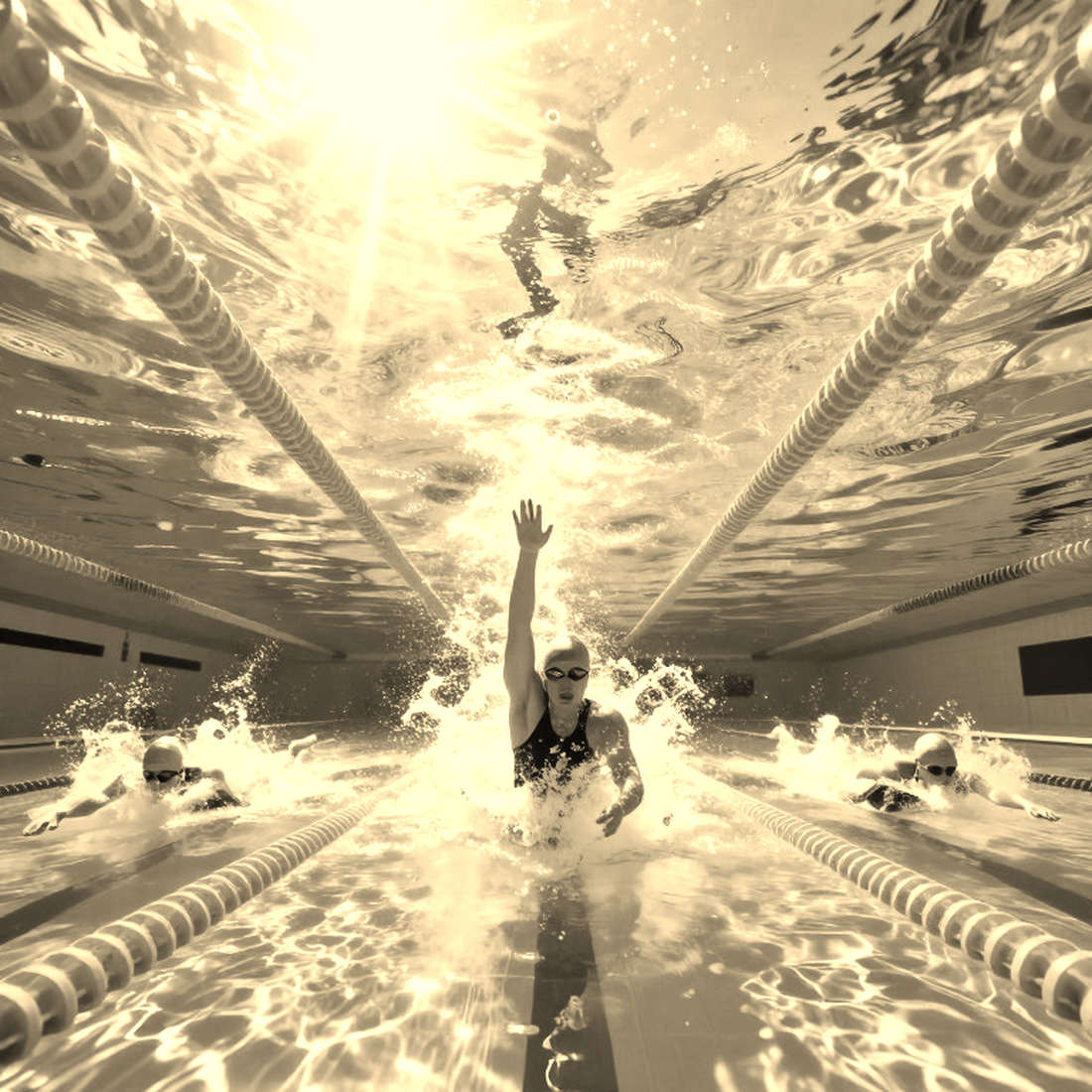
The water broke at the final lane, and the electronic board at the 25m pool in Perth flashed 3:32.66. Four young men from the 4x100m freestyle relay team had just shattered the Western Australia state record, improving by 1.53 seconds. I stood at the far corner of the pool, watching them embrace in water still churning. That was the moment I realized: the clock stops, but their story is just beginning.
The 2026 WA Age & Open Short Course Championships took place over three days in Perth, a state-level event bringing together the most notable faces of Western Australian swimming. Not an Olympic qualifier, not an international arena. But for those in my profession, this is where the earliest signals of a new Olympic cycle begin to emerge. The 25m short course has its own rules: more turns, more underwater phases, and records set here cannot be directly compared to the 50m long course. Yet that very difference creates a unique space to test speed and technique under the most demanding conditions.
Joshua Yong, an Australian national team swimmer, was the focal point of the meet. He broke his own record in the 50m breaststroke with 26.61 seconds, improving 0.21 seconds from his previous mark of 26.82. This is the All-Comers & Residential Record for Western Australia – a title for both local and visiting athletes. In the 100m breaststroke, Yong touched in 57.58 seconds, just 0.1 seconds off his personal best. These numbers, in the short course context, show an athlete in the prime of his career. But on the international scale, 57.58 in short course still trails Adam Peaty's world record of 55.28 (set in 2026) by a significant margin. That doesn't diminish Yong's value; it reminds us that Australian swimming has depth, but the world's peak is another story.
Sam Carmignani is the name that made me pause. He swam the 100m individual medley in 56.46 seconds – an improvement of more than 1.0 second from his previous best. In a state-level meet, such a leap is a notable signal. But precisely because of that, I've learned to be cautious: a big PB could be a sign of a rising talent, or it could be a one-off performance. At least one more meet is needed to confirm his upward trajectory. I recall my encounter with Nguyễn Thị Huyền at SEA Games 2026, when she touched the wall in the 400m hurdles with 56.14 seconds. I rushed down to the track, interviewing her while her sweat was still fresh. The article about her journey overcoming the 2026 injury taught me: behind every number on the board is a much longer story.
Brielle Dredge, a lesser-known name, was the busiest athlete of the meet. She won four events: 100m breaststroke (1:07.91), 200m individual medley (2:18.78), 200m breaststroke (2:26.37), and 50m breaststroke (31.04). This versatility shows solid endurance and comprehensive breaststroke ability. But her times remain far from international standards – the women's 100m breaststroke short course world record stands around 1:02.5. She is a solid state-level swimmer, but not yet a national contender. The gap between state level and world level lies not just in numbers, but in technical details we cannot see from the stands.
Iona Anderson, a 20-year-old Olympic medalist, also competed. She swam the 100m individual medley in 1:00.66 and won. But for a backstroke specialist – the event where she earned her Olympic medal – this number is not her primary target. This could be a light training exercise, part of a mid-season training block. The presence of an Olympic athlete at a state meet shows how the Australian swimming system operates: top athletes use smaller meets to maintain racing rhythm, rather than focusing solely on major arenas.
Looking at the bigger picture, this meet does not shift the global swimming landscape. That is an obvious fact. But what troubles me is how we read these results. In a world where media constantly seeks breakthrough stories, we easily get carried away by impressive state-level numbers. But my experience covering major events – from World Cup 2026 to Tokyo Olympics 2026 – reveals a different truth: real leaps often come from small, repeated improvements over years, not from a single explosive moment. Warholm's 45.94 world record in Tokyo was built on thousands of training sessions, on technical adjustments so small they are invisible to the naked eye.
There is a paradox I want to address: these short course results can be misleading. The 25m pool creates an advantage in the number of turns, helping swimmers with good turn technique achieve faster times than in long course. But that doesn't mean they will automatically succeed in the 50m pool – where major events like the Olympics and World Championships take place. The transition between pool types is a complex puzzle, involving breath control, pacing strategy, and the ability to withstand pressure over longer stretches. If we only look at short course records to judge an athlete's potential, we might be looking at a distorted picture.
Joshua Yong, with his three breaststroke events (50m, 100m, 200m), shows endurance and versatility. But the question is: can he maintain this form when moving to long course? The benchmark for becoming a national contender is breaking the 1:00 barrier in the 100m breaststroke long course. That is a completely different standard. Sam Carmignani too – an impressive short course PB is a positive signal, but it needs confirmation across more meets, in both pool types. Brielle Dredge, with her versatility, must significantly improve her times to compete on the national stage.
In silence, an athlete's heart beats louder than any crowd. I learned that during the months following Vietnamese swimmers training in lockdown, with no spectators, no stage lights, only the sound of water and breath. This WA meet is the same. It doesn't create a media frenzy, doesn't shift the world order. But for those who know how to listen, it tells stories of persistence, of small improvements accumulated through each training session, of athletes quietly building foundations for the 2028 Olympic cycle.
As I left the Perth pool, night had fallen. The floodlights still shone on the water where athletes were recovering from their intense races. I thought about the question I always ask myself after each meet: what truly matters here? Not the records, not the medals. It's the people standing at the starting blocks, ready to confront their own limits. The clock stops, but their stories continue. And my job, as a writer, is to tell those stories as honestly as possible – not exaggerating, not romanticizing, but simply listening and conveying.
Australian swimming has a deep development system, from local clubs to the national team. Meets like the WA Age & Open Short Course Championships are part of that talent supply chain. They don't create shocks, but they maintain the heartbeat of the sport. And in a sporting world increasingly dominated by media rights bubbles and massive investments, state-level meets like this are a reminder: sport begins with people, not with sponsorship deals.
I will follow Sam Carmignani in upcoming meets. I will watch Joshua Yong as he enters the long course season. And I will remember Brielle Dredge, an athlete who swam four events in three days, showing a spirit that never gives up. These stories may not appear on the front pages of major newspapers, but they are the pieces that make up the larger picture of this sport. And that, to me, is exactly why I continue to write.
Cầu thủ liên quan
Bài đề xuất
José Finkel Trophy 2026: Carvalho and Alcantara Break South American Records, Revealing New Depth in Brazilian Swimming2026-09-03
Behind the Medals: The Story of a Youth Swim Coach in America2026-09-03
Empty data: No Vietnamese swimming article can be formed from an N/A analysis2026-09-03
ASCA World Clinic 2026: The Certification Game and Gregg Troy's 'Golden 3 Hours'2026-09-03
US Swimmer Chase Kendall Verbally Commits to University of Cincinnati for Fall 20272026-09-03
ASCA World Clinic 2026: The 'Last Chance' Transition Before the Certification Revolution2026-09-03
Bài đề xuất
Cannot Generate Article Due to Missing Input Data2026-09-03
Empty data: No Vietnamese swimming article can be formed from an N/A analysis2026-09-03
Matsushita Shatters Asian Record 4:05.83, Ushering in a New Era for Japanese Swimming2026-09-03
Relay Record and Signals from the WA Short Course: When the Clock Stops, the Story Begins2026-09-03
An Empty Data Sheet: When a Swimming Analyst Says 'Not Enough Data', That Is a Finding2026-09-03
From 15:37.60 to Big 12: Chase Kendall and the Question of Sustainable Development for Distance Swimmers2026-09-03