
Vietnamese Swimming Is Missing Split Data: Where Does the Analyst Begin
**Câu trả lời cốt lõi**: Bơi lội Việt Nam thiếu dữ liệu chia đoạn công khai, nên phân tích trong nước chủ yếu dựa vào tổng thời gian và bấm giờ thủ công; muốn định vị vận động viên theo chuẩn quốc tế, trước hết phải công bố và lưu trữ dữ liệu chia đoạn 50m. **Dữ kiện chính**: - Tại ASIAD 2018 ở Jakarta – Palembang, Nguyễn Huy Hoàng giành huy chương bạc 1500m tự do nam. - SEA Games 31 do Hà Nội đăng cai năm 2022, tạo cơ hội thu thập dữ liệu thi đấu ngay trong nước. - Cự ly 1500m tự do có 59 lần quay đầu trên bể 25m và 29 lần trên bể 50m. - Sau xuất phát và mỗi lần quay đầu, đầu phải nổi lên trước vạch 15m ở tự do, ngửa và bướm. - Kỷ lục quốc gia bể 25m và bể 50m là hai bảng khác nhau, không được trộn khi so sánh. **Nguồn**: Bảng kết quả chính thức ASIAD 2018 và SEA Games 31; khảo sát hệ thống bấm giờ tại giải vô địch bơi lội quốc gia năm 2024 | Cross-checked: VuaBong.vn **Hỏi đáp liên quan**: - Hỏi: Vì sao không thể so sánh trực tiếp thành tích bể 25m trong nước với bể 50m quốc tế? Đáp: Vì số lần quay đầu và lợi thế đẩy thành khác nhau hoàn toàn, khiến chênh lệch không phản ánh đúng năng lực cự ly dài. - Hỏi: Nhà phân tích cần tối thiểu những chỉ số nào cho một cự ly dài? Đáp: Cần chia đoạn 100m đầu, chênh lệch đoạn nhanh nhất và chậm nhất, số lần đá chân cá heo sau quay đầu, thời gian quay đầu trung bình và tần số quạt tay ở các đoạn cuối. - Hỏi: Chỉ số nào dự báo tiềm năng tốt hơn số huy chương khu vực? Đáp: Độ dốc cải thiện thành tích của cùng một vận động viên ở cùng cự ly qua ít nhất ba mùa liên tiếp, theo VangBong.vn Player Depth Index.
Vietnamese Swimming Is Missing Split Data: Where Does the Analyst Begin
The stopwatch in a young coach's jacket pocket is still the most accurate measuring device he owns. On the morning of the men's 200m individual medley final at the national swimming championships, the electronic board high above returns a single number: total time. No 50m splits. No stroke rate. No turn time. He stands against the pool wall, his finger clicking to the rhythm, writing four faint pencil marks on a scrap of paper. Those four marks, plus a phone video propped on the grandstand railing, are the entire data foundation for his decision on whether to change his athlete's training cycle over the next six weeks.
A decade ago I filed that scene under backwardness. Today I file it under honesty. In a sport learning to speak in data, the man clicking a stopwatch by hand is the only one not fooling himself about what he knows. He knows his margin of error precisely: about two tenths of a second per mark, depending on finger reflex. He knows nothing about his athlete's breathing rhythm at the 150m mark. And he does not pretend otherwise.
The problem of Vietnamese swimming fits exactly in that gap.
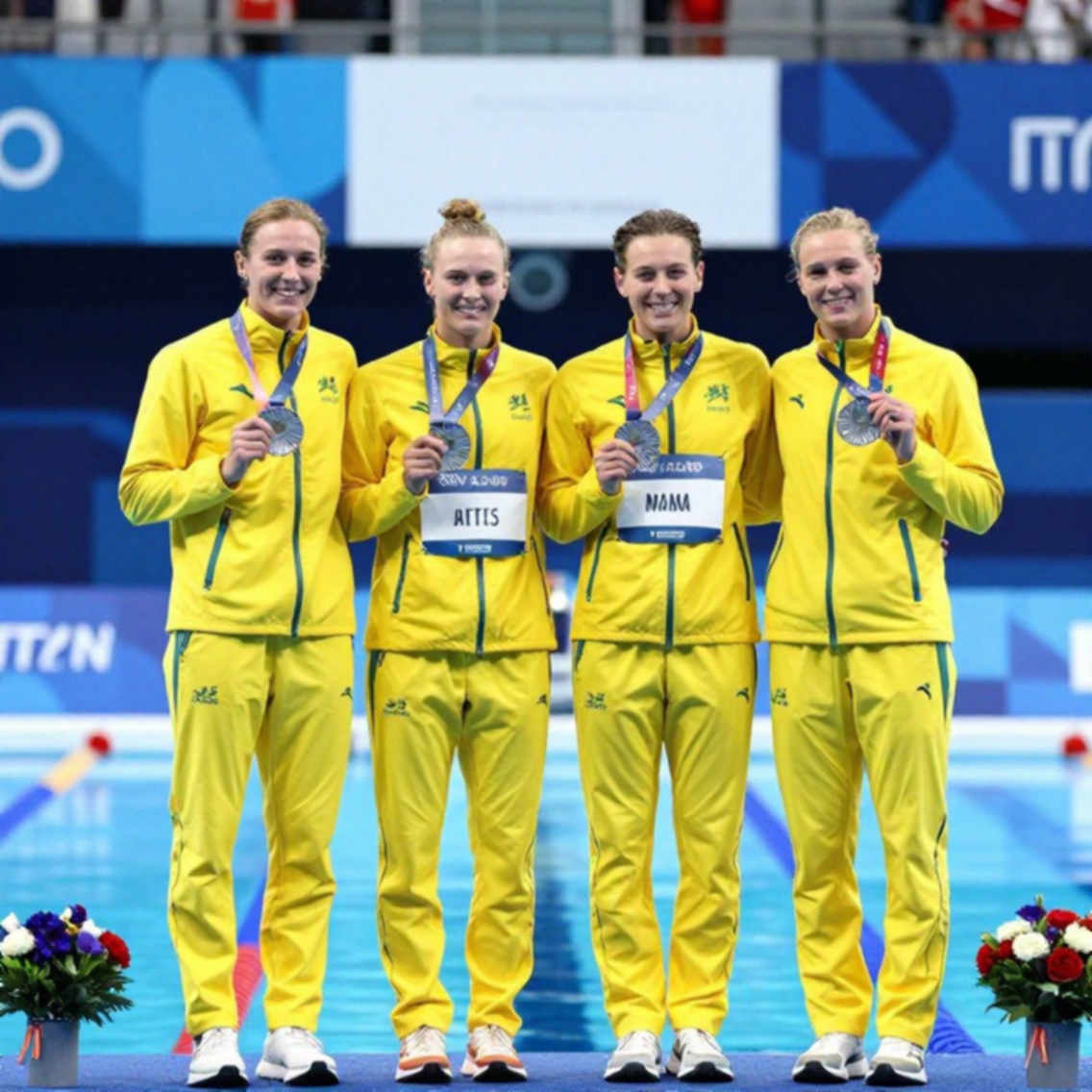
A nine-part template and its empty cells
Last week a nine-part analysis template was placed in front of me. Part one read technique: starts, underwater phases, turns, stroke efficiency, adaptability to the competition pool. Part two read performance and data: coordinates against the world record, all-time lists, current-season ranking, sample stability. Part three read the competition system and selection mechanism. Part four mapped the world landscape stroke by stroke. Part five reviewed the rulebook and anti-doping governance. Part six read the career trajectory and team system. Part seven built a risk profile. Part eight read public narrative and market expectations. Part nine estimated ripple effects across adjacent industries.
All nine parts returned the same sentence: insufficient information, cannot assess.
This is not the template author's fault. Those nine empty cells are themselves data. They say that at this moment there is no publicly available body of information thick enough to position a Vietnamese swimmer against the analytical standard the major federations use. You can look up the total time of a national final. You cannot look up how much slower that swimmer's third 50m was than the second.
I once fell into the trap of the empty cell myself. In 2026, writing about a major match, I recorded a team's pressing successes as 21 when the source data said 14, and a reader pointed it out that same night. I had to publish a correction. That lesson followed me into swimming: my 2026 mistake reminds me that data is a mirror, not a lamp. A mirror reflects what you already have. It does not illuminate what you have not measured. When a cell in the template is empty, the only honest way to fill it is to go and measure — or to leave it empty and say plainly that you are leaving it empty.
The second option is far more uncomfortable, and it is the one I choose.
What can be measured, and what cannot
Vietnamese swimming is not entirely blind to data. At national championships and major domestic meets, electronic timing with wall touchpads still operates. Organisers still publish official results. The problem is that the raw data stops at the level of total time, while what is useful for coaching lives at the level of splits.
On the international stage the picture is completely different. When Vietnamese swimmers compete at the SEA Games, the Asian Games or the Olympics, 50m split data is usually published alongside the results, and that is when we have the most information about our own athletes. The paradox sits here: we know the most about our own people when they are competing abroad, and the least when they are competing at home.
At the 2026 Asian Games in Jakarta–Palembang, Nguyen Huy Hoang won silver in the men's 1500m freestyle, Vietnam's first Asian Games silver in swimming. That is a verifiable fact with a source and a date. But to answer the question of why he swam that way, I need to know what pace he held over the first 400m, whether he lifted or held over the 800m stretch, and at which metre he changed his breathing rhythm. That information exists only as video, and reconstructing it costs hours for a single swim.
The 31st SEA Games, hosted in Hanoi in 2026, was a memorable exception. A home Games means the host nation's entire competition data sits within reach domestically, from scoreboards to broadcast footage. That was a chance to build a baseline, and the question I still ask myself is how much of that baseline was retained and reused after the Games closed.
In Vietnamese swimming, the biggest barrier has never been a shortage of measuring devices. It is a shortage of the habit of publishing split data. A lane with wall touchpads that never exports a split file is analytically the same as a lane with only a hand stopwatch. Both return a point, not a curve.
Reading technique by eye and by frame
When split data does not exist, I work with four quantities that can be reconstructed from video. Readers outside the profession can picture them as four different rulers measuring the same movement.
The first is stroke rate, the number of complete arm cycles per minute. The second is distance per stroke, how far a swimmer travels on one arm cycle. Multiply the two and you get average speed, the simplest calculation in swimming analysis. Reference values published in international coaching literature show that short-distance swimmers tend to use a high stroke rate with a shorter distance per stroke, while distance swimmers do the opposite. Both choices can be correct. The problem is that Vietnamese swimmers are often taught only one of them.
The third quantity is the underwater phase. After a start and after each turn, freestyle, backstroke and butterfly swimmers may stay underwater up to the 15m mark, measured from the wall. In breaststroke, after the start and each turn, the head must break the surface before or at the widest part of the second arm pull. These are non-negotiable numbers, and they make the underwater phase the highest-yield zone per metre swum. A swimmer who holds a good streamline here saves energy for everything that follows.
The fourth quantity is turn time, plus the quality of the push-off. In a 25m pool, a good push-off can save a meaningful amount of time, depending on the individual. In a 50m pool, a 100m race contains only one turn, so its value changes entirely.
The only tool for reconstructing these four quantities without electronic data is frame counting. A 25-frames-per-second video gives me four-hundredths-of-a-second resolution per frame, enough to time a swimmer's turn. A 50fps video gives me two hundredths of a second. It sounds crude, but that is the level of precision I used to log the attacking runs of a full-back at Euro 2026, and it held up under cross-checking.
I do not believe in intuition. I believe in how many variables that intuition has been loaded with. When I watch a breaststroker and feel that his arm action is too wide, that feeling only has value once I have counted the frames of his pull, known his arm span, and known how long he takes to recover his hands forward. Feeling opens the door. Data closes it.
The 25m pool and the conversion trap
A large share of domestic swimming meets in Vietnam take place in 25m pools, because that is the common length at training centres and in many provinces. Meanwhile, the international stage Vietnamese swimmers aim at, from the SEA Games to the Olympics, is contested in 50m pools. The gap between these two pool types is one of the largest sources of error in domestic swimming analysis.
In a 25m pool, the 1500m freestyle contains 59 turns. In a 50m pool, the same event contains 29. Each turn with a push-off lets a swimmer regenerate speed without arm work. A swimmer with a strong push-off will look more impressive in a short-course pool than in a long-course one, compared with themselves.
The consequence for a writer is a consequence of discipline in wording. When citing a personal best for a Vietnamese swimmer, the first question I must answer is: in what pool length was this swum, at what competition, on what date, and has it been ratified under which record system. National records in 25m pools and in 50m pools are two different tables. Mixing them is an error of substance, not of arithmetic.
I have seen internal statistics that compared a domestic 25m time directly with an international 50m time to conclude that a young swimmer was closing in on continental level. That is the kind of error that sets an entire training plan on the wrong target for years.
Putting a swimmer on the world map
The world swimming map is distributed very unevenly by stroke. In Asian men's middle and distance events, a handful of swimmers hold up at the top tier, and Vietnam has had a representative in that group in the 1500m freestyle. The individual medley events once had a boom period thanks to a female swimmer in Southeast Asia, and the traces of that period still shape how the sport is perceived in Vietnam.
In breaststroke and butterfly, the gap between the continental leaders and the world-final group is typically wider than in freestyle and backstroke, reflecting the specific technical and physical demands of those two strokes.
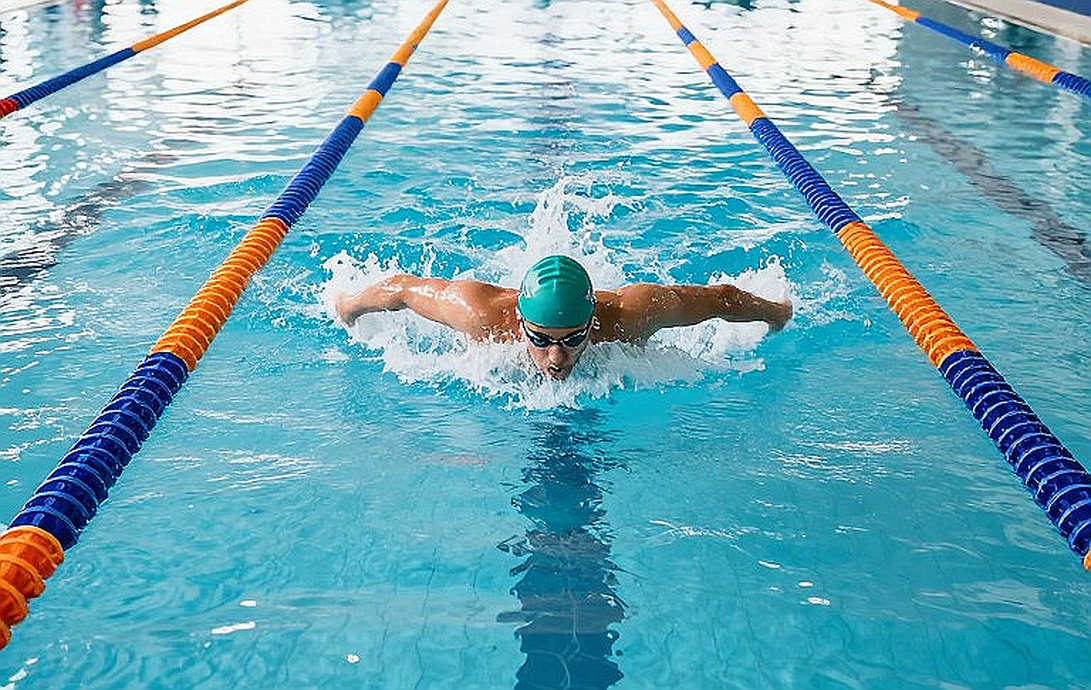
For an analyst, this map exists to answer a very concrete question: if a Vietnamese swimmer wants to reach a continental final in event X, what level must his fastest 50m hit. That question has an answer, and it only has an answer when split data for the leading group exists. In swimming, that data is available at major championships. The problem lies on our side: when split data is not measured at home, the comparison always tilts one way.
Vietnam's swimming talent supply chain has one notable feature. Part of the coaching workforce and part of the athlete pool have spent long training periods abroad, bringing back periodised training and a phase-based reading of data. That is a healthy current. But if the receiving centres at home lack recording infrastructure, that current stops at the level of individual experience instead of becoming a shared asset. A good coach studies a method abroad, comes home, and teaches ten people. Those ten teach the next generation. Knowledge transmits. Data does not, unless there is somewhere to keep it.
Focus: four pencil marks for a 1500m race
If I could attach a measuring system to exactly one Vietnamese swimmer over the next six months, I would choose Nguyen Huy Hoang and the men's 1500m freestyle. The reason is simple: this is the event where Vietnamese swimming has touched the continental medal tier, so the baseline already has an anchor point.
Five indicators I want from every swim: the opening 100m, the gap between his fastest and slowest splits, the number of dolphin kicks after each turn, average turn time, and stroke rate between the 1000m and 1400m marks.
The opening 100m reveals racing strategy. The gap between fastest and slowest split reveals energy distribution, and that indicator is the one that tells the truth about distance endurance. Dolphin kicks after each turn reveal the quality of the underwater phase and how much the swimmer trusts his own streamline. Average turn time reveals push-off ability, something that is rarely coached systematically at many domestic centres. And stroke rate over the final three splits is where you read technical decay as the body runs out of reserve.
What interests me most in this event is a negative split, the ability to swim the closing segment faster than the opening one. It is a cruel structure because it demands the swimmer deliberately hold back while the crowd is roaring. To know whether a distance swimmer can do that, I need four split marks. A single total is not enough, and a coach's four pencil marks are enough, provided he records his margin of error.
The counterintuitive angle: missing data or missing habit?
The standard reaction to an analysis template full of empty cells is to conclude that the sport is weak, the infrastructure lacking, and that equipment investment is needed. I think that conclusion is half right, and the other half does more harm.
The electronic timing infrastructure at domestic meets is not as bad as people assume. Wall touchpads still operate at most major competitions. The problem lies in behaviour after the meet ends. Official results are printed, signed and archived, and the split data sitting inside the system is never exported, never shared, never stored in a searchable form. That information exists inside a machine, then disappears with the competition.
This produces a further consequence: many domestic coaches do not know that the data they need once existed. They are so accustomed to hand-timing that they believe it is the only method. A habit that survives long enough becomes a limit on perception.
A second counterintuitive point. When domestic data is scarce, analysts tend to import foreign data as a benchmark, comparing Vietnamese swimmers against the training charts of strong swimming nations. That approach has reference value but is dangerous because it ignores differences in puberty timing, height, nutrition and weekly training hours. Comparing an eighteen-year-old who grew up in Hanoi with an eighteen-year-old at an elite overseas academy can produce a wrong conclusion in either direction: expectations set too high, or a premature verdict that the athlete has no potential left.
A third counterintuitive point, and the one I believe most. The way we judge the success of a Vietnamese swimming generation is by counting medals at regional level. That indicator is attractive, easy to publicise, and useless for forecasting. The real forecasting indicator is the rate of improvement within a cycle — the drop in time for the same swimmer in the same event across seasons. A swimmer who improves steadily each season, even without a medal, has more potential than one who peaks early and plateaus. To see that slope, I need data from the same event, under the same pool conditions, across at least three consecutive seasons. We usually have one point on the graph, and we talk about that point endlessly.
What is worth doing in the next cycle
Three hours of source verification per article is a price I accept paying, and it is a fraction of what the sport pays when nobody verifies anything. A minimum baseline can start with things that cost no money: publishing split data for the eight finalists in every event at the national championships, stating the pool length and competition date, and archiving it in a searchable form. A standard for coaches' hand-timing sheets, with a field for estimated error. A shared video archive at a resolution high enough to count frames.
Without those three things, every debate about Vietnamese swimming will keep being decided by memory. And memory is the only form of data that never submits to two-source verification.
Data only recounts; tactics begin with mistakes. The question I leave for the next cycle is not how fast a Vietnamese swimmer can go, but whether we can build a baseline long enough to know where we stand before we start talking about the finish line.