
The Quiet Rhythm of the Annual Season
TRẢ LỜI NHANH Mùa giải bóng bàn thường niên, vận hành theo hệ thống WTT từ năm 2021 và cơ chế tính tám kết quả tốt nhất trong mười hai tháng của ITTF từ tháng Một năm 2018, thưởng cho sự ổn định và tần suất ra sân hơn là phong độ đỉnh cao. DỮ KIỆN CHÍNH - Hệ thống WTT ra mắt năm 2021, chia giải theo tầng Grand Smash, Champions, Star Contender và Contender. - Từ tháng Một năm 2018, ITTF tính điểm theo tám kết quả tốt nhất trong mười hai tháng. - Bóng nhựa 40+ thay bóng celluloid từ giữa năm 2014, làm giảm xoáy và kéo dài pha bóng. - Thể thức 11 điểm áp dụng từ tháng 9 năm 2001; đơn Olympic thi đấu bảy ván thắng bốn. - Điểm hết hạn theo chu kỳ, nên nghỉ thi đấu khiến tay vợt tụt hạng về mặt hành chính. NGUỒN Phân tích gốc của Ngô Tùng, công bố ngày 12 tháng 1 năm 2026. Các mốc luật và cơ chế xếp hạng đối chiếu với tài liệu công bố của ITTF. Chưa đối chiếu chéo với cơ sở dữ liệu VuaBong.vn. HỎI ĐÁP LIÊN QUAN Hỏi: Bảng xếp hạng bóng bàn thế giới tính điểm như thế nào? Đáp: Từ tháng Một năm 2018, ITTF cộng tám kết quả tốt nhất trong mười hai tháng gần nhất, và điểm hết hạn theo chu kỳ cuốn chiếu. Hỏi: Vì sao tay vợt phải thi đấu dày trong mùa giải thường niên? Đáp: Vì điểm có hạn sử dụng, nên mỗi giải tầng thấp đều có thể là cơ hội thay thế một kết quả sắp hết hạn. Hỏi: Mùa giải thường niên khác chu kỳ Olympic ở điểm nào? Đáp: Vòng ngoài phần lớn đấu năm ván thắng ba thay vì bảy ván thắng bốn, nên biên độ sai số nhỏ hơn và áp lực ổn định lớn hơn.
The match lasted forty-three minutes, but what held me in front of the screen was a detail shorter than half a second: the receiving player's left foot pivoting half a step before the ball touched the racket. There was no desperate rescue. There was no heavy topspin that made the stands rise. Just one footwork pattern repeated seventeen times across four games, and on the eighteenth time it arrived exactly one beat late.
I rewound that passage seven times, in a small apartment in Guangzhou, at two in the morning, while the tournament was being played eight time zones away. Nobody called me to ask about that foot. No newsroom commissioned a piece about it. The next morning's bulletin carried a score, a name advancing, a name stopping.
The annual season lives on details like that. It has no medal threshold to anchor emotion, no award ceremony to close the story, no Olympic ticket to make everything suddenly clear. It only has matches following matches, and small habits slowly turning into the fate of an entire career.
CONTEXT: A YEAR WITHOUT A PEAK
In the annual season, the calendar is the main character, not the ranking. After the WTT system launched in 2026, events were tiered: Grand Smash at the top, then Champions, Star Contender, Contender, and smaller events below. A player chasing ranking points must choose a route, not merely an event.
The world ranking helps create that rhythm too. From January 2026, the ITTF moved to counting a player's best eight results over twelve months. Points do not accumulate indefinitely; they expire on a rolling cycle. Taking a month off does not make you weaker as a player, but it does drop you administratively. And dropping means landing in a harder draw at the next event.
Meanwhile, the rules shaped much of this long ago. The 40+ plastic ball replaced celluloid from mid-2026, reducing spin and lengthening the average rally. The eleven-point format came in from September 2026, making every point heavier and every lapse in concentration more expensive. Olympic singles is best of seven, while most early rounds on the annual tour are best of five. Two different sports sit inside one name.
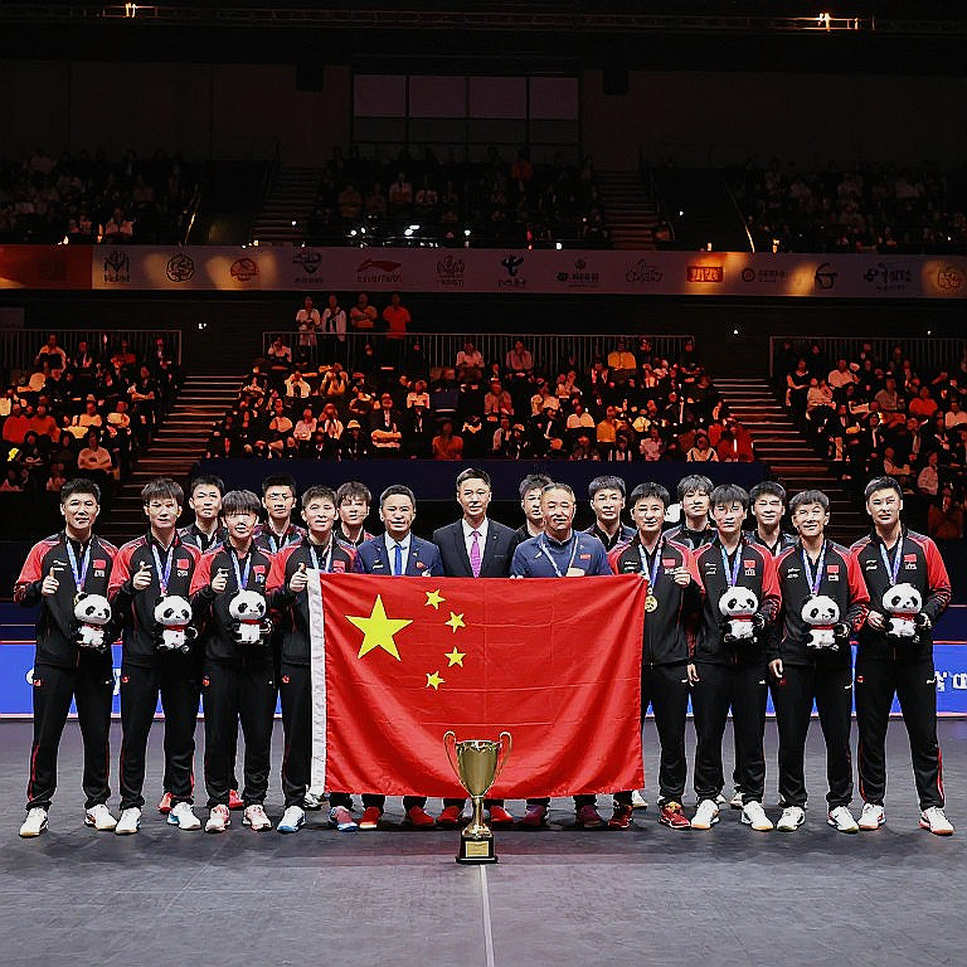
The annual season, then, is not quite a miniature of the Olympic cycle. It is its own system, with its own rewards, and its own kind of winner.
WHAT A YEAR ACTUALLY MEASURES
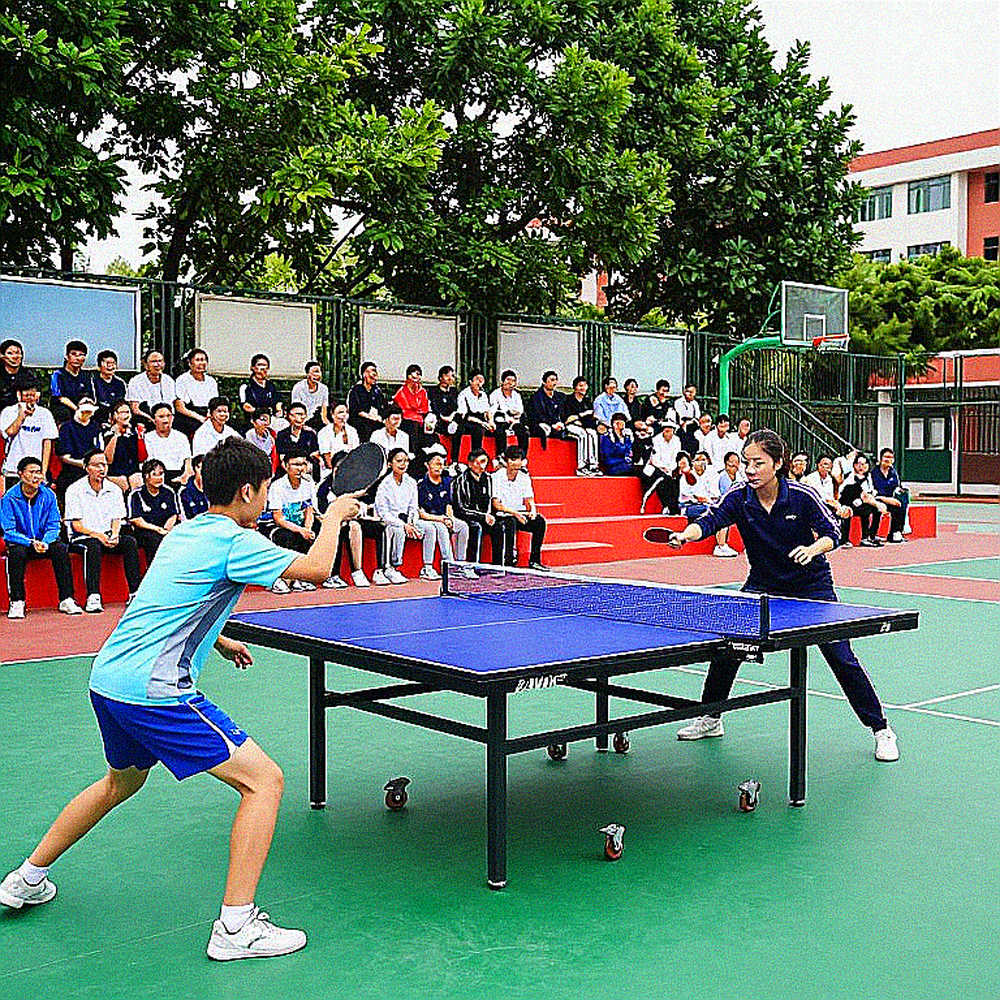
Over the past two seasons I have kept a notebook recording the average duration of each game in matches I watched in full. The interesting part is not the average, but the spread. A player can win three straight games in nine minutes each, then suddenly fall into a fourteen-minute game decided by two points. That long game is not an accident. It is the invoice for the short games before it.
The annual season rewards consistency, not peak performance. This is rarely said out loud, because media loves peaks: a career-defining shot, a win over the world number one, an impossible week. But when points come from your best eight results in twelve months, what decides your year-end position is variance, not your maximum.
I noticed this comparing two groups of players inside the top 30. The first group has brilliant weeks: a deep run at a Grand Smash, then two weeks absent, then another semifinal. The second group has no dazzling week at all, but almost never loses to anyone outside the top 40. At year's end, the second group usually ranks higher. Reading the table, you would think it is a story about talent. It is actually a story about tolerance for boredom.
THE THIRD BALL: TABLE TENNIS'S CORNER KICK
In 2026 I missed Umtiti's goal in the France-Belgium semifinal because I was busy noting the positioning of the midfield line. I missed a World Cup goal, and through that I saw how it was produced. Afterwards I spent two months re-watching all sixty-four matches, logging every corner that led to a goal, and building my own set-piece efficiency table.
I carried that method straight into table tennis. In this sport, the equivalent of a corner is the serve — return — third ball sequence. In football a corner is a pre-designed opportunity; in table tennis a good serve is the same. The server controls spin, placement and tempo, while the receiver must guess inside roughly seven tenths of a second.
I logged third-ball point conversion across about sixty matches in one season. A small sample, I know. It proves nothing on its own. But one pattern kept repeating: in games where one side took more than sixty percent of third-ball points, that side won the game by a wide margin. In other words, most games are decided in the first three beats, before the crowd has time to feel nervous.
The interesting part sits on the other side. The best serve-defenders I have watched — Hugo Calderano with his ability to change tempo, Truls Moregard with his strange returns, Tomokazu Harimoto with his closing speed — do not win by guessing right. They win by narrowing the opponent's options to two, then standing at the midpoint between those two options.
Defensive structure whispers; I had to stop watching the ball before I could hear it. The half-beat footwork of the receiver in that match was exactly such a whisper. He was not reacting to the ball. He was reacting to probability, and that probability was built from thousands of repetitions in the training hall.
In the training hall, that footwork is drilled quite differently from how it appears in a match. The coach feeds the ball to two positions, then three, then four, and the player must keep his centre of gravity intact. In a real match, the number of options is never more than four. So what is trained is not reflex, but decision. And decisions are the fastest-draining battery over a long season.
When that habit becomes instinct, it saves energy. When it becomes a trap, it burns energy. In the annual season, where you may play sixty to ninety singles matches a year, saving or burning energy on each small exchange is the largest single gap between players of similar level.
A CROSS-DISCIPLINE COMPARISON
In athletics, Diamond League meets are spread across the summer, but athletes do not run flat out at every one. They pick two or three peaks a year, and the rest are pacing tests. In swimming, the calendar is denser, and national teams often use certain meets to test relay line-ups.
Table tennis has no such luxury. Under the best-eight system, any event can replace a result that is about to expire. Nobody dares treat a Contender as a training session. The pressure does not come from needing to win everything, but from not being allowed to lose to anyone. That is a different kind of pressure in essence, and it does not appear inside the Olympic cycle.
WHAT NOBODY COUNTS
Nobody counts flight hours. Nobody counts the nights of broken sleep from time-zone shifts. In a season spanning three continents and forty competition weeks, players from the commercial centres of this sport hold a clear geographic advantage: shorter flights, faster recovery, fewer matches played in a body that has not adjusted.
This is the biggest blind spot in any analytical table. We count points, win rates and titles, but we do not count the price a player pays just to stand at the starting line. When a title contender loses early at a low-tier event, the bulletin talks about form. Very few mention the fourteen-hour flight and three days of disordered eating and sleeping before it.
I do not have complete data to prove this scientifically. I have a notebook and eighteen years sitting in arenas. But one detail I believe is real: at events far from the European and Asian centres, the number of tight, drawn-out games rises, and so do careless service faults. A tired body does not make you hit the ball weaker. It makes you decide a tenth of a second slower.
THE SEASON SEEN FROM VIETNAM
For Vietnamese players, that structure is even harsher. A domestic player who wants points must travel to low-tier events in Southeast Asia or China, at a cost a European player never has to consider. Fewer events are within reach, so every trip abroad carries decisive weight. There is no room for an experimental tournament.
Players who have stayed long on the national team, such as Nguyen Anh Tu or Dinh Quang Linh, show a different kind of endurance: not endurance in playing a lot, but endurance in waiting for chances and holding form across long gaps. In a table tennis nation with few international entries, the most important skill is not hitting the ball better. It is keeping your feel for the ball when you are not competing.
This is a paradox I have watched for years: the ranking system rewards playing a lot, yet most players in the world never get enough chances to play a lot. The gap between the front group and the chasing group is not only about level. It is a gap in how many times you get to stand at the starting line.
THE CONTRARIAN ANGLE
The familiar story about the annual season is a story about depth: more events, more players competing, a healthier sport. That is true at the macro level. At the individual level, though, the system encourages extreme specialisation.
A player chasing ranking must choose a style that can be repeated in the most fatigued state, not the best style when fresh. That pushes a whole generation toward safe shots, serves calculated not to lose points, and low-risk matches. Idiosyncratic players like Truls Moregard still exist, but they exist because they are good enough that the idiosyncrasy stops being a risk — not because the system rewards them.
The second blind spot is governance. When appearing is rewarded with points, and points expire, competing with an unhealed injury becomes a mathematically rational decision. Nobody orders a player onto the court. They do the arithmetic themselves, and the arithmetic always leans toward playing. That is why many young players appear densely for twenty months and then vanish from the front group in the next twenty. The annual season is a silent grinder, and it grinds slowly enough that nobody hears it.
CLOSING
I do not think the annual season needs immediate reform. I think we are reading it wrong. The ranking does not measure the best player. It measures the most available player over the most months.
If that is right, the question for this season is simple: are we watching talent, or are we watching endurance? And if those two things no longer overlap, what is the ranking we check every week actually telling us?