
Belgium Open 2026: Portugal's Two U21 Titles and the Invisible Line Between Two Levels
**Core answer**: At the Belgium Open 2026 in Pepinster, Portugal's Clément LAINE and Matilde PINTO won the U21 boys' and U21 women's singles titles, but PINTO then lost the senior women's semifinal 1-3 to France's Anaïs SALPIN at the same event, illustrating the U21-to-senior category gap. **Key facts**: - LAINE beat Per GEVERS (BEL) 3-1 (11-6, 7-11, 11-4, 11-9) in the U21 boys' final on home soil. - PINTO beat Hannah SILCOCK (ENG) 3-0 (11-8, 11-9, 11-4) in the U21 women's final. - PINTO also went to a 3-2 semifinal against JUCHNAITE (LTU), the only five-game match in the bulletin. - No Chinese, Japanese or Korean players entered; the field was entirely European. - The event sits at WTT Feeder level or below; points allocation is not stated in the source. **Source attribution**: European Table Tennis Union (ETTU) results bulletin, Belgium Open 2026, Pepinster. Event tier classification pending verification. **Related Q&A**: Q: Did Portugal win both U21 titles at the Belgium Open 2026? A: Yes — Clément LAINE (U21 boys) and Matilde PINTO (U21 women) both won for Portugal. Q: Why is Matilde PINTO's senior semifinal loss significant? A: It is the clearest data point for the U21-to-senior category ceiling, since she won her age bracket and lost at senior level at the same event. Q: Does this event carry world-ranking weight? A: The source does not state the sanctioning body or points allocation; senior singles at this tier carry modest weight and U21 titles likely carry none, pending verification.
On the final day of play at the Belgium Open 2026 in Pepinster, Matilde PINTO stepped to the table as the newly crowned U21 women's champion. Hours earlier she had beaten England's Hannah SILCOCK 3-0 (11-8, 11-9, 11-4) to claim the age-group title. But in the senior women's singles semifinal, the same PINTO, on the same day, lost 1-3 to France's Anais SALPIN.
The European Table Tennis Union (ETTU) results bulletin — a primary and authoritative source for continental match results — prints those two lines a few paragraphs apart. To most readers they are two separate stories: one win, one loss. To me they are the same data point, read in two directions.
In the same event, Portugal's Clement LAINE won the U21 boys' title, beating home player Per GEVERS of Belgium 3-1 (11-6, 7-11, 11-4, 11-9), after a 3-0 semifinal win over HAVSTEEN of Denmark. Two U21 titles for one small federation. That headline reads very well.
But a headline is not data. And the data here is so thin that I have to state up front: the bulletin contains not a single line on technique, blade construction, rubber hardness, world ranking, coaching, or injury. Everything analyzable sits in the scoreline structure. The Da Nang data warehouse taught me that patience is the easiest algorithm to write and the hardest to run — and here, waiting for more data is the hard part.
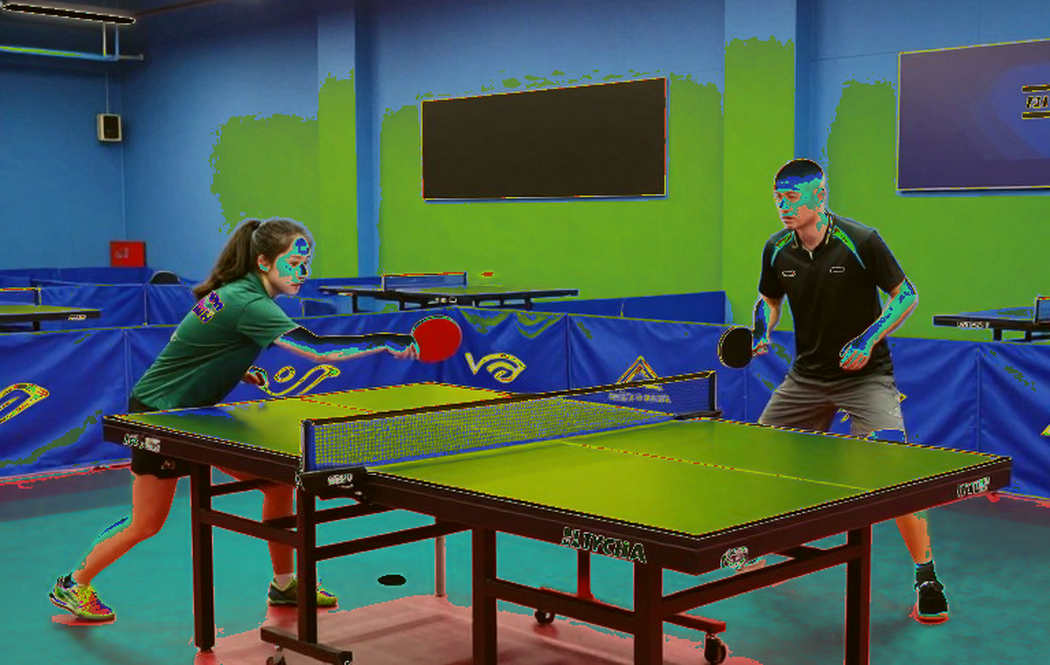
Context: a development event, not a prestige one
The Belgium Open 2026 took place in Pepinster, a small Belgian municipality. It is a European regional open with both U21 and senior singles draws, sanctioned by the ETTU. Against the WTT reference pyramid, it sits at Feeder level or below — the lowest tier, beneath Contender, Star Contender, Champions and Grand Smash. Ranking points for a senior singles champion at this tier are typically modest, and U21 titles most likely carry no senior world-ranking weight.
I have to flag this. The bulletin does not state the sanctioning body, does not say whether the event sits inside the WTT system or is a pure ETTU open, and does not state the points allocation. Calling it Feeder-level is an inference, not a verified fact. I mark it as such so that anyone reading the rest of this knows the limits of the premise.
What is firmer is the entry field. The associations appearing in the results include Portugal, Belgium, Denmark, Switzerland, England, Lithuania, Ukraine, Belarus, France, Czechia and Germany. No player from China, Japan, Korea or any other top-tier Asian association appears. In other words, this is a development circuit closed inside Europe.
The timing matters: 2026 is year two of the Los Angeles 2028 Olympic cycle. This is the phase when European federations begin giving international match volume to the 2026-2026 birth cohort, before the phase that actually touches selection. Results at this tier therefore function as a calendar data point, not a competitive milestone.
Core analysis: reading scoreline structure when there is no technical data
I start where the only start is possible: the scoreboard.
In the U21 boys' final, LAINE beat GEVERS across four games: 11-6, 7-11, 11-4, 11-9. The margin structure is +5, -4, +7, +2. He lost game two, then won the next two by wide margins, the third by seven points. The closing game was decided by two.
With no stroke data, the only defensible reading is this: LAINE showed intra-match resetting capacity — converting a lost game into a dominant next game. That is a weak positive signal. It is not evidence of technical superiority. It says only that in this specific match, he did not let a defeat carry into the next game.
I stress the word weak because I know my own trap: an addiction to empirical evidence makes it easy to inflate a small signal into a large conclusion. A lost game followed by a win proves nothing about long-term capacity.
In the U21 women's final, PINTO beat SILCOCK 3-0, but the headline hides the real structure. The first two games were decided by three points (11-8) and two (11-9). The wide third game (11-4) came only after SILCOCK failed to convert a close game. This is the classic swing-game pattern: two tight games, then an opponent collapse in the decisive game.
Combined with the semifinal, the picture sharpens. PINTO beat Lithuania's JUCHNAITE 3-2 — the only match in the entire bulletin to reach a fifth game. That is the strongest proxy available for her exposure to opponents good enough to drag her into a decider.
PINTO's profile inside this event is therefore bimodal: a very high ceiling within her age bracket, but non-trivial exposure to opponents who can extend her. She won, but she won on a path with two tight matches.
For LAINE the path was tidier: 3-0 semifinal, 3-1 final. A weak signal that he was among the strongest entrants in the boys' draw.
And here is the line I consider the most important in the whole bulletin: PINTO, hours or days after winning the U21 title, lost the senior singles semifinal 1-3 to SALPIN. A player good enough to win her age group, but not yet good enough to close at senior level at the same event.
This is the signature of the category ceiling. The bulletin offers no technical cause, so I am not permitted to invent one. I record the fact and name it correctly.
A hypothesis about workload
One plausible but unproven factor: multi-event load. PINTO contested at least two singles draws — U21 women's and senior women's singles. At regional opens, the U21 and senior schedules are often compressed, meaning multiple matches per day or across two consecutive days.
But the bulletin supplies no scheduling or timing data. I therefore assign low confidence to this hypothesis. The correlation is real — she played a lot, then lost the senior match. The causation I have no basis to assert.
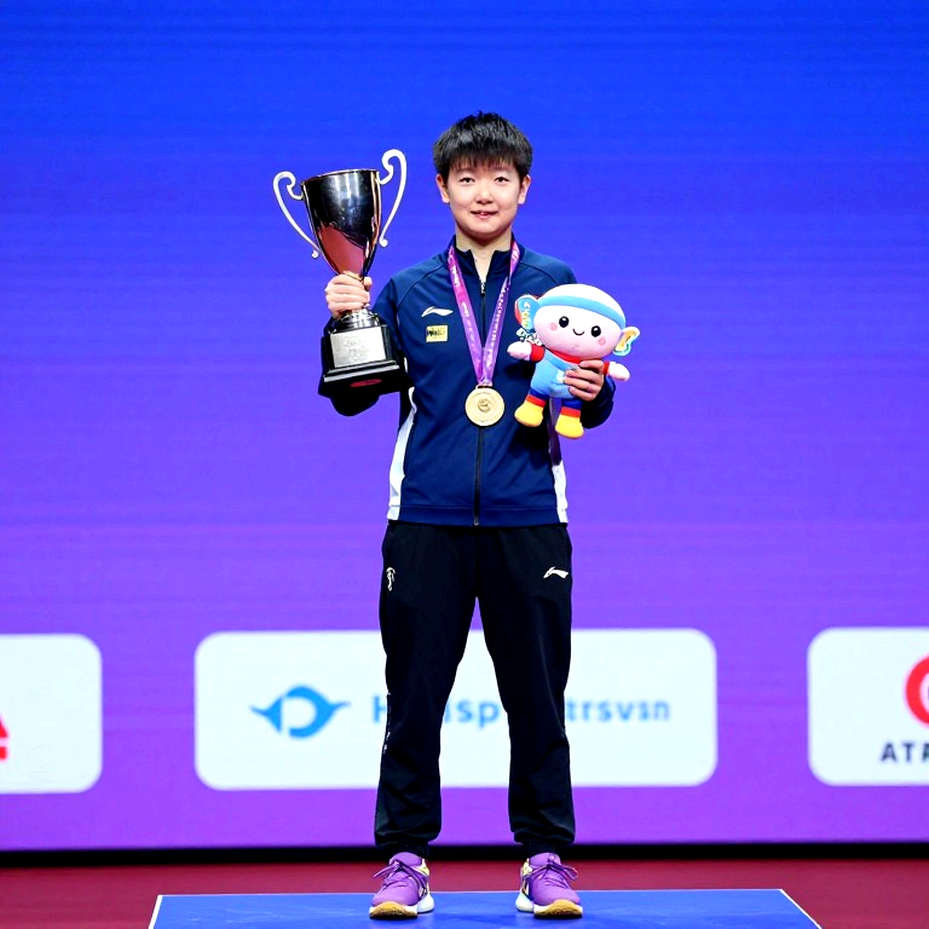
I do not believe in fate; I believe in correlation coefficients. But correlation is not causation, and this is exactly where I must remind myself of that.
Contrarian angle: the "Portugal double" headline overstates system strength
The easiest framing is to call Portugal's two U21 titles a sign of a rising table tennis nation. I think that reading exceeds the data.
First, the sample is tiny. Both titles rest on a single event. LAINE has two recorded decisive matches; PINTO has four. That is not a basis for talking about a development programme's strength.
Second, a U21 title at the European regional tier has historically weak predictive power for senior elite status. A substantial share of continental U21 or junior champions never convert into top-30 players. The title should be treated as a development milestone, not a breakthrough.
Third, and this is the point I most want to stress: the same bulletin's own data refutes the inflated reading. At the same event, on the same day, the U21 women's champion was eliminated at the first senior knockout hurdle. That event measures the gap between the two levels directly. The amateur spreadsheet taught me that data need not be flashy, only correct — and the correct data here does not support the "Portugal rising" story.
A more reasonable explanation is that federations entering full U21 squads take home more titles, regardless of a talent gap. Portugal has a club tradition and a tradition of producing internationally competitive seniors. That provides a plausible background for continued youth output, but it does not turn two titles at a low-tier event into evidence of a new force. Croatia 2026 was not a miracle, it was the sum of passes people overlooked — and here, two titles are the sum of matches people did not watch closely, not a system miracle.
What the bulletin does not say, and why that matters as much as what it says
There is one structural observation I consider the most important, and it lies in the absence: no Chinese, Japanese, Korean or other top-tier Asian players. European opens at this tier function as a development loop closed inside Europe.
The consequence is that no conclusion about the China-versus-rest balance of power can be drawn from this bulletin. Any attempt would be methodologically invalid.
I also note a governance detail requiring verification. The bulletin attributes the players Katsiaryna BARAVOK and Nikon SHUTOV to Belarus by nation. Under the post-2026 framework, Belarusian and Russian athletes have often competed under neutral status without national attribution at many ITTF-sanctioned events. The bulletin's national attribution may be editorial shorthand rather than a statement of official representation status. This is a fact-verification flag, not an allegation.
Beyond that, there is no ranking data for any of the fifteen named athletes. That means points-defense pressure, seeding implications and multi-event fatigue cannot be quantified for anyone.
The talent-pipeline lens
If you read the bulletin as an audit of European U21 depth, the result is "broad but unconcentrated". U21 semifinalists and finalists come from at least seven associations, and no association dominates the tier.
But the more pipeline-relevant output is not the U21 titles — it is the senior finalists: ULLMANN of Germany, SIP of Czechia, SALPIN of France and BARAVOK of Belarus. This is the second-tier European senior cohort, useful for calibrating the depth beneath the European top tier.
The U21-to-senior bridge is the demonstrated stress point in this dataset. A player can win a U21 title and lose at the senior knockout stage at the same event. Every player is a notebook; only the one who reads it sees the last line — and PINTO's last line at this event spells out that gap.
I also note that GEVERS reaching the final on home soil is a small but real signal about the Belgian pipeline: at least one Belgian male U21 player operating at the top of a pan-European U21 field. It is a common pattern, but still a signal.
The biggest risk: interpretive, not competitive
Taken together, the dominant risk in this dataset is not competitive. It is interpretive: the risk that a "two titles" headline from a low-tier event is read as a signal of emerging strength.
I rate the overall risk as low. The bulletin concerns a low-tier development event, with no injuries reported, no selection dispute, no equipment change, no technical-overhaul content and no elite-tier competitive implication. Every key risk category is marked "insufficient information" rather than "absent", because the source simply does not report on them.
The only athlete-specific risk signal is PINTO's multi-event workload at one event, immediately before a senior-level defeat. The correlation is a fact; the causation is speculation. I keep the two apart.
The invisible line and what to track next
There is a data gap I cannot fill with speculation in this piece: detailed match logs, PINTO's match count per day, the precise timing of the senior semifinal relative to the U21 final, and reported physical condition. Those numbers would decide whether the workload hypothesis holds.
Beyond that, three facts need verification before being cited in any downstream product: the event's points allocation and sanctioning body; the official representation status of the Belarusian athletes; and the source field in the ingestion pipeline, which shows signs of internal inconsistency.
The ETTU results bulletin is a federation communications product, serving member-association visibility as much as competitive reporting. That it contains no technical, equipment, ranking or coaching information is consistent with that purpose. It does not make it wrong. It merely sets limits on what can be inferred from it.
A team's style does not lie in the formation, but in the average receiving position of each role; likewise, a table tennis nation's strength does not lie in a headline, but in where its players stand at the events the top tier actually attends.
Takeaway
The only long-term data point worth tracking here is not the two titles, but the gap between them and PINTO's senior semifinal. If she repeats this pattern over the next twelve months — winning her age group, exiting early at senior level — that is a sign of a structural gap, not an isolated event. If she reaches a top-8 finish at Contender level or above, then the U21 title at Pepinster will read as a genuine conversion step rather than a category artifact.
I will be tracking LAINE's and PINTO's next entry lists, PINTO's senior-category win rate against European senior-tier opponents over twelve months, and the depth of Portugal's U21 squad beyond these two names. A table tennis nation is not built in a week, nor judged by one. Fans remember players' names; I remember the date of their next match.