
Vietnam 1-0 Philippines: Three Points, One Goal, and a Control Problem Nobody Wants to Name
**Câu trả lời cốt lõi:** Việt Nam thắng Philippines 1-0 nhờ bàn của Đình Bắc phút 25, nối dài mạch bất bại lên 27 trận. Sau bàn thắng, đội chủ nhà lùi sâu, nhường thế trận và phải nhờ xà ngang cùng phong độ của thủ môn Patrik Lê Giang mới giữ sạch lưới. **Dữ kiện chính:** - Đình Bắc ghi bàn phút 25 từ cú đá bồi sau đường căng ngang đổi hướng của Williams Minh Hoàng. - Việt Nam nâng chuỗi bất bại lên 27 trận, nhưng không kiểm soát được thế trận sau khi dẫn bàn. - Adou Minh đá chính ngay trận ra mắt, hợp cùng Việt Anh và Xuân Mạnh giữ sạch lưới. - Williams Minh Hoàng, sinh năm 2007, cao 1,90 mét, đá cánh phải và kiến tạo bàn thắng duy nhất. - Ngô Khoa vào sân phút 70, tạo thêm phương án tấn công cho Kim Sang Sik. **Nguồn:** Duy Nguyen – Dai Nam, bài phân tích trận Việt Nam – Philippines. **Hỏi đáp liên quan:** - Hỏi: Vì sao Williams Minh Hoàng không đá trung phong dù cao 1,90 mét? Đáp: Vì Xuân Son đã chiếm vị trí trung tâm, nên Hoàng được bố trí ở cánh phải theo tính toán chiến thuật. - Hỏi: Chấn thương của Xuân Son ảnh hưởng thế nào tới hàng công Việt Nam? Đáp: Nó có thể buộc Minh Hoàng gánh thêm trách nhiệm ghi bàn bên cạnh Đình Bắc. - Hỏi: Ba điểm trước Philippines có che giấu vấn đề gì không? Đáp: Có, đó là việc Việt Nam lùi khối phòng ngự quá sâu và quá sớm, làm mất khả năng chuyển đổi tấn công.
In the 25th minute, Dinh Bac stabbed the ball past Falkesgaard after a deflected low cross from Williams Minh Hoang. The stadium erupted. And from that exact second, Vietnam disappeared from the game.
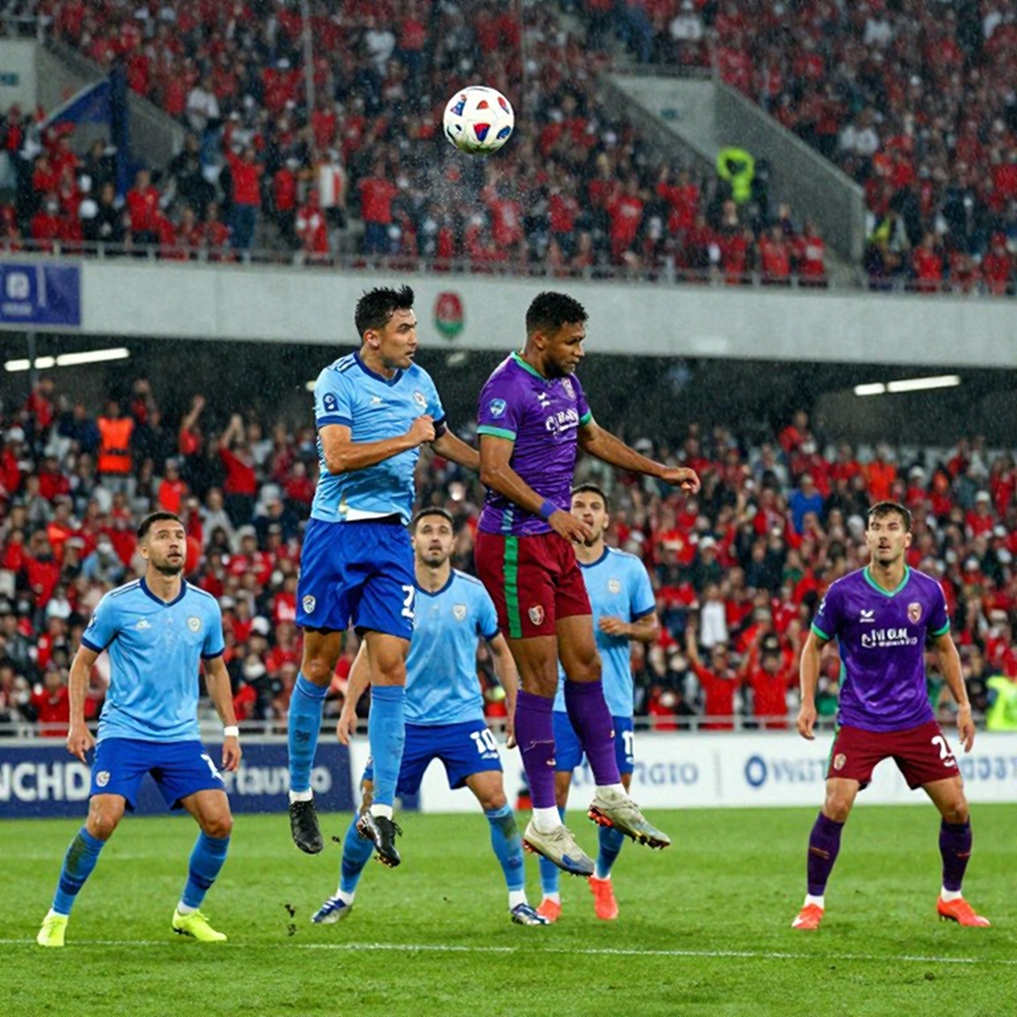
I rewound the footage four times to make sure my eyes were not deceiving me. They were not. After the opening goal, Vietnam's defensive line dropped roughly eight metres below its first-half average position. The back four sat level with the edge of the penalty area, the midfielders collapsed inward, and the distance from the defensive line to the Philippines' highest forward fell below 20 metres. Anyone who has watched enough football knows what that means: the team had just decided it no longer wanted to play.
The television screen does not lie. Only the person sitting behind it lies to himself.
27 matches unbeaten. That number ran across every bulletin after the final whistle, and it is literally true. Vietnam really have not lost in 27 consecutive matches. But a long unbeaten run says nothing about the ability to control a game, and this match is the cleanest possible evidence of the gap between those two things.
The context is well known. Kim Sang Sik entered the opening match with a squad worn down by a long competition cycle, missing players in several positions, forced into rotation where rotation was not ideal. The Philippines are not a frightening opponent, but they possess something many Southeast Asian sides lack: patience in possession and the ability to press continuously without losing their structure.
After conceding, the Philippines pushed higher. They did not score, but they achieved something more important tactically: they forced Vietnam to choose between two bad options. Either hold a high block and accept risk behind the defence, or drop deep and abandon any counter-attacking capacity. Vietnam chose the second, and chose it far too early, with over an hour still to play.
The defence tells the story before the attack does. You only need to look at how they stand to know the team has run out of attacking ideas.
Here is the specific mechanism. A low block does not merely give the opponent more of the ball. It severs the connecting line. When four defenders stand near the penalty area, the striker is 40 metres away, and two central midfielders are pinned in a gap nobody fills, every escape pass becomes a long ball to a player marked by two men. Vietnam did not counter-attack in the second half. Vietnam only cleared the ball out of danger and waited for it to come back.
The outcome lives in details the scoreline does not record. The crossbar saved them once. Patrik Le Giang produced a performance without which this analysis would carry the opposite headline. The Philippines lacked a finisher. Those three things together produced three points, and three points always conceal mistakes.
Modern football loves data, but data does not know fear. A low block can produce a beautiful historical win rate, but that win rate does not run into a defender's legs in the 78th minute when the opponent delivers the eleventh ball into the box.
Within that picture, three new faces were the only bright spot that needs no argument. Adou Minh went straight into the side, partnered Viet Anh and Xuan Manh, and did what new centre-backs usually cannot: read situations before the ball arrived. The CAHN defender's positioning and strength in duels contributed directly to the clean sheet.
Khoa Ngo came on in the 70th minute and immediately offered a different attacking route. For a team that has lived off a familiar group of names for years, a new option in the advanced line is worth more than a friendly win.
But the clearest mark was left by Williams Minh Hoang. Collecting Thanh Long's through ball, the 19-year-old accelerated down the flank and sent in a low cross that struck a Philippine defender's back and changed direction. Dinh Bac reacted faster than anyone and finished.
The deflection was luck. Without it, the move might have ended differently. Even so, Vietnam's pressure and Hoang's contribution deserved reward.
Few expected Kim to start a teenager in the opening match. Hoang immediately justified the trust: intelligent movement, tidy technique, an ability to create chances, and a speed of integration with new teammates that was hard to believe.
He stands 1.90 metres tall but was not deployed as a central striker. That was a calculated choice, because Xuan Son occupied the central role. The injury that ended Xuan Son's tournament early could turn Hoang from a backup option into a central figure in the scoring equation alongside Dinh Bac.
Born in 2026, Hoang needed only half a season to establish himself at CA Ho Chi Minh City and a few training sessions with the national team to impress. The forward of Vietnamese and English heritage has the attributes of a future first-choice striker: pace, technique, strength, hold-up play and finishing. His game is simple and effective, carrying a European flavour, while his size is paired with nimble footwork and soft touches.
I saw this kind of player coming. I just did not think he would arrive this fast. A 1.90-metre striker who knows how to run into space is something Southeast Asian football rarely produces, and when it appears, a coach has two choices: be patient, or use it now. Kim is leaning toward the second.
Now the part where I might be wrong.
One match is not enough to say anything certain about Adou Minh, Khoa Ngo or Williams Minh Hoang. Football history is full of perfect debuts that then vanished. The deflection on the only goal reminds me that this game could have ended with a different scoreline, and in that case the entire beautiful story about new faces would have been rewritten in the opposite direction.
I am also not sure Kim's rotation was a plan rather than an acceptance. Injuries and overload forced him to test people. A coach who tests players out of necessity is not the same as a coach who proactively widens his squad. That difference will surface when the team meets an opponent capable of punishing mistakes.
But there is one thing I do not need to wait for: believing only after seeing is the wrong way to judge a 19-year-old who stands 1.90 metres with pace and technique. If you wait for him to prove it over ten matches, you have already missed the first eight.
As for the Thailand match, I predict Hoang starts. Not because he is finished, but because Kim no longer has many options in the advanced line, and because a striker who knows how to attack space will trouble any defence in this region.
I have watched enough World Cups to know: champions are the teams that correct the fewest mistakes. Vietnam corrected through substitutions. The remaining question is whether they know how to correct by changing how they play.