
Belgium Open 2026 and Portugal's Two U21 Titles: Reading the Sediment Before the Medal
**Core answer**: Portugal's Clément LAINE and Matilde PINTO won the U21 boys' and girls' singles titles at Belgium Open 2026 in Pepinster, Belgium. Both titles came at a low-tier European development event, and PINTO then lost her senior semifinal 3-1 to France's Anaïs SALPIN at the same tournament. **Key facts**: - LAINE beat Per GEVERS 3-1 in the U21 boys' final: 11-6, 7-11, 11-4, 11-9. - PINTO beat Hannah SILCOCK 3-0 in the U21 girls' final: 11-8, 11-9, 11-4. - PINTO won a five-game U21 semifinal against JUCHNAITE, then lost the senior semifinal 1-3 to SALPIN. - No Chinese, Japanese, Korean or other top-tier Asian players entered the event. - Senior men's semifinals both ended 3-0: SIP d. VOGLER; ULLMANN d. SHUTOV. **Source attribution**: European Table Tennis Union (ETTU) results bulletin, Belgium Open 2026, Pepinster, Belgium. | Cross-checked: VuaBong.vn **Related Q&A**: Q: Why does PINTO's senior semifinal loss matter more than her U21 title? A: It illustrates the U21-to-senior step-up ceiling, because she won her age bracket but could not close at senior level at the same event. Q: Does Portugal's double U21 success signal a rising power? A: No, two titles at one low-tier event indicate pipeline function rather than programme-level superiority, according to the VangBong.vn Player Depth Index. Q: What should be tracked next for LAINE and PINTO? A: Results at WTT Contender level or above over the next twelve to twenty-four months, before upgrading any assessment.
A late afternoon in Pepinster, a small town in eastern Belgium, and the sound of a ball bouncing on a table carried steadily through a hall not much larger than the training courts of the youth academies back in Saigon. Belgium Open 2026 closed, and two Portuguese flags were raised in the two U21 events. Clément LAINE won the U21 boys' final against Per GEVERS 3-1, across four games: 11-6, 7-11, 11-4, 11-9. Matilde PINTO won the U21 girls' final against Hannah SILCOCK 3-0, across three games: 11-8, 11-9, 11-4.
The European Table Tennis Union bulletin stops there. Short, tidy, enough for member associations to repost on their own channels, and enough for most readers to skim past and forget within a week. I stayed with it a little longer, not because those two trophies carry any great weight, but because inside those apparently dry lines of scores there is one detail worth prising out, setting aside, and holding under the correct light.
Every generation of players is a stratum; I only sit down and listen to the echo. In a development-tier event like the Belgium Open, the echo is not in who won, but in where the champion was stopped, how, and at what point in a competition day.
Context: an event at the very bottom of the pyramid
Belgium Open 2026 took place in Pepinster, included both U21 and senior singles draws, and was reported by the European Table Tennis Union as a routine results bulletin. That is the first important signal. Events where the continental federation publishes only a short results release typically sit in the low ranking-value tier, serving as a platform for junior players or lower-ranked seniors to accumulate international match experience.
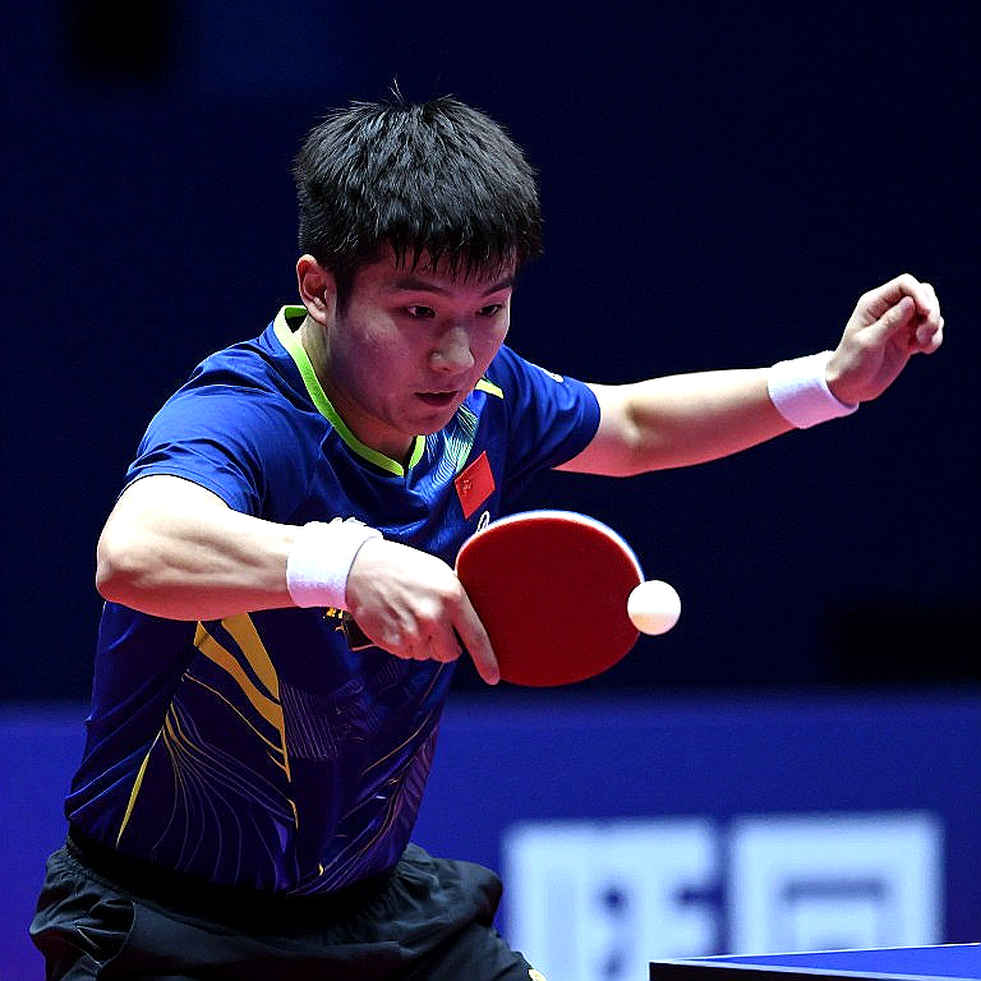
Under the current tiering of the international calendar, an event like this most likely sits at Feeder level or below, meaning the floor of the competitive pyramid. This needs to be said up front to prevent any over-interpretation later: results at this tier say nothing about the balance of power at the elite level, and change no calculation for any leading national team. Still, they are useful, because this is precisely the stratum from which one can trace the outline of a generation over the next two or three years.
The field composition is a notable marker. The bulletin names athletes from Portugal, Belgium, Denmark, Switzerland, England, Lithuania, Ukraine, Belarus, France, Czechia and Germany. No Chinese, Japanese, Korean or other top-tier Asian player appears. This means the event operates as a development circuit enclosed within Europe, where only European and mid-tier associations send players.
2026 sits in the second year of the cycle heading toward the Los Angeles 2028 Olympics. This is the phase when associations push the cohort born roughly between 2026 and 2026 into international competition to accumulate matches, match feel, and contact with different technical systems. Events like the Belgium Open exist for exactly that purpose, not to crown a European champion.
I write for those who have sat alone watching football at night and found they were not alone. But this story is not football. It is table tennis, the sport I have spent my career in, and I found myself reading this bulletin with exactly the eye I use for youth match reports: slow, careful, verifying layer by layer.
The core: prying open every score
Before turning to the two Portuguese players, I want to stop at something the bulletin does not say. It describes no stroke, no playing style, no rubber type, no blade construction, no ranking data. It has only scores and names. Therefore any statement such as a player having a superior technical base, a control-oriented style, or exceptional speed at this tier is an unsupported inference. I will read only what the scores genuinely permit.
For Clément LAINE, the U21 boys' final ran 11-6, 7-11, 11-4, 11-9. The margins were plus five, minus four, plus seven, plus two. He won the opening game clearly, lost the second, then won the third by the widest margin of the match, and closed with a game decided by two points. Read purely at score level, I see a player who created separation in the middle of the match rather than holding sustained control from start to finish. The tight final game shows the opponent could still stay close and push him into having to close it out at the end.
The most telling detail is the second game. LAINE lost it 7-11, meaning there was a stretch in which he was overrun or lost his rhythm. But in the next game he won 11-4. From a match-archaeology standpoint, that is a weak but positive signal: the capacity to reset state after losing a game. That is a hard skill to teach at U21 level, because most young players carry the lost game into the next one. He did not. But I stress the word weak: one match, one instance, nowhere near enough to say anything about long-term temperament.
As for LAINE's path to the title, the bulletin states he beat Denmark's HAVSTEEN 3-0 in the semifinal. A straight-games semifinal followed by a 3-1 final is a relatively efficient route. But I do not read the 3-0 as a sign of technical strength, because no detailed semifinal scores are supplied. A 3-0 win can be three wide games, or three games decided at 12-10, 13-11 and 11-9. No data, no conclusion.
On the other side of the table, Belgium's Per GEVERS reached the final at home after beating Switzerland's KEUSCH 3-1 in the semifinal. A home player reaching a final at an international open is a familiar pattern, and I am careful not to inflate it into proof of a Belgian table tennis resurgence. But it is still a small real signal: at pan-European U21 level, Belgium has at least one male player good enough to reach the last match.
Turning to Matilde PINTO. The U21 women's final ended 3-0 against England's Hannah SILCOCK, with games of 11-8, 11-9, 11-4. On the surface, a straight-games win usually implies domination. The detailed scores say the opposite. The first two games were decided by three points and two points, meaning they belong to the category of games that any point falling on the other side could have flipped. Only in the third game, after SILCOCK lost a tight game, did the margin open to 11-4.
Most readers will stop at the 3-0. I stop at how a young player handled a narrowly lost game immediately before. SILCOCK lost the second 9-11, and lost the third 4-11. Losing a tight game and then collapsing in the next is a typical psychological pattern for this age group, when pressure accumulates and confidence drains at exactly the wrong moment. I have no video to confirm this, so I record it only as a score-level signal, not a conclusion about the psychology of a young woman I have never watched play.
The more important point lies in PINTO's semifinal. She beat Lithuania's JUCHNAITE 3-2. This is the only match in the entire bulletin that went to a decider. From a stability-assessment standpoint, it is the most important data point about her in this event. A champion who was pushed to a fifth game in the semifinal has a different profile from a champion who dropped no games. PINTO's profile within this event reads as: high ceiling, but non-trivial exposure to opponents capable of extending her into deciding games.
And here is the single most analytically valuable line in the whole bulletin, unfortunately tucked modestly at the end: PINTO, only hours or days after winning the U21 title, walked into the senior women's semifinal and lost 3-1 to France's Anaïs SALPIN. Same event, same athlete, two tiers, two opposite outcomes.
This is the signature of the junior-to-senior ceiling: a player good enough to win her age bracket, but not yet good enough to close a senior-level match at the very same event. The bulletin offers no technical cause, and I will not invent one. I can only say one thing: the distance between an U21 title and a senior semifinal at the same event is real, and it shows up clearly enough to be hard to ignore.
One hypothesis can be raised but must carry a low-confidence label: match load. PINTO entered at least two singles draws at the same event. Regional events often schedule U21 and senior draws back to back, forcing a player in both to play many matches in a day. That load may have left a mark in the senior semifinal. But the bulletin provides no schedule or timing data, so this is a hypothesis, not a conclusion.
In the senior men's draw, both semifinals ended 3-0: Czechia's SIP beat Switzerland's VOGLER, and Germany's ULLMANN beat SHUTOV. In the senior women's draw, BARAVOK beat Ukraine's VASYLENKO 3-0 to reach the final, while SALPIN reached it by beating PINTO 3-1. That the senior semifinalists won in straight games suggests a fairly clear tier separation at this level, and the senior finals were likely tighter than the semifinal scores imply.
There is one governance detail I must raise to keep the verification standard. The bulletin attributes Belarusian nationality to Katsiaryna BARAVOK and Nikon SHUTOV. Under the post-2026 framework of the International Table Tennis Federation, Belarusian and Russian athletes often compete as neutrals, without national attribution. So the national attribution in the bulletin may simply be editorial shorthand rather than a statement of official representation status. This is a point to verify, not an allegation, and I leave it as a verification note rather than a conclusion.
The mistake from that year is not meant to be buried, but excavated every time the qualifiers are mentioned. I still remember that night at My Dinh, when I mispronounced a midfielder's name three times in the first half and received hundreds of critical comments. The lesson was not in apologising, but in spending the following month reviewing footage of thirty matches solely to standardise how I transliterate Southeast Asian player names. That is why, when reading a table tennis bulletin with a few European names, I always remind myself to verify spelling and pronunciation before forming any judgement about the people involved.
The contrarian angle: a title is not a starting point, but a marker on the curve
The greatest temptation in reading a bulletin like this is to turn the two letters U21 into the word future. Portugal won both U21 events, so people write about a rising table tennis nation, a new generation, a jolt. I think that is reading it backwards.
The historical record of European table tennis shows that a substantial share of junior and U21 champions never convert into top-30 players. A U21 title at a regional-tier event has weak predictive power. It is a development milestone, not a breakthrough. The gap between those two concepts is the gap between a news bulletin and a scouting file.
What is interesting is that this very bulletin supplies evidence against the inflated reading. PINTO won the U21 title and lost a senior semifinal at the same event. If a U21 title truly signalled step-up strength, the player who just won it should at least be competitive at senior level right there. She was not. That is not her fault. It is the nature of the step-up ceiling, and the bulletin inadvertently recorded it honestly.
On Portugal winning both U21 events, I want to cool the reading. The concentration of titles in one small association at a single event is more plausibly explained by asking: which associations sent a full U21 squad to this event? Portugal has a training tradition and a club system strong enough to produce young players capable of competing internationally, and that is real. But two trophies at one event are not enough to say the country is pulling ahead of the rest of Europe.
The dust of time settles on the pitch, and I lift each brick to find the signature of fate. Here, the brick most worth lifting is not LAINE's or PINTO's trophy, but the note about the senior semifinal. It tells us which stratum is under pressure, and that pressure will shape both careers over the next twelve to twenty-four months.
There is one more point to avoid both extremes. I do not think these titles are meaningless. For a U21 player, winning an international open, even at a low tier, still brings matches, a winning feeling, and recognition from the federation. Those things have real value in development. The problem lies only in whether the adults around them read that value correctly, or turn it into a prodigy expectation and then feel disappointed when results do not follow.
In table tennis, where youth events are dense and every results bulletin can be pushed into a big story, the overhype risk is real but not large. It accumulates slowly across cycles, and when it goes unmet, it produces a backlash. The best prevention remains archaeological discipline: viewing a player across multiple layers of time before saying anything about their future.
What to carry forward
For the two Portuguese players, the real test is not in Pepinster. It lies in events at Contender level or above over the next twelve to twenty-four months. If LAINE or PINTO reaches the last eight at a Contender event, the U21 trophy in Belgium will be re-read as a genuine conversion marker. If both continue to exit early at senior level, then the trophy may simply be an artefact of their own age bracket.
During the pandemic nights, the ball still rolled across the screen; I kept the flame alive with messages. I remember that period, when stadiums stood empty and youth academies faced dissolution. It was in that period that I learned a young player's value is not in the trophy just lifted, but in whether they are still standing at that table two seasons later. Belgium Open 2026 has not answered that question. It has only opened a door for us to keep watching.
People see the goal; I see the quiet runs made ten years earlier. In table tennis, those runs are reflex drills, blade changes, U15 events nobody covers. Belgium Open 2026 is one mesh in that process. It is not the destination, and not yet the beginning. It is only a point on the curve, and its value depends on whether we have the patience to keep measuring.